By Howard Schneider and Ann Saphir
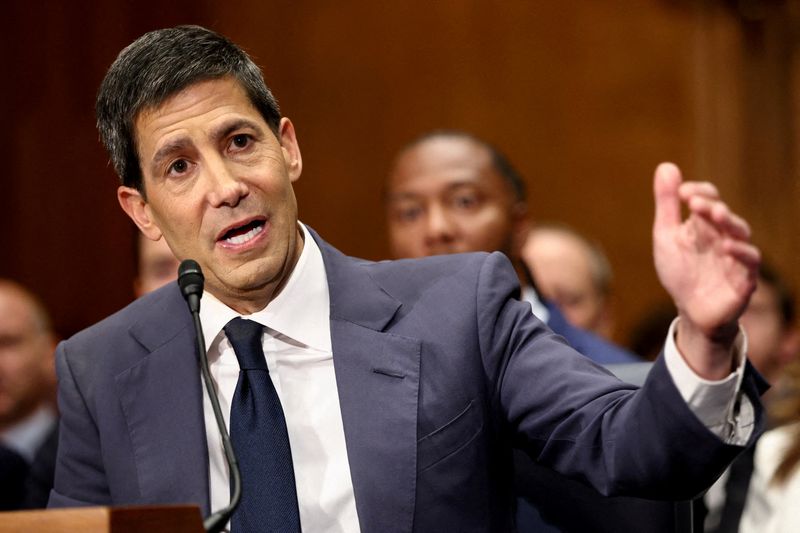
WASHINGTON, May 13 (Reuters) – Fifteen years after leaving the Federal Reserve in opposition to an expansive bond-buying program that has since saddled it with a $6.7 trillion portfolio, Kevin Warsh is expected to return as the U.S. central bank’s leader this month with a big reform agenda that may be tough to translate into quick changes.

With critiques spanning everything from how the Fed monitors inflation to its willingness to bail out markets to its communications strategy, Warsh’s ideas would involve not just technical reform to the central bank’s economic analyses, but sensitive shifts in how it speaks to financial markets and the public more broadly – issues previously hashed over and considered hard to meddle with quickly.
The 56-year-old lawyer and financier could make fast changes in tone and at his discretion cut back on things like press conferences, a return to the more restrained, opaque form of central banking that existed before the 2007-2009 recession and financial crisis triggered a bias towards more public explanation and “forward guidance” for markets about where policy was heading.
Warsh is not a fan of that approach, but he also “doesn’t want to disrupt the markets. There are so many things that he wants to do and it is just going to take time to work through that,” said Randall Kroszner, a University of Chicago economics professor who served alongside Warsh as a Fed governor from 2006 to 2009. “It’s not just ‘off with their heads’ or suddenly tomorrow we’re going to have the balance sheet be $4 trillion.”
President Donald Trump’s nomination of Warsh to take over the top job from Fed Chair Jerome Powell is expected to clear the U.S. Senate this week. Trump clashed repeatedly with Powell, initially demanding interest rate cuts but expanding his pressure through an effort to fire Fed Governor Lisa Cook and a Justice Department criminal probe of Powell that many consider a broader assault on the central bank’s independence. The Cook case is pending before the U.S. Supreme Court and the Justice Department has closed its Powell investigation.
Powell’s eight-year tenure as Fed chief ends on Friday, but he has decided to keep his seat on the central bank’s Board of Governors while that investigation fully winds down, in part to buffer the Fed against further legal attacks by the administration.
BEYOND INTEREST RATES
Warsh’s immediate challenge will be to navigate that same conflict between Trump’s rate-cut demands and economic data that leaves little room for them. The U.S. unemployment rate remains a relatively low 4.3%, while inflation, the other key issue the Fed manages, remains well above the central bank’s 2% target and is likely moving higher.
When Warsh chairs his first policy meeting in June, in fact, it may be a victory for him if he keeps colleagues on the rate-setting Federal Open Market Committee from saying a rate hike may actually be needed. Three Fed policymakers dissented at the April 28-29 meeting in favor of new language along those lines, and that trend may gain momentum based on inflation broadening beyond what can be attributed to tariffs or elevated oil prices.
Powell had about six months after Trump promoted him to the Fed chief job in 2018 before the president began berating him, and at this point investors do not expect rate cuts before 2028.
Warsh, in speeches, interviews and public hearings over the past year, has provided various arguments for why interest rates might still fall despite the current data: Productivity gains flowing from artificial intelligence may make everything cheaper; shrinking the Fed’s longer-dated bond holdings might justify lower short-term rates; and alternate and more accurate measures of inflation actually show prices rising more slowly than those currently emphasized by the Fed.
While he may have reasonable arguments about any of those items, buttressing them with compelling research and convincing fellow policymakers will take time, if it’s possible at all.
Former Fed staff and officials said the most likely first steps would be for Warsh to commission a range of internal reviews, followed by debates at the FOMC and, later, potential changes in things like rules for bank reserves – one possible path to a smaller balance sheet – or the incorporation of different inflation data in policy discussions.
Warsh has also indicated he would like to change some longstanding communication tools like the quarterly Summary of Economic Projections, which includes the “dot plot” chart of rate projections. There’s broad dissatisfaction about aspects of the SEP, for example, making that a possible area for faster reform.
But both the SEPs issued by the central bank and the press conferences held by the Fed chief have become powerful tools for shaping public expectations. In a recent Brookings Institution survey of academic and private-sector Fed experts, nearly all of the 29 respondents regarded the post-meeting press conference as “useful or extremely useful” and just over half said the same about the SEP and dot plot.
Press conferences in particular are “an international standard” for explaining policy decisions and the economic outlook, said former St. Louis Fed President James Bullard, the dean of Purdue University’s Mitch Daniels School of Business. “I think it would be hard to change that.”
COUNTERARGUMENTS ALREADY DEVELOPING
On other issues, former Fed officials and staff say Warsh’s proposals would need to be vetted like any other.
Ideas are already circulating about how to reduce the balance sheet, for example, but there is skepticism about Warsh’s notion that shrinking bond holdings would allow for rate cuts.
Warsh’s comments about the impact of improving productivity on inflation also are broadly accepted – in theory – but with doubts about the time frame involved and the implications for rates. Chicago Fed President Austan Goolsbee last week laid out an alternative scenario in which the AI revolution becomes so broadly anticipated that people start spending expected stock and wealth gains today, driving up inflation and forcing the Fed to hike rates.
The difference in views is less about what AI means for the economy and more about timing and risk – how long improving productivity takes to lower inflation versus stoking extra spending today, and whether the Fed can safely bank on future disinflation to risk cutting rates now.
“He might be right in the impact on demand versus the impact on supply,” Goolsbee told reporters after participating in a conference in Los Angeles. “I think it is worth thinking about … I don’t know what the debate ground rules are going to be … I hope, for my purposes … it will be rooted in serious economic research.”
(Reporting by Howard Schneider; editing by Dan Burns and Paul Simao)