The debate over crime in Cincinnati has become trapped between two competing realities.
One reality is statistical. City leaders point to numbers showing crime is down in several categories. Mayor Aftab Pureval has repeatedly called the level of violence “unacceptable,” while City Council pushed through a $5.4 million crime-fighting package and the city administration continues trying to recruit officers for an undermanned police department.

The other reality is emotional.
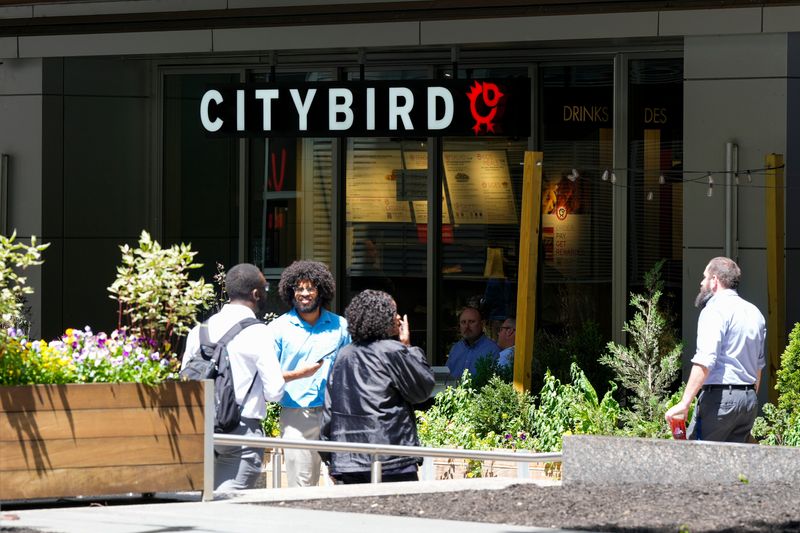
It’s the fatal stabbing of an Over-the-Rhine business owner. The viral brawl at Fourth and Elm streets. Two 11-year-olds killed on the same West End playground. The skirmishes during Opening Day. The pair of shootings at the City Bird restaurant on Fountain Square six months apart. It’s nightly television coverage and push alerts flashing violence across phone screens before people even finish dinner.
And once fear settles into the public psyche, statistics alone rarely remove it.
That growing perception that crime was spiraling out of control became politically consequential enough to contribute to the ouster of former Cincinnati Police Chief Teresa Theetge, a 35-year veteran and the city’s first female chief.
So the question becomes: Is Cincinnati’s crime problem real or perceived?
At this point, does the distinction even matter?
Perception is shaped by proximity
As someone who works downtown and spends considerable time attending events there, I’ve noticed something fascinating: perception of safety in Cincinnati often depends on where you live.
Those who live in the city frequently describe downtown as imperfect but manageable. Many outside the city limits describe it as chaotic and dangerous.
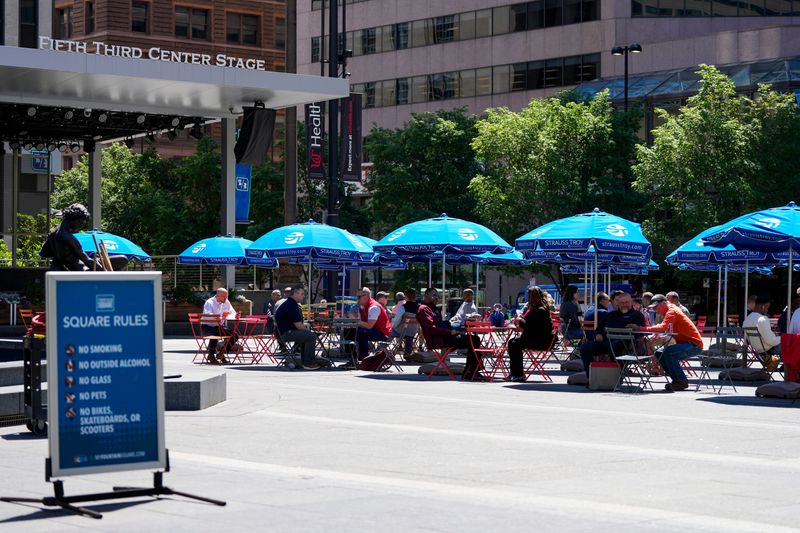
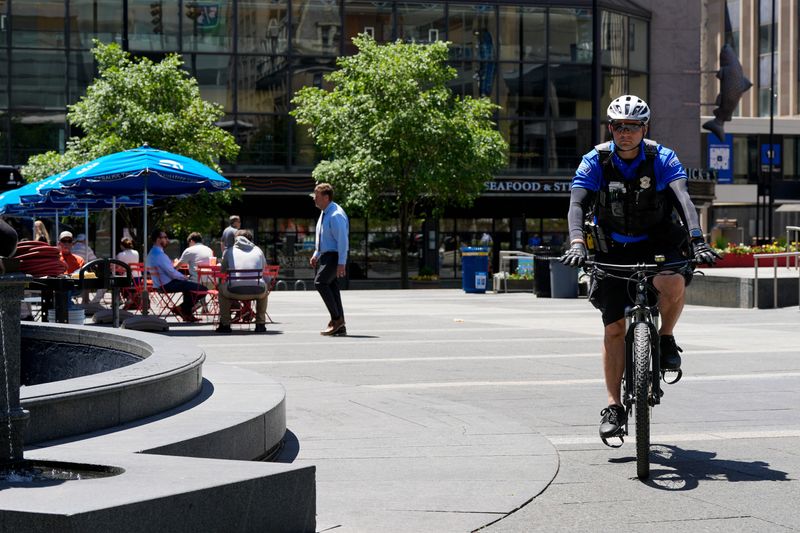
I spent time on Monday afternoon on Fountain Square, just days after the fatal May 8 shooting of a City Bird employee. Dozens of people sat outside casually eating lunch and talking less than 100 yards from the crime scene. Police presence was visible but not overwhelming. A cruiser sat parked on Fifth Street for roughly 15 minutes. A bike officer circled the area. Security guards patrolled near the Fifth Third building like they usually do.
Life, remarkably, continued.
Brian True, 55, of Liberty Township, has worked downtown for 25 years and said he generally feels safe during the day.
“I rarely have felt unsafe,” True said. “Of course, you have to be aware of your surroundings. Violence like that (the City Bird shooting), you never know when it’s going to happen, so you do have to keep your wits about you. If something looks off, then you have to move on and try to avoid it.”
True said visible police presence and the volume of people downtown help create a feeling of safety. However, he suggested the city may need increased police visibility during evenings and weekends.
A 32-year-old woman from Loveland who works downtown but declined to be identified echoed similar thoughts. She said she doesn’t avoid downtown and feels most comfortable in places like Fountain Square, Over-the-Rhine and The Banks, where there are crowds, restaurants, bars and security presence.
“Crime didn’t get this way overnight, and it’s not going to be solved overnight,” she said.
That may be one of the truest statements anyone can make about crime in Cincinnati right now.
He was mugged twice. He still loves Downtown.
One of the more revealing conversations I had was with Ricky Dumont, 52, of Hyde Park.
Dumont used to live downtown before moving to Hyde Park in late 2025. Crime played a role in that decision. He was assaulted by a group of teens in one incident and mugged at gunpoint in another.
And yet despite being victimized twice, he still says he feels safe downtown and is considering moving back.
“I don’t fear for my personal safety, but I am aware that situations can happen,” Dumont said. “I could be a unicorn, but you can’t act like a victim. I’m not going to change my lifestyle out of fear.”
Dumont noted that in both of his cases, arrests were made and justice was served. He credits that with helping restore confidence.
“You see a lot of what the city is trying to do with its focus on the area,” Dumont said. “I see increased police presence, what 3CDC is doing on the Square. I see a lot of patrols − things I took for granted before. There are a lot of things being done (for safety) that I don’t see in Hyde Park.”
Then came perhaps the most provocative line of all:
“CPD can’t be everywhere,” Dumont said. “The question we have to ask is, do we want safety or freedom?”
That tension sits at the center of this entire debate.
How much policing is enough? How much is too much? When does visible enforcement make people feel safer − and when does it make others feel intimidated?
Candace Edwards of Mount Healthy put it bluntly: “A shooting can happen at any time, in any community.”
Her lunch companion, Norman Bouwie of Hebron, Kentucky, echoed that sentiment and believes media coverage heavily shapes perceptions.
“One incident can’t define what the Fountain district is like,” Bouwie said. “There are incidents that happen in Newport, Covington and other places, too. You just don’t hear about them as much.”
Bouwie added, “People who don’t live in or know these communities watch the news, and that’s how they begin to think about them. The media doesn’t give the full story.”
That criticism may make journalists like me uncomfortable, but it is worth wrestling with honestly.
Cincinnati needs solutions, not political theater
The crime happening in Cincinnati should neither be minimized nor exaggerated for political convenience. Too often, it is both.
Some politicians and critics of Cincinnati’s leadership speak as though the city is collapsing into lawlessness. In a recent Facebook post, Signal 99, “a spicy meme page for Cops, Firefighters, Medics and Dispatchers − but also a page where we throw light on the shady s—,” said, “let’s stop pretending that we don’t have a gang problem. A violent offender problem. A courtroom problem.
“We also have a political leadership problem that is so terrified of damaging the ‘Downtown is thriving’ narrative that they’d rather gaslight the public than say the obvious out loud,” the post continued. “If this administration truly believes the current strategy is working, then somebody better explain why bodies keep hitting the pavement while politicians keep hitting Facebook with carefully polished statements pretending everything is under control.”
Others sometimes sound too eager to dismiss public concern because statistics look better on paper. Neither approach builds trust.
The reality is more complicated.
Crime persists despite more policing. Crime persists despite harsher sentencing. Crime persists despite additional laws. None of these things alone solves the deeper conditions that create violence, or the unpredictable nature of the criminals who perpetrate it.
Nathan Ivey, co-host of the Hot Mic Cincy Podcast, framed it clearly.
“Downtown Cincinnati is no more dangerous than any other Midwest city,” Ivey said. “I could be a victim of crime anywhere. I could be in line at the store or on my porch.
“Crime is the product of a lot of generational factors that you can’t do much about in an election cycle. That’s why I don’t specifically blame politicians,” he said. “These are long-term, deep-rooted issues.”
He also warned about the power of perception created by social media and the mainstream news media.
“People start to believe what they see on TV or read in the newspaper because what else do they have to go on?” Ivey said. “Crime, statistically, is down, but the perception is that it’s much higher. I understand that you have to report on it, but what is the context?”
Fighting crime requires a united front
That context matters. Because if enough people believe downtown Cincinnati is unsafe, they behave as though it is unsafe. They stop coming downtown. They stop supporting businesses. They avoid events. Fear itself begins reshaping the city regardless of what statistics say.
At the same time, dismissing legitimate public concern is equally dangerous. The answer cannot simply be flooding downtown with tactical units and turning public spaces into militarized zones.
“We have to figure out how to fix this without flooding the streets with SWAT officers,” Ivey said.
Exactly.
Cincinnati doesn’t need denial. It doesn’t need panic. It needs honesty, coordination and long-term thinking. The city’s leaders, police, courts, state lawmakers, businesses and communities must stop operating like separate factions and start acting like partners confronting a shared problem.
Because whether crime is truly getting worse or merely feels worse to people, perception has become reality.
Opinion and Engagement Editor Kevin S. Aldridge can be reached at kaldridge@enquirer.com. On X: @kevaldrid.
This article originally appeared on Cincinnati Enquirer: Is Downtown really unsafe? Depends on who you ask. | Opinion
Reporting by Kevin S. Aldridge, Cincinnati Enquirer / Cincinnati Enquirer
USA TODAY Network via Reuters Connect