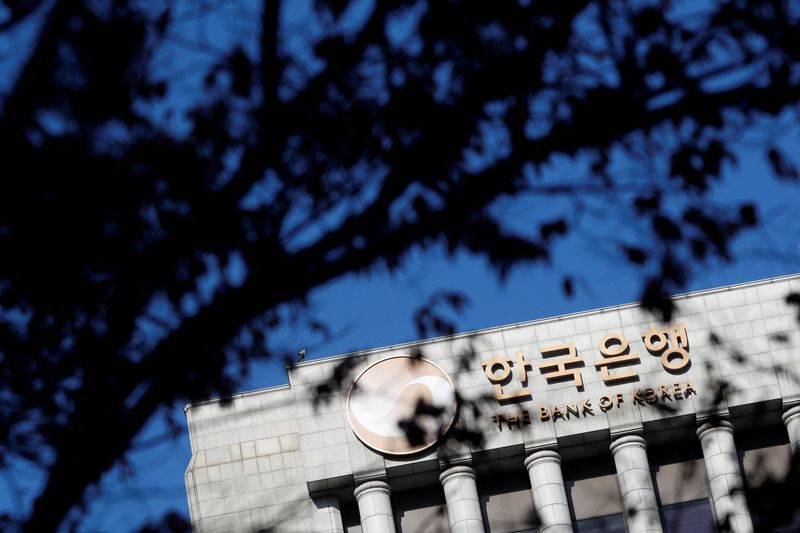
SEOUL, May 11 (Reuters) – South Korea’s central bank needs to prioritise controlling inflation as it could exceed the target rate after the war in Iran drove up energy prices, an outgoing member of the policy-setting board said on Monday.
“If there is a possibility of it deviating from our target of 2%, especially towards the upward direction, it is appropriate to focus on inflation, even if there is a significant trade-off between growth and inflation,” Shin Sung-hwan said at a press conference a day before his term on the seven-member monetary policy board ends on Tuesday.

Shin has been considered a policy dove, and he had dissented from the majority to argue for a cut in interest rates at several meetings since the Bank of Korea last cut rates in May 2025.
On Monday, he said the surge in oil prices sparked by the war has made it extremely difficult to discuss rate cuts, and the primary policy focus should be on controlling inflation even if it caused difficulties for some sectors.
“If oil prices stay high at around $100 per barrel, it is extremely important to minimise their spillover effects, even if it causes a significant pain to the economy, and that is the Bank of Korea’s mandate.”
Consumer inflation quickened to reach a near two-year high of 2.6% in April, raising expectations of interest rate rises later this year to curb inflation pressures.
Last month, the central bank held interest rates steady, and said a wait-and-see approach was appropriate as heightened uncertainty from the Iran war warranted more monitoring of its impact on growth and inflation. The bank next meets on May 28.
Shin said the boom in AI-related chip demand that was driving strong economic growth was expected to continue for another one to two years, although he said he had concerns about how one sector that accounted for about 10% of gross domestic product was so influential on the overall headline growth rate.
Shin said he agreed with the view that the won was excessively undervalued, even after considering rate differentials with the U.S.
(Reporting by Yena Park and Jihoon Lee; Editing by John Mair)