Like many Chicanos, the name Cesar Chávez was heralded in my household growing up in El Paso, Texas.
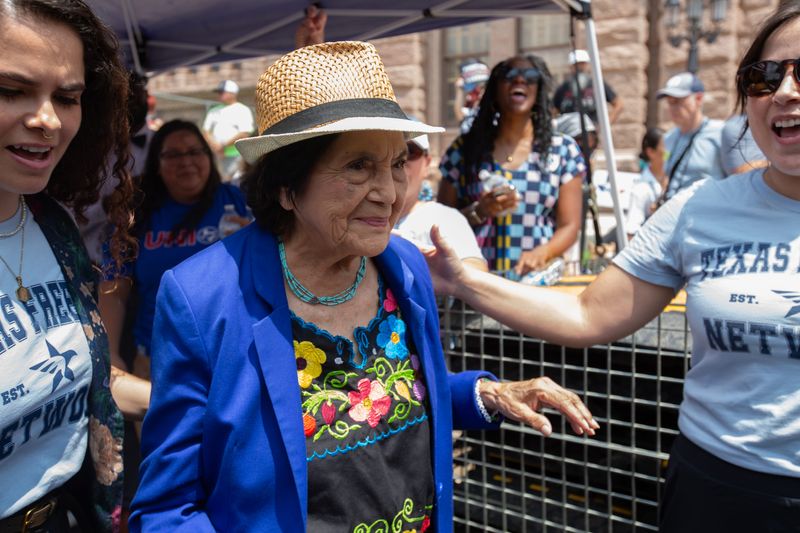
During the height of the farmworker movement, my father grew up in the historic Chicano neighborhood of Boyle Heights in East LA, where Chávez organized the community. After meeting Dolores Huerta, Chávez’s work moved beyond East LA, and they formed the National Farm Workers Association, which later became the United Farm Workers union.

For generations, his name was synonymous with dignity, justice and equality. In true machismo fashion, however, we rarely heard about Dolores Huerta’s contributions to the cause. As if being sidelined in history wasn’t enough insult, the revelations that Chávez allegedly raped his long-time organizing partner, Dolores Huerta, made the erasure extra despicable.
My grandfather was a farm worker in the 50s. We heard stories of my abuelito riding the train between El Paso and Southern California, looking for work in the fields. He often talked about the deplorable conditions, humiliation and exploitation he endured. He also experienced racism and discrimination. He would tell the story of how he and other farm workers were run out of a town in California because they were Mexican: “No dogs or Mexicans allowed,” they were told. This story isn’t unique to my family.
For a movement to organize around and to center farm workers offered hope to many like my grandfather. His humanity and dignity were finally being acknowledged and fought for. There was finally a chance that searching for opportunities wouldn’t come at the expense of safety and security.
For decades, the story of this powerful movement was told through the lens of one man’s sacrifice. But recent sickening revelations changed all that. Following a multi-year New York Times investigation detailing heartbreaking testimony of abuse and grooming involving several women and girls during Chávez’s leadership, Huerta revealed that he raped and pressured her into sex, once in a secluded grape field — often seen as a symbol of the movement because of the Delano grape strike and boycott.
We are no longer looking at a hero with flaws. Rather, we’re seeing a pattern of inaction that was designed to prioritize a leader’s reputation over the safety of children like Debra Rojas and Ana Murguia, who say they were groomed and sexually abused by Chavez, starting at the ages of 12 and 13, respectively.
As a Chicano, coming to terms with this truth was more than difficult. Not just processing the hurt and betrayal but worrying about how these revelations may also be weaponized against Latino communities, communities of color, and immigrants — especially, in today’s climate of xenophobia and hostility. But in the end, the survivor voices broke through any fear I felt.
Do we cling to a version of our history that requires the silence of our sisters and daughters to stay intact? Or do we embrace a Chicanismo rooted in el pueblo, our community, that recognizes that the true power of the movement never lived in any one man, but in the hands of workers exploited on and off the fields?
For too long, my cultural identity has been intrinsically tied to machismo — the strongman who leads without question. He who gets things done, no matter the price. But these revelations force me to think about what kind of Chicanismo I want to carry into the future.
My generation inherited a culture of silence and sexual violence. Nearly half of women have experienced some sort of sexual violence in their lifetime, and more than 20% have experienced completed or attempted rape. Nearly half of female survivors reported being first raped as a minor. Statistics show that nearly 80% of sexual harassment charges in the workplace are filed by women — often with women of color facing the highest barriers to justice — yet researchers know this is an incomplete picture because 90% of individuals who have experienced harassment never take formal action to report it.
But we do not have to pass this culture on to the next generation.
As a new father to a 9-month-old boy, I ask myself what kind of man I want my son to be. I want him to speak truth to power. I want him to know that being a man isn’t about posturing the strongman archetype. It’s about being a person of integrity who refuses to let his community’s success be built on sexual violence, silence, and pain.
As I envision what it means to be Chicano in 2026, I still hope for a day when opportunity doesn’t come at the expense of safety and security. I hope for a day when systems don’t shelter predators to protect legacies.
The Sí, se puede spirit must evolve. It can no longer mean Yes, we can achieve at any cost. It must mean Yes, we can progress together, so long as we hold ourselves accountable.
As we watched cities and states across the country replace Chávez’s name to honor farm workers, we aren’t losing our history. We are finally stripping away the ego of a predator to reveal the true faces of the movement: the women who organized, the families who marched, and the survivors who finally spoke their truth.
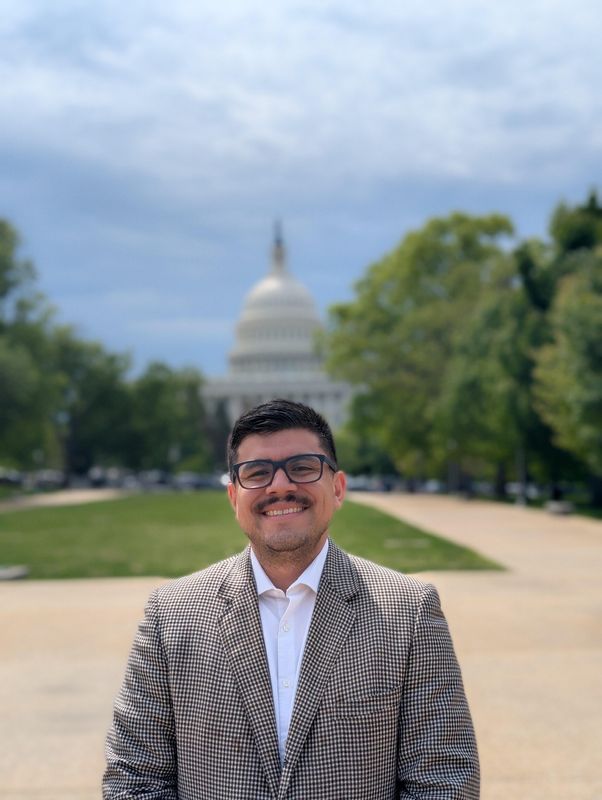
Aaron Nodjomian-Escajeda is the policy director at Rights4Girls, a national human rights organization working to end gender-based violence.
This article originally appeared on El Paso Times: OPINION: Cesar Chávez’s failings force us to examine Chicano identity
Reporting by Aaron Nodjomian-Escajeda, Guest columnist / El Paso Times
USA TODAY Network via Reuters Connect