Spreading any new sewage sludge is now banned in Brevard County, at least until stricter statewide biosolid rules take effect over the next two years.
On Tuesday, Brevard County decided unanimously to extend the county’s biosolids ban for the ninth time since 2019, this time as an “open-ended” ban until the new statewide biosolid rules are in place.

But how long the legacy of pathogens, ‘forever’ chemicals, microplastics and other contaminants from so-called biosolids last in our soil and raw water supply remains unknown.
What are biosolids?
Biosolids are the leftovers from sewage treatment, after the liquids are separated out. The nutrient-rich material is used to fertilize farmland. When spread on land at the proper rate, biosolids can improve soil, help conserve costly landfill space, and ease demand for synthetic fertilizers.
Biosolids save farmers and municipalities money
Putting municipal sludge on pastures saves farmers tons on fertilizer costs and local governments on the expense of all the other ways of getting rid of the stuff, especially hauling it far away. But in 2019 Brevard banned any new biosolids permits, because the high phosphorous it contains can trigger toxic algal blooms in our drinking water supply, not to mention all the other contaminants sludge carries.
Long term, spreading biosolids also poses pollution threats to the Indian River Lagoon, some conservationists warn.
Biosolids contain excess phosphorus, nitrogen, metals, microplastics, PFAS, pathogens and remnants of pharmaceuticals that can pollute groundwater and surface waters like the St. Johns River, which supplies about half of Brevard’s drinking water. About a quarter of Brevard’s water supply comes from Lake Washington, an outcropping of the St. Johns.
Brevard banned biosolids to guard water supply
After a toxic algae bloom in Lake Washington in July 2019, commissioners approved a 180-day moratorium on any new permits to expand spreading biosolids. They’ve been extending that ‘temporary’ ban ever since.
Sludge leaves long legacy of polluted soil, water
A 2026 law prohibits the land application of Class B (the lowest level of treatment) biosolids statewide by July 1, 2028. Another state law that takes effect Nov. 1, 2026, bans land application of Class AA (highest level treatment) biosolids exceeding rates needed for farming.
But even Class AA sludge can cause large increases in phosphorus in soil and pollute groundwater, warns Gary Roderick, a former Florida Department of Environmental Protection administrator. He’s been lobbying for years to get Florida toprocess sewage sludge as a source of energy.
Lakeland and St. Petersburg capture biogas from biosolids digestion and use it to generate electricity on site.
When people are “screaming” NIMBY (not in my back yard) for land-applying biosolids, Roderick points to Florida’s many other waters plagued by excess nutrients. “So we move it out of the St. Johns, where are we going to put it instead, the springs? Lake Okeechobee, the # 1 most polluted lake in North America, the Everglades? I don’t think so,” Roderick said via email.
He sees biosolids as a basic supply-demand problem: If sludge supplies more nitrogen and phosphorus to those watersheds than demanded by the crops and nature it is fertilizing, the excess eventually winds up in runoff or groundwater that flows to waterways.
“Although understanding the problem and knowing there are solutions there is still one thing we are going to have to figure out — damage to the agricultural soils that have already been contaminated,” Roderick said.
Indian River County also bans biosolids
Indian River County enacted a similar biosolids ban in 2019 after similar excess phosphorus concerns tied to Blue Cypress Lake and the lagoon.
Although biosolids have been spread in Brevard each year since the county’s ban took effect, under the grandfathered permits, only one site — Deer Park Ranch in east Osceola/west Brevard — is currently accepting biosolids.
Brevard tried to stop sludge dumping just west of border
For decades, some counties like Brevard became dumping grounds for the rest of Florida’s sludge, especially Osceola County. Osceola takes 73% of Florida’s sewage sludge, spreading it along the St. Johns River basin, which feeds Brevard and the rest of Central Florida’s drinking water supply. Most of the biosolids come from Miami-Dade and elsewhere in South Florida.
In August, Brevard commissioners voted unanimously to petition DEP for a hearing to consider stopping a Clewiston company from dumping more sewage sludge on pastures that flow to the St. Johns River.
But in October, DEP denied the county’s request for the hearing, saying the county lacked standing to prove harm.
In a July 2025 agreement, DEP had ordered H&H Liquid Sludge Disposal, Inc. of Clewiston, to follow a strict, multi-year plan to comply with the state’s 2021 sludge rules regarding phosphorus.
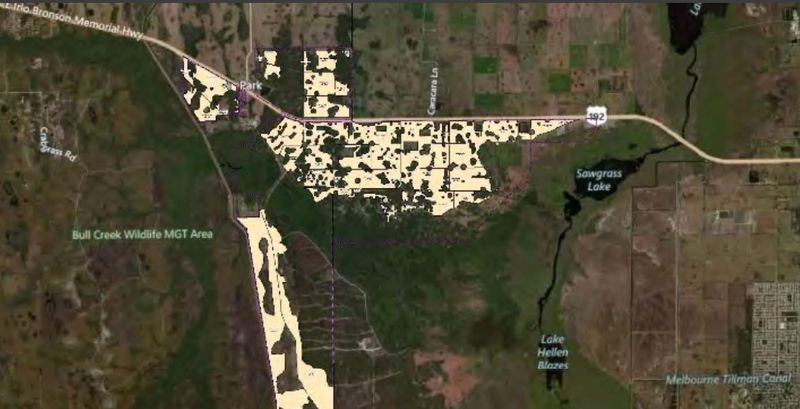
So most of H&H and the state’s sludge continues to go to Osceola County. One approved sludge site is Deer Park Ranch, at 6254 Kempfer Rd., in Saint Cloud, south of U.S. 192. About two-thirds of the roughly 25,000-acre ranch is in western Brevard, and the rest is in eastern Osceola County.
Brevard’s utility dumps its sewage sludge at the county’s landfill west of Cocoa, but some Florida cities in and out of Brevard have for years hauled their sludge to Deer Park Ranch.
Waymer covers environment and county government. Contact him at (321) 261-5903 or jwaymer@floridatoday.com. Follow him on X at @JWayEnviro.
This article originally appeared on Florida Today: Brevard County extends ban on sewage sludge, citing water pollution concerns
Reporting by Jim Waymer, Florida Today / Florida Today
USA TODAY Network via Reuters Connect