The ACC enters the 2026 college football season with a coaching landscape that spans from one of the sport’s most accomplished active coaches to a pair of first-year head coaches still learning their rosters. The Miami Hurricanes are the clear conference favorite entering spring practice, but the wide-open battle behind the Hurricanes is what makes this league one of college football’s most compelling storylines heading into fall.
Here is a complete ranking of all 17 ACC football head coaches heading into the 2026 season, graded on résumé, current roster trajectory, and program ceiling.

17. Tavita Pritchard — Stanford
Pritchard inherits 10 returning starters and a roster that projects to lean on an intact offensive line and running back Micah Ford as the strength of his first squad in Palo Alto. At 39, he is among the Power Four’s youngest head coaches, and the patience required to accurately evaluate his tenure extends well beyond a single spring.
16. Tosh Lupoi — California
Lupoi’s first act as a head coach was to retain quarterback Jaron Keawe-Sagapolutele and surround him with new skill talent, including running back Adam Mohamed from Washington and receivers Ian Strong and Chase Hendricks. The primary spring priority is rebuilding a defense that surrendered 31.5 points per game in ACC play last season, a figure that must improve substantially for California to compete for the conference’s upper half.
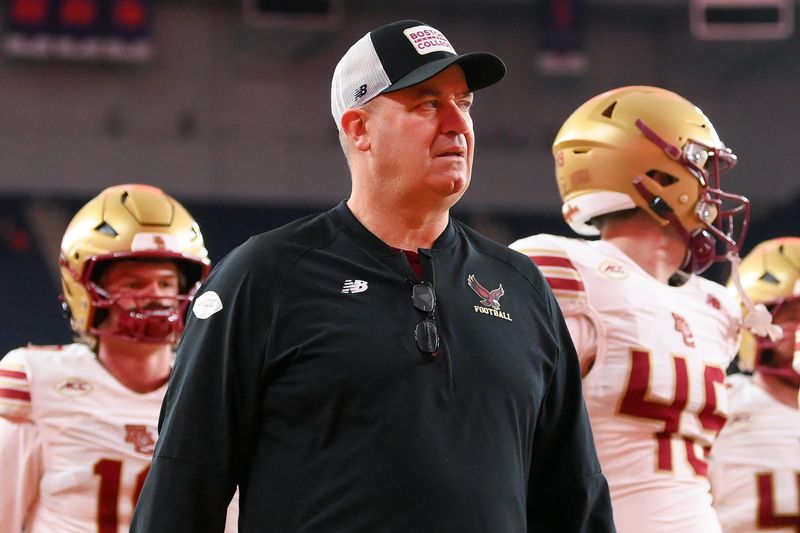
15. Bill O’Brien — Boston College
Boston College’s 2-10 finish in 2025 is the defining number of O’Brien’s tenure, and the rebuilding task entering Year 3 remains as daunting as any in the ACC. The offense returns just one starter, Saginaw Valley State transfer Mason McKenzie is an unproven quarterback at the Power Four level, and a defense that surrendered 32.8 points per game must show marked improvement under veteran coordinator Ted Roof.
14. Fran Brown — Syracuse
Quarterback Steve Angeli’s return from a torn Achilles is the program-defining storyline of Syracuse’s spring, and replacing receivers Johntay Cook and Darrell Gill ranks among the most pressing offseason priorities on offense. New defensive coordinator Vince Kehres is one of the ACC’s top assistant coaching hires of the entire cycle, and Brown’s ability to sustain momentum in Year 3 after a roster turnover year will define whether Syracuse is truly trending upward.
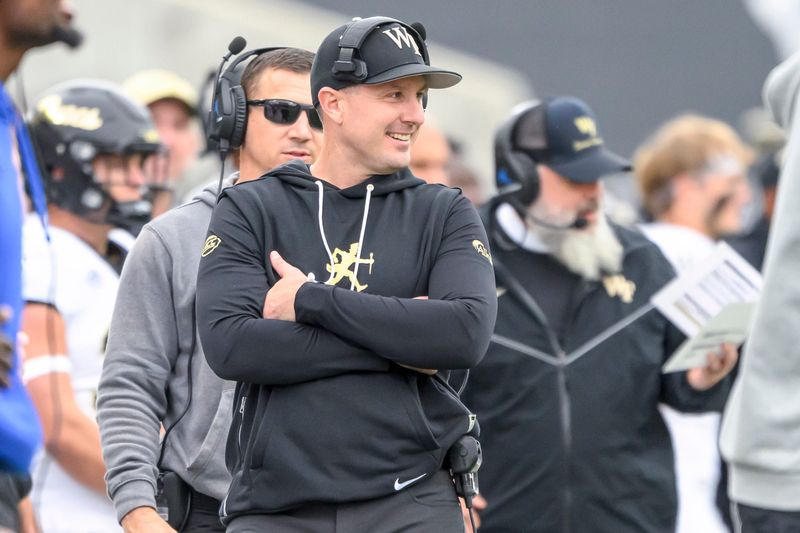
13. Jake Dickert — Wake Forest
Wake Forest enters 2026 with eight returning starters on defense, a genuine conference strength, but faces a rebuilt offense that must replace running back Demond Claiborne’s production and multiple key departures at receiver and along both lines. Dickert is a credible program builder who inherited a roster with real talent gaps after Steve Forbes’ departure and has steadily improved the product on the field in each of his two seasons.
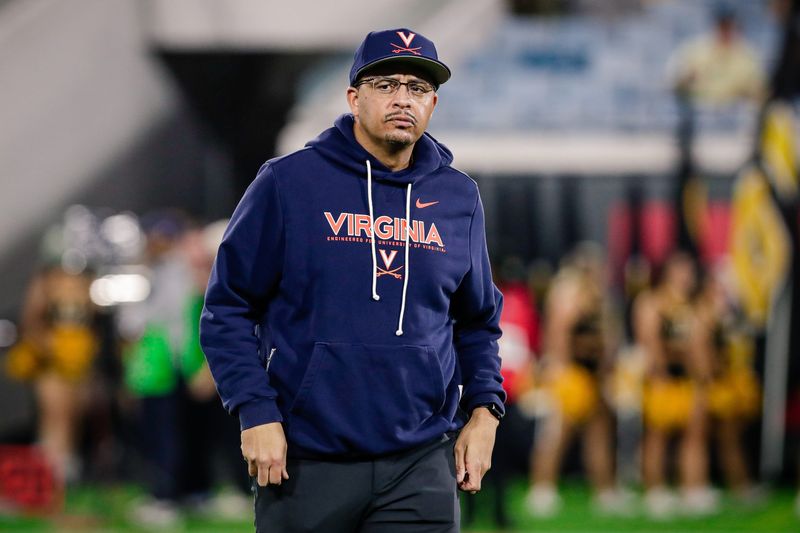
12. Tony Elliott — Virginia
Virginia returns eight starters from a team that won 11 games, the best single-season win total of Elliott’s tenure, and appeared in the ACC Championship Game. Missouri transfer Beau Pribula is the frontrunner to replace Chandler Morris under center, with three returning offensive line starters projected as a strength.
Elliott has turned a corner in Charlottesville after a rocky 2022 debut, and the foundation for sustained ACC contention is more credible now than at any point in his tenure.
11. Bill Belichick — North Carolina
Arguably the greatest coach in NFL history remains one of college football’s most compelling experiments. Year 2 brings new offensive coordinator Bobby Petrino and transfer quarterback Billy Edwards Jr. from Wisconsin to an offense that managed just 19.3 points per game in 2025. Belichick’s defense showed meaningful improvement in the back half of last season, holding ACC opponents to 4.8 yards per play in conference play.
10. Dave Doeren — NC State
Now in his 14th season, Doeren enters 2026 as the ACC’s longest-tenured active head coach outside of Dabo Swinney. NC State returns quarterback CJ Bailey and holds a favorable schedule that makes the Wolfpack a legitimate dark-horse contender in the conference’s mid-tier, though just five starters return overall, and the defensive front is undergoing a significant overhaul this spring.
Doeren has produced a program that consistently hovers between seven and nine wins — a reliable floor that few programs in this conference can consistently match.
9. Mike Norvell — Florida State
Norvell faces a make-or-break 2026 campaign in Tallahassee, with just six returning starters and all five offensive line starters gone from last year’s roster. New quarterback Ashton Daniels has one of the nation’s top receivers in Duce Robinson to throw to, but the question marks on both sides of the ball are significant.
The recruiting class is solid, and the program is not without talent, but this is the season that will define whether Norvell remains the right man for the job in Tallahassee.
8. Pat Narduzzi — Pittsburgh
Now in his 12th season as the Panthers’ head coach, Narduzzi has earned his institutional standing, but Pittsburgh faces significant roster questions this spring. Quarterback Mason Heintschel, who took over midseason and injected the offense with energy, enters his first full spring as the unquestioned starter, while the Panthers suffered key losses at every level of a defense that was hit especially hard at linebacker by the departures of Kyle Louis and Rasheem Biles.
7. Brent Key — Georgia Tech
Coach Key has quietly turned Georgia Tech into one of the ACC’s more competitive programs over the past three seasons and deserves recognition for what he has built in Atlanta. Quarterback Haynes King, the heart and soul of the program in recent years, is out of eligibility, and Indiana transfer Alberto Mendoza has been brought in to replace him.
New coordinator George Godsey’s offense will lean heavily on the one-two punch of running backs Justice Haynes and Malachi Hosley, while new defensive play-caller Jason Semore takes over a unit bringing back five starters.
6. Manny Diaz — Duke
Diaz is 18-9 through two seasons at Duke, and the Blue Devils’ ACC Championship appearance in 2025, however circuitous the path, represents a genuine program-building achievement for a school that has not historically been a football destination. The late portal departure of quarterback Darian Mensah and receiver Cooper Barkate to Miami is the central storyline of Duke’s offseason, with a quarterback competition between Walker Eget and Dan Mahan unfolding this spring as Diaz’s defense brings back three starters and undertakes a significant overhaul up front.
5. Dabo Swinney — Clemson
The résumé remains unmatched by anyone in this conference — nine ACC titles, two CFP national championships, consistent top-10 recruiting classes across more than a decade. However, last year’s 7-6 season was a major disappointment, and Swinney’s response was to shake up the coaching staff and add 10 transfers.
Chad Morris returns to call plays, and the results of this spring will offer the first real window into whether Clemson is genuinely back on an upward trajectory.
4. Jeff Brohm — Louisville
One of the most underrated coaches in the ACC, Brohm quietly owns the conference’s second-best sustained record since 2023. He has guided Louisville to a 28-12 overall record in three seasons, highlighted by four wins over Top 25 opponents, including a 24-21 road upset of No. 2 Miami in 2025 — snapping the Hurricanes’ 10-game home winning streak and delivering Louisville its first-ever road win over a top five opponent.
The Cardinals have posted back-to-back nine-win seasons for the first time since 2014, and Brohm became just the second coach in school history to win nine or more games in three straight seasons.
3. Rhett Lashlee — SMU
SMU enters 2026 as one of the ACC’s most dangerous programs behind Miami, with quarterback Kevin Jennings, one of the conference’s most experienced signal-callers, returning as the engine of an offense that ranked among the ACC’s best in 2025.
The spring challenge is restocking the supporting cast after losing receivers Jordan Hudson and Romello Brinson and tight ends Matthew Hibner and RJ Maryland, while defensive coordinator Maurice Crum Jr. rebuilds a unit that was among the ACC’s best.
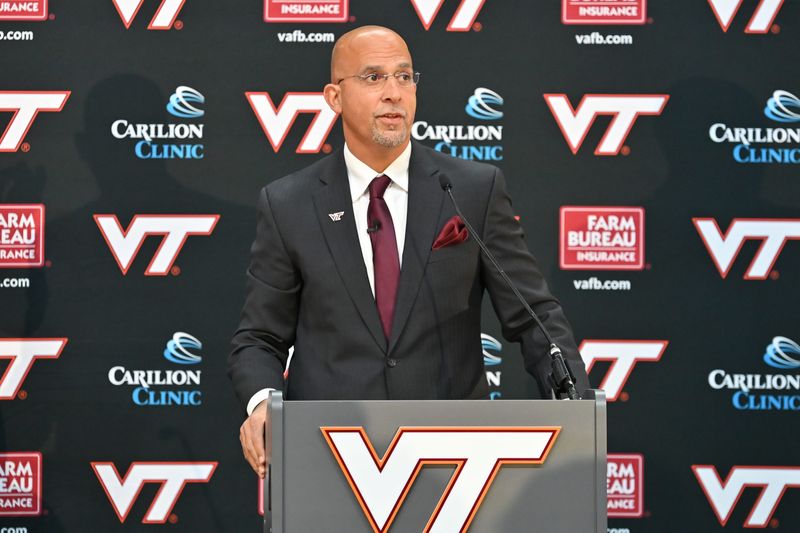
2. James Franklin — Virginia Tech
With 14 returning starters and a standout transfer class, the Hokies could be the ACC’s most-improved program in 2026 — and Franklin’s arrival from Penn State gives a program that hadn’t won 10 games since 2016 a legitimate chance to compete for the conference’s second tier. Franklin’s track record of program transformation speaks for itself: at Penn State, he compiled a 104-45 record across 11 seasons with six 10-win campaigns. Former coach Brent Pry returned to Blacksburg under Franklin to serve as defensive coordinator, a notable continuity hire that suggests Franklin understands the roster he inherited.
1. Mario Cristobal — Miami
No other coach in this conference is operating at a comparable level. In his fourth season at the helm in 2025, Cristobal guided Miami to a school-record 13 wins, a maiden College Football Playoff appearance as the No. 10 seed, and a run through Texas A&M, Ohio State, and Ole Miss before falling just short of a national title in the CFP Championship Game — the program’s first title game appearance since the 2003 Fiesta Bowl.
Miami finished 13-3 overall and 6-2 in ACC play, marking its second consecutive double-digit-winning season under Cristobal. Miami enters spring 2026 as the heavy favorite to win the ACC, with Cristobal landing one of the top transfer portal quarterbacks in the country in Duke’s Darian Mensah to replace the departed Carson Beck.
Follow us @FSUWire on X and like our page on Facebook to follow ongoing coverage of Florida State news, notes, and opinions.
This article originally appeared on FSU Wire: 2026 ACC football head coach rankings
Reporting by Brandon Foster, FSU Wire / FSU Wire
USA TODAY Network via Reuters Connect