As the music gushes May 16 at Indiana University’s Musical Arts Center (MAC), the audience will feel Beethoven wrestling with his disappointments: a pitiless father, illnesses, spoiled romances and his well-publicized hearing loss. In his Ninth Symphony Beethoven seeks global elation. The third movement contains his sad memories evolving into acceptance. “Ode to Joy” comes last and splashes exuberance.

Beethoven’s Ninth Symphony (Symphony No. 9 in D minor, Op. 125 ) is “dedicated to all Mankind. Embracing all phases of human emotion … it is the final resume of all of Beethoven’s achievements.” (Frederick Stock, the Chicago Symphony Orchestra‘s second music director, in “Talks About Beethoven’s Symphonies” from cso.org).
It is often called the “greatest of all symphonies.”
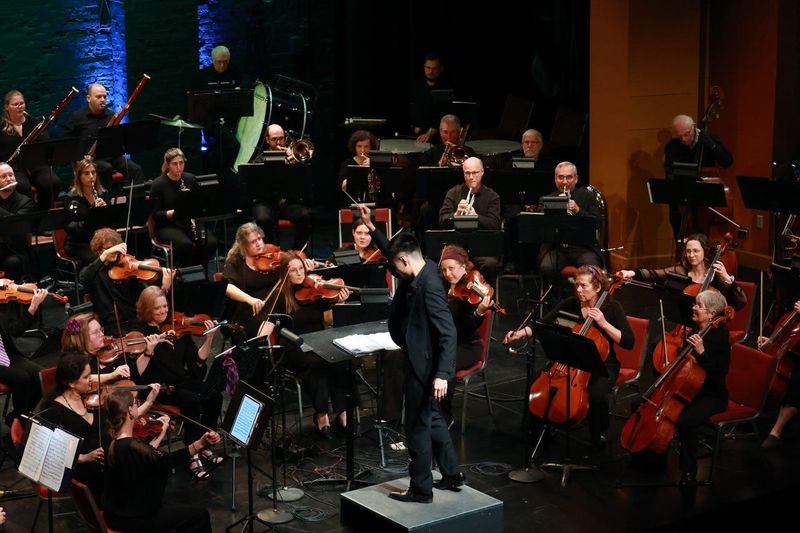
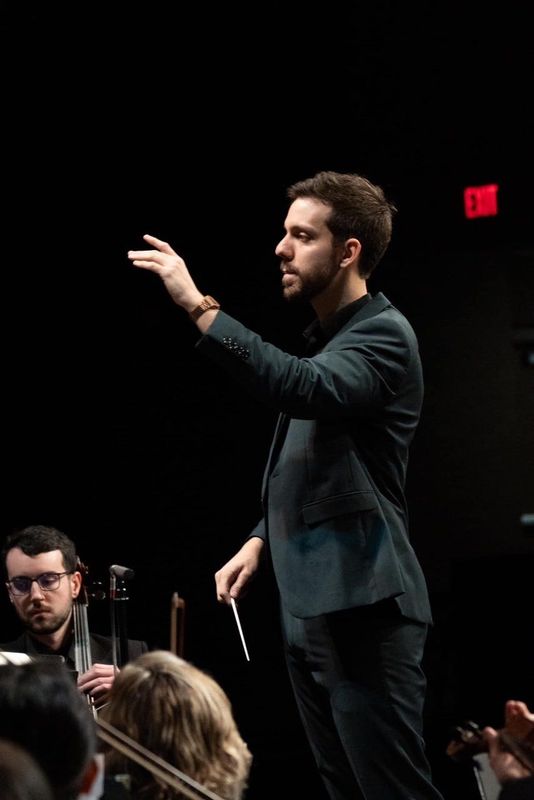
Bloomington Symphony Orchestra’s music director, Ryo Hasegawa, will conduct the program.
Did Beethoven have it in for sopranos (and tenors)? Those high notes!
Beethoven and women didn’t mix well. His pretty mother, Anna Maria Magdalene, had once said “if you want my good advice, stay single, then you’ll have the true, quietest, most lovely and pleasant life. … Then what is marriage, a little joy, but after that a chain of suffering, and she is still young.”
And of course, grave abdominal ailments tortured Beethoven for most of his life. By 1792, in Vienna, people — particularly generous aristocrats — were admiring him. His hearing noticeably decreased around 1797. By 1802 he seriously considered taking his life, as he noted in the Heiligenstadt Testament, a letter he wrote to his brothers. But music stopped him from doing so, he told them.
Two years later Beethoven fell in love with one of his fortepiano students, Josephine Brunswick, a young widow. To marry him was to lose social standing for Brunswick. She cut off the love affair. According to his own account, Beethoven fell in love again in 1816. This ended sadly too. In 1821 he had a terrible case of jaundice. Until death, sickness chased him.
Beethoven’s Ninth Symphony is well known for its difficulty to sing. It contains ferocity, speed — and it’s sung in German. Many choir directors tell their sopranos and tenors to sing a lower part or rove from one part to another.
Skyward as Beethoven’s notes may be for the piece’s top voices, “sopranos like to sing high notes,” said Carolyn Sowinski, a soprano and board officer with Bloomington Chamber Singers.
Beethoven composed first symphony using vocal soloists, chorus
Many call Beethoven’s Ninth a masterpiece of Western classical music and one of history’s most stupendous musical feats. The piece is his last symphony. It represents his life, starting as a little boy, of music, always music. (Rishab Jain, cadencecorner.org.) Beethoven composed the first symphony ever to use singing soloists and a chorus.
“Beethoven’s music is familiar, the way we all know a painting like (van Gogh’s) ‘Starry Night,’” said Mary Craig, a soprano who will be singing. “Beethoven demands a lot of the chorus. We need to feel as powerful and versatile as instruments in the orchestra to achieve the sound.”
A first for BSO
The BSO hasn’t performed Beethoven’s Ninth before. Donna Lafferty, the symphony’s executive director, has readied her trombone. Joining her and the other instrumentalists will be more than 100 members of local choruses. The evening will begin with a world premiere work by Chinese American composer and pianist Daixuan Ai. Ai wrote “When It Blooms” to coordinate with Beethoven’s Ninth in several ways.
“While it’s not as technically challenging as some of the pieces we’ve performed in the past–here I’m thinking of (Maurice) Ravel’s ‘La valse’ from eight or nine (BSO) seasons ago,” staging Beethoven’s Ninth Symphony presents its own unique challenges,” Lafferty said.
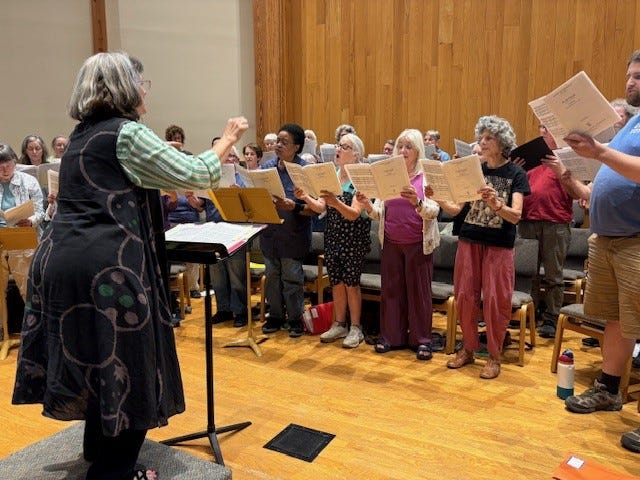
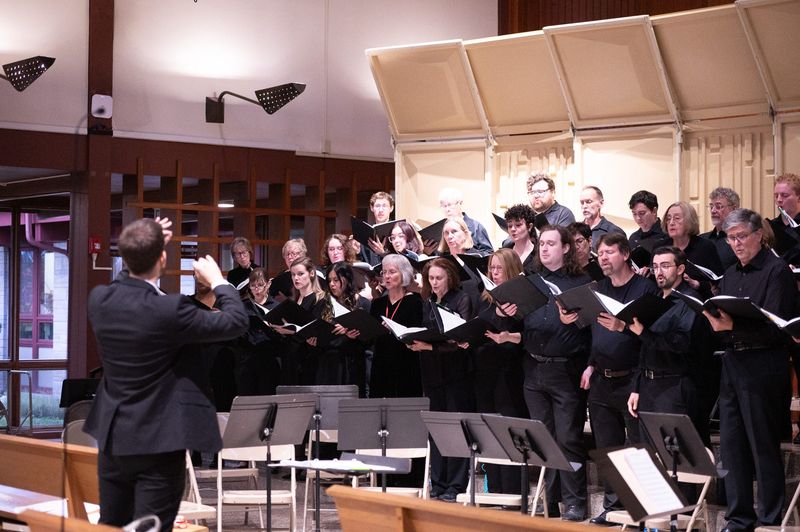
Betsy Burleigh will prepare the chorus, which includes several singing organizations. Among those are the Bloomington Chamber Singers (Caio Guimarães F. Lopes, artistic director), Voces Novae and the choir of the Unitarian Universalist Church (Sue Swaney, director of the last two). Additional local choirs will also sing. The soloists are Natalie Friedrich, Esther Jo, Suro Kim and Stephen Stavnicky.
Bloomington Chamber Singers began in 1970 and now has roughly 50 members from differing backgrounds. Many are music professionals or have studied voice. Singers audition in August; visit chambersingers.info.
Voces Novae is a Bloomington chamber choir that offers the unexpected, giving newness to old masterpieces as well as preforming new works. Unitarian Universalist Church of Bloomington’s choir will also sing, as will members of additional vocal groups.
‘Solos pop up’
Beethoven’s Ninth Symphony is generous with trials for instrumentalists. “The string parts are tricky,” Lafferty said, and “solos pop up. The fourth horn has a really important solo in the third movement.” And organizing vocal soloists and a full, multi-trained chorus demands attention. The decision to combine choruses and orchestra came from BSO’s music director, Hasegawa — who will conduct the orchestra — and the BSO programming committee. “It’s a celebration of bringing community together,” Hasegawa said on a YouTube post.This is BSO’s final concert of their 56th season. Playing at the MAC is another first for BSO. Audiences usually find them at Switchyard Park or the Buskirk-Chumley Theater. “But there’s no way either venue would work for this scale of performance,” Lafferty said.While organized well in advance, this concert named “Resounding Joy” comes at a knotty time for BSO. Music director Hasegawa leaves for another conducting position soon. “We’ve actually used some of these symphony rehearsals,” Lafferty said,“ to audition the finalists (for a new director).”
Lafferty will play second trombone, “or as I like to call it, Nanki-Poo, if you’re familiar with ‘The Mikado.’ Our first trombonist (Eli Brauner) actually went out and bought an alto trombone for the performance. That’s some dedication!”
“We are all using the same score,” Lopes said. “Not only a generic score for the piece, but a score that was prepared and marked for this very occasion (by Betsy Burleigh). That means that the likelihood of the choirs having similar musical ideas, articulations and sound is very high.
“This piece is more difficult than many of our choirs will normally sing,” Swaney said, “and I think that is good for us.”
‘When people sing together their heartbeats synchronize’
“When people sing together their heartbeats synchronize,” said Jane McLeod, board president of Unitarian Universalist Church of Bloomington and a soprano in that choir and in Voces Novae. “The (Beethoven’s Ninth) is a challenge for amateur sopranos who do not necessarily sing every day, because Beethoven has us singing so high in our range for so long.
“For many of the singers, including myself, it will be the first time we’ve sung in a full symphonic chorus, and we are really excited,” said Claire Tafoya, a soprano in the Bloomington Chamber Singers and an upcoming, and past, board member.
“It turns out you don’t have to live in a big city to perform this piece with a full orchestra and chorus. Bloomington can do it, too.”
If you go
WHAT: Bloomington Symphony Orchestra’s Ryo Hasegawa conducts Beethoven’s Ninth Symphony with full orchestra and 100+ singers, plus “When It Blooms,” a world premiere piece by Daixuan Ai.WHEN: 7 p.m. May 16. A pre-concert talk is at 6:15 p.m.
WHERE: Indiana University Musical Arts Center, 101 N. Eagleson Ave.
TICKETS: Adults $25, students $12, children under 18 attend free. Visit https://am.ticketmaster.com/iumac/buy/ism/TTI2MDUxNg==
Note: The writer sings with and has served on the board of the Bloomington Chamber Singers and has sung in the choir of the Unitarian Universalist Church of Bloomington.
This article originally appeared on The Herald-Times: ‘Greatest of symphonies’ at IU’s MAC with Bloomington Symphony Orchestra
Reporting by Connie Shakalis, For the Herald-Times / The Herald-Times
USA TODAY Network via Reuters Connect