By Neil J Kanatt and Waylon Cunningham
April 29 (Reuters) – Chipotle Mexican Grill posted a surprise rise in first-quarter comparable sales on Wednesday, as the burrito chain’s cheaper offerings and revamped menu brought back diners to its outlets.

Shares of the company rose about 5% in extended trading.
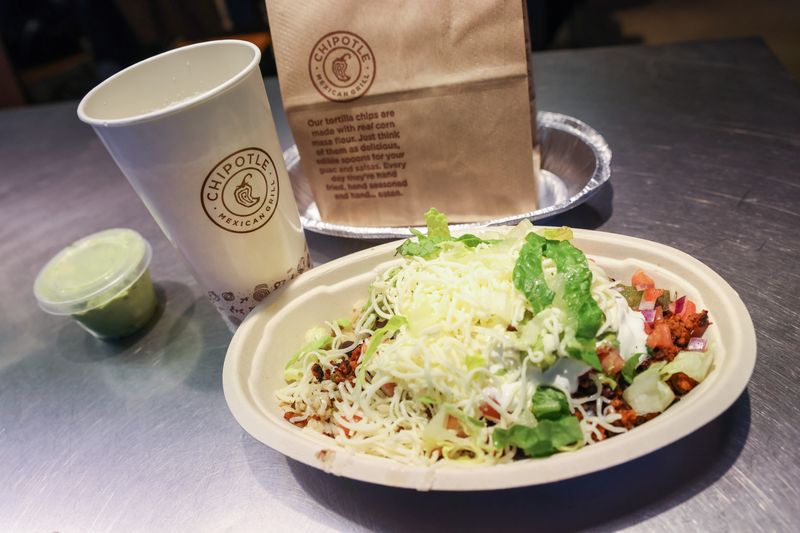
Consumer preferences have shifted toward protein-packed meals and healthier, less-processed food options, benefiting the restaurant chain known for its burrito bowls and salads, even as macroeconomic uncertainty pressures spending, especially among lower-income households.
The company reported a 0.5% rise in quarterly comparable sales, compared with analysts’ expectations for a 0.8% decline, according to data compiled by LSEG.
Even as prices rose, higher customer traffic helped sales, with transactions up 0.6%, although spending per order fell slightly. Analysts have attributed the decline to the popularity of smaller portion sizes.
Smaller, cheaper additions, such as a $3.50 single taco and a $3.80 high-protein cup, are resonating with cost-conscious diners and those seeking smaller portions amid growing adoption of weight-loss drugs, Consumer Edge analyst Michael Gunther said.
Overall visits to Chipotle locations rose 5.8%, fueled by its “Recipe for Growth” initiative to reverse the sluggish demand of 2025 by improving operations, boosting marketing, and refreshing the menu in February with the reintroduction of its Chicken al Pastor dish, according to placer.ai.
Restaurant-level operating margins in the quarter fell to 23.7% from 26.2% a year ago as input costs on beef and labor rose.
Beef prices, Chipotle’s largest commodity cost, recently hit a record high due to depleted cattle supplies following prolonged droughts.
Chief Financial Officer Adam Rymer said the company would seek to offset some of its increased costs through higher sales and slight menu price increases, which management pegged at about 1–2% over the full year, less than the industry average.
The U.S. restaurant industry raised menu prices by about 4% in the last year, according to the U.S. Consumer Price Index.
“At a time when consumers are under pressure, we want to be cautious about price,” Rymer told Reuters.
He said Chipotle’s business model of owning its restaurants, as opposed to the franchise model most U.S. restaurant companies use, allows them to be more patient with price increases.
The company reaffirmed its annual sales forecast, but said it sees delays to Middle East restaurant openings due to geopolitical conflicts.
Chipotle’s positive sales result mirrors those of rival Yum Brands’, where cheaper meal options drove demand at the Taco Bell and KFC chains.
(Reporting by Neil J Kanatt in Bengaluru; Editing by Tasim Zahid)