As you go about living your day-to-day life, do you have a theme song? Has it changed over the years and decades? Do you remember the past through its essential music?
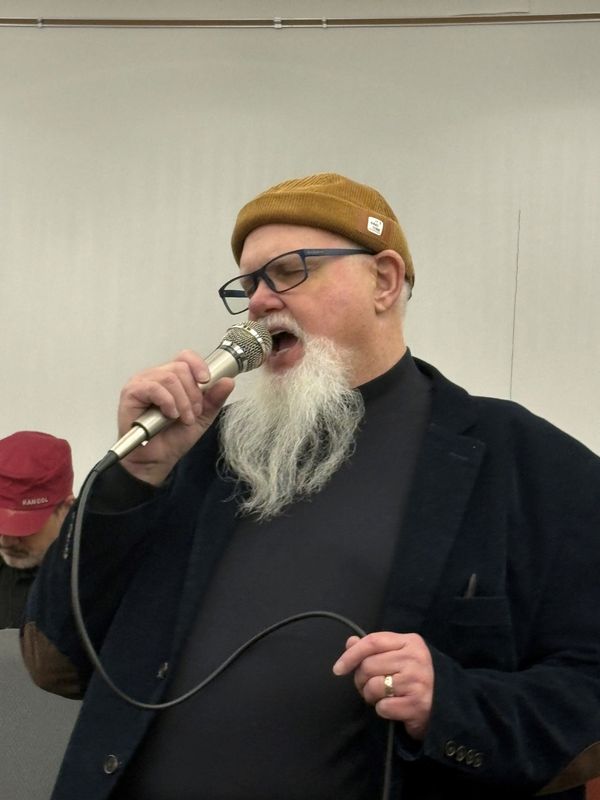
M.L. Liebler’s personal soundtrack covers 72 years of his journey so far, from growing up in blue-collar metro Detroit to becoming a well-known poet, arts activist, university professor and Motor City icon.

He writes about those experiences in a new memoir titled “Hound Dog: A Poet’s Memoir of Rock, Revolution, and Redemption” that has chapters (or track listings, as he dubs them) named after music greats like Elvis Presley, the Beatles, Bob Dylan, Jimi Hendrix and Eminem.
“Hound Dog” is a lively, yet introspective read that describes Liebler’s lifelong devotion to creativity and artistic collaboration, fueled by some of the best rock rebels of his era.
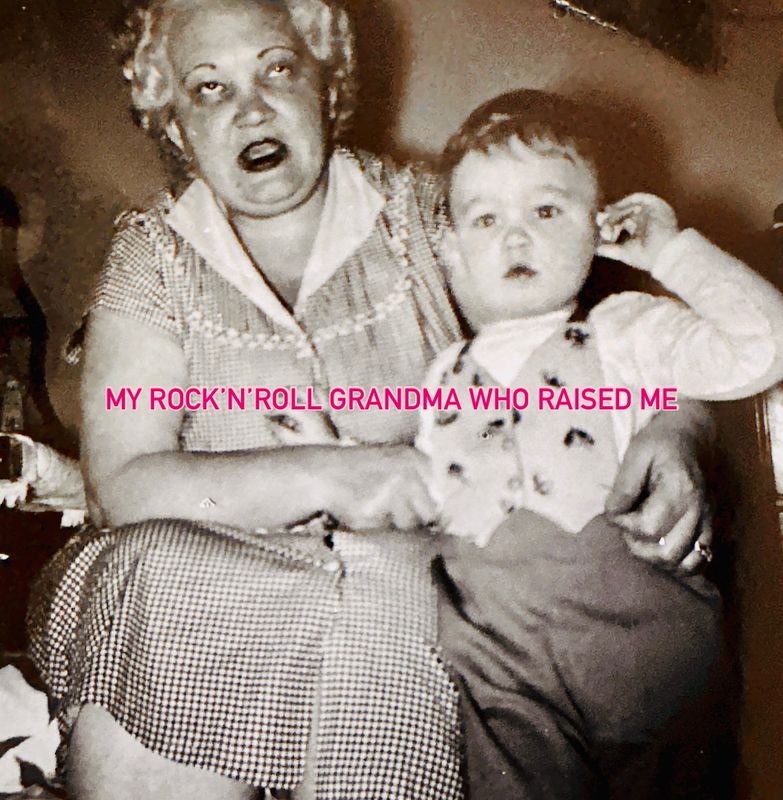
“At the age of 4, Grandma lifted me onto the rock’n’roll bus, and I have been ‘on the bus’ ever since, as my late friend Ken Kesey would say,” he writes, citing his both his Elvis-loving maternal figure and the counterculture author of “One Flew Over the Cuckoo’s Nest.”
Liebler is having a book release party at Aretha’s Jazz Café inside Detroit’s Music Hall at 7 p.m. Thursday, April 23. The free event will feature performances by Liebler’s Magic Poetry Band and other groups.
As a faculty member at Wayne State University since 1980 and the current director of WSU’s Humanities Commons and the Detroit Writers Guild, Liebler is a force in the academic world. He also is the founding director of the National Writer’s Voice Project in Detroit and the Springfed Arts: Metro Detroit Writers Literary Arts Organization.
Those are just a few of the deep cuts on his career soundtrack. He has won many awards for his poetry and landed several times on the annual Michigan Notable Books lists, including in 2010 for an anthology he edited, “Working Words: Punching the Clock and Kicking Out the Jams.” In 2005, he was declared the first poet laureate of his hometown, St. Clair Shores. On any given week, he is either hosting literary or music gatherings in Detroit or traveling to perform his poetry outside the state.
When asked to describe the multi-hyphenate roles that define him, he says: “One thing I can say in a description of myself is the reason I do so many things all at once is I never look back and reexamine something. I just keep moving forward.”
While that sentiment may be true of his schedule, it doesn’t apply to “Hound Dog,” which Liebler began working on 15 years ago. It relies on music and memories to examine how certain artists have affected him through their songs and albums and, sometimes, through their friendship. One of his friends, the late Woodstock great Country Joe McDonald, wrote the book’s foreword.
The memoir’s first chapter, “Elvis,” focuses on how Liebler, born to a single teenage mom, was raised by his grandfather, one of the first UAW members to participate in the 1937 Dodge Main Strike, and his grandmother, whom he calls “a cool, hip, working-class woman who enjoyed what she enjoyed.” Her likes included the music of Presley, the Ink Spots and Pearl Bailey, to name a few.
“The Beatles” chapter contains Liebler’s vivid recollection of watching the Beatles perform for the first time on American TV on “The Ed Sullivan Show” in 1964. Girls in the audience screamed! I screamed! I swear I heard the neighbor girl screaming through the closed windows! My hair grew. My patience grew. My world breathed in deep. ALIVE!”
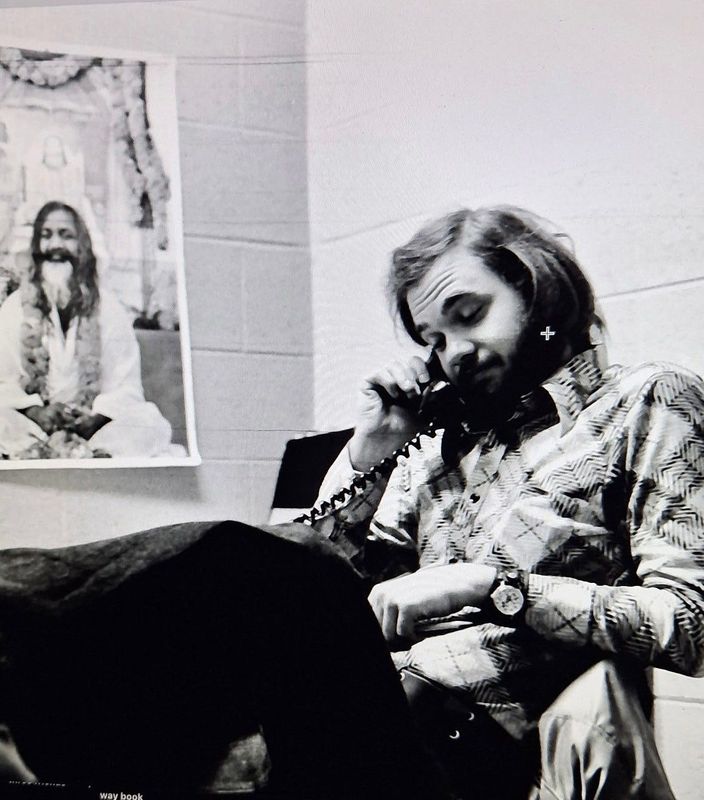
The book revisits tragedies like the first young man from St. Clair Shores to die in the Vietnam War (mentioned in the chapter “Bob Dylan & Country Joe McDonald”) and sheer happiness like Liebler meeting his future wife, Pam, and deciding in junior high that he would marry her (a prediction revealed in the “Paul McCartney” chapter). As he writes: “I realized I never wanted to be apart from this girl. I was right.”
In several instances, “Hound Dog” details how Liebler’s life has intersected with figures like songwriter, record producer, musician and friend Al Kooper (who played the distinctive organ riffs on Dylan’s “Like a Rolling Stone”) and alternative rocker Bob Mould, then with Husker Du, whose conversation with Liebler in 1987 about finding sobriety encouraged him to take the same path.
At the event where he met Mould — a weeklong celebration of Beat author William Burroughs held in Lawrence, Kansas — Liebler recounts hanging out at a bar with ’60s counterculture figure and psychedelic drug advocate Timothy Leary, who then remembered he was supposed to be giving a talk with Dead Kennedys singer-songwriter Jello Biafra.
“We get in the car, and he’s in the back seat,” says Liebler during a phone interview. “We pull up and (Leary) says, ‘You guys want to come in and see this?’ We said no. We literally pushed him out of the car in front of the theater and went back to the bar.”
Hanging out with Timothy Leary before his booking with Jello Biafra sounds like a Mad Libs of 20th century youth culture, but it is Liebler’s true story — and he has many more. “None of this was supposed to happen,” he says. “But it did and one thing led to another. I think you can almost, with all these various people, play Six Degrees of Kevin Bacon with me.”
One of Liebler’s most compelling chapters, titled “Blair Channels Steve Wonder” for the Detroit musician and poet and the Motown legend, delves into his overseas travels as a participant in the U.S. State Department’s cultural programs. He visited Afghanistan in 2012, a trip that included meeting in Kabul with members of the Afghan Women’s Writing Project after being driven in an armored SUV to an undisclosed location.
Says Liebler: “I thought, I’m not going to tell my wife all of this because this is pretty dangerous stuff. I always had to wear a bulletproof vest and a helmet, fly on helicopters everywhere with machine guns shooting.”
Traveling to Afghanistan was part of Liebler’s credo of seizing the day through opportunities that may arise. “I tell my students … when you’re a writer, if someone asks you to do something, anywhere in the world, always say yes.”
Asked how he feels about the America of 2026, which is so different from key decades like the 1960s and 1970s, Liebler voices his concerns about the Trump administration’s attacks on civil liberties and dissent.
“Growing up in the ’60s and early’ 70s with Vietnam and all the other changes, the Civil Rights Movement and everything like that, there were definitely hard and strained moments. But in the back of all of it in our minds, we knew we could publicly protest,” he says. “You could write about it. You didn’t have to worry about something reporting you to the government or anything like that.”
Says Liebler about the free expression that he has always practiced and encouraged in others: “I don’t want to give up the America that gave us Elvis, Ed Sullivan, Howdy Doody, the blues, jazz. I don’t want to just throw that out the window because of one guy. I don’t want to give that away. It’s too precious.”
Contact Detroit Free Press pop culture critic Julie Hinds at jhinds@freepress.com.
M.L. Liebler book release party for ‘Hound Dog’
With performances by The Magic Poetry Band, Jackamo, and the Plushies
7 p.m. Thursday, April 23
Aretha’s Jazz Cafe
Music Hall,
350 Madison, Detroit
Free
This article originally appeared on Detroit Free Press: From Elvis to Eminem, Detroit poet M.L. Liebler maps his life in a memoir
Reporting by Julie Hinds, Detroit Free Press / Detroit Free Press
USA TODAY Network via Reuters Connect