Florida Highway Patrol troopers drew their guns and ordered Deanne Rollison out of her car and onto the ground. Over their shouting and a barking K-9, Rollison could hear her 6-year-old daughter crying from the back seat.
Troopers had mistaken her 2019 Toyota Camry for a 2016 Toyota Corolla involved in a shooting in Columbia County that day in July 2024 — though the car model and occupants did not match the suspect’s description, court records show. A dozen law enforcement vehicles, some from other agencies, swarmed the scene, Rollison recently told TCPalm.

“I feared my daughter might make any movement,” said Rollision of Tallahassee. “I was afraid they’d kill my baby.”
Rollison said she thinks she was stopped because she is Black, since that is the only detail she said matched the suspect’s description. She is not alone in that belief.
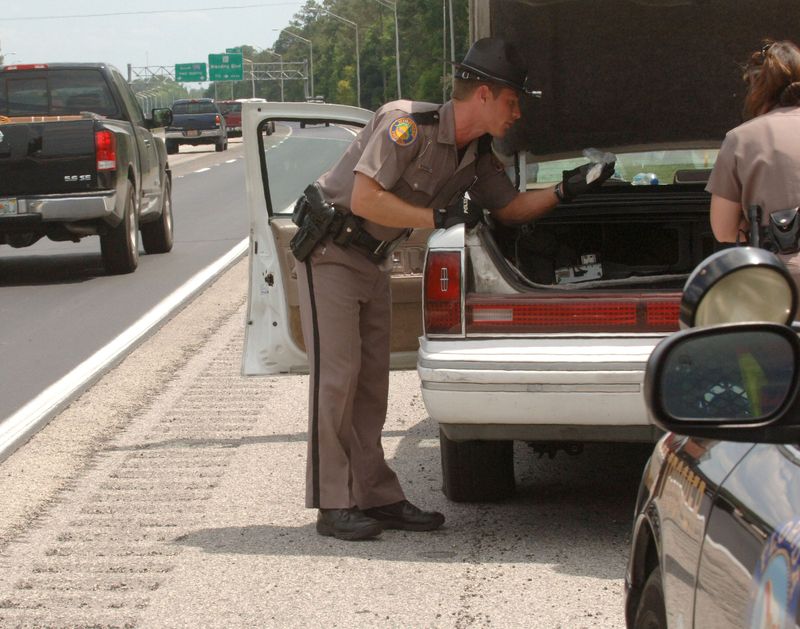
FHP stops and searches Black drivers more than White drivers, and troopers are less likely to find contraband when they do, according to a TCPalm analysis of over 1 million FHP traffic stops from 2024-25.
What FHP stats say about racial bias toward Black drivers
TCPalm’s findings are significant because research shows a major indicator of an agency’s racial bias is how it searches groups of people differently. The findings include:
The disparity is higher in some counties than others. For example, Black drivers were twice as likely to be stopped than White drivers in Nassau County and 78% more likely in Lafayette County. Both counties’ Black populations are 7% and 14%, respectively, according to Census Bureau data.
“There has to be something more than the race of the driver to warrant a stop,” said James V. Cook of Tallahassee, one of the few civil rights lawyers who pursues cases against law enforcement agencies. “It shouldn’t get to that point where people are placed on the ground at gunpoint.”
FHP finds contraband on a coin toss
Every time law enforcement stops Charlie Ray Mayhue, he calls his wife or mother so someone knows where he is and what’s happening to him. That’s because FHP troopers have stopped and searched the 24-year-old Orlando resident about three times, even though he did not have contraband and was stopped only for speeding.
“It’s an invasion of privacy,” Mayhue told TCPalm. “One guy was super determined that I had something in the car.”
After not finding any contraband, troopers never have apologized to him, he said. They’ve simply told him he’s free to go.
How an agency searches one group of people differently than another can say more about potential racial discrimination than about the people getting stopped, said Jack McDevitt, author and former criminology professor at Northeastern University in Boston, Massachusetts.
The real distinction lies in how many of those searches find contraband, such as drugs or illegal weapons.
“Across the country, the biggest disparities are in who is searched,” McDevitt said. “Some officers’ perceptions of who commits crimes can be tied to their race and ethnicity.”
How FHP searches drivers
The most common reason Black drivers are stopped before they are searched is for window tint, FHP records show. Speed is the second. Not wearing a seatbelt is the third.
Reasons for mandatory searches include when a suspect is arrested or a vehicle is being towed and law enforcement must take inventory of its contents before impounding it.
Discretionary searches are based soley on a trooper’s subjective suspicion that the driver may be involved in a crime, but they are required to log their reasons.
“Physical / visual indicators” is the top rationale, records show.
FHP history of racial profiling
FHP policy prohibits troopers from treating people differently based on “race, ethnicity, gender, age, education level, religious affiliation, sexual orientation or financial status.” It also gives troopers discretion when writing warnings “in cases where minor traffic violations are observed.”
FHP’s website says it filters for bias and discriminatory behavior at “every step of the application process,” including psychological screening, polygraph test and a background check. However, the agency has been accused of racial profiling since the War on Drugs in the 1980s.
In 1985, the Florida Department of Highway Safety and Motor Vehicles, which oversees FHP, was blatant in its racial profiling, advising troopers to look out for drivers who:
In response to the backlash, Florida Gov. Jeb Bush directed FHP to begin collecting traffic-stop data in 2000.
More recently, a 2021 study by the nonpartisan American Economic Association found 42% of FHP troopers practiced racial discrimination based on factors such as the driver’s location, employment, apparent race and whether they spoke Spanish or English with an accent.
The story continues below
The practice or perception of racial profiling causes “resentment and distrust of the police, particularly in communities of color,” according to the National Institutes of Justice. That erosion of trust makes people of color less likely to report crimes, confide in police officers, be witnesses at trials or serve on juries.
Despite Rollison’s experience with FHP, she said she does not oppose law enforcement overall.
“There are good officers out there; but some go too far,” Rollison said. “I don’t want to teach my daughter that all police are bad. There might be a time she needs to call 911.”
Jack Lemnus is a TCPalm enterprise reporter. Contact him at jack.lemnus@tcpalm.com, 772-409-1345, or follow him on X @JackLemnus.
This article originally appeared on Treasure Coast Newspapers: Florida FHP searches Blacks more than Whites and finds less contraband
Reporting by Jack Lemnus, Treasure Coast Newspapers / Treasure Coast Newspapers
USA TODAY Network via Reuters Connect