By Shivangi Lahiri
April 22 (Reuters) – Australia’s Treasury Wine Estates said on Wednesday it will shift to a new regional operating model on October 1 to simplify its structure and lower costs, lifting shares of the luxury winemaker to their highest point in more than two months.

Shares of Treasury Wine were up 19.8% at A$4.85, as of 0013 GMT, and marked their strongest intraday trading session since May 20, 2014. The stock hit its highest level since February 20.
The company, which is among the top five winemakers by volume, said it has secured A$300 million ($214.83 million) in new debt commitments to refinance future maturities and bolster liquidity.
Under the new model, operations will be structured across four regions: the Americas; Australia, New Zealand and Europe; Greater China; and emerging markets, which include the rest of Asia, the Middle East and Africa.
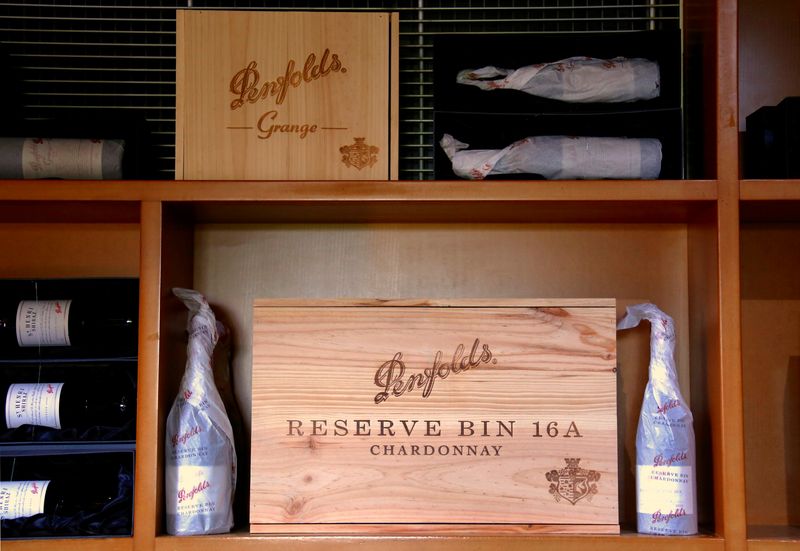
The owner of the Penfolds label said the new model aims to improve accountability, speed decisions, sharpen market execution and customer focus, and lower costs through a simpler structure.
“While TWE hasn’t publicly disclosed specific headcount numbers impact, the programme explicitly targets a ‘streamlined corporate centre’ responsible for group strategy, capital management, and governance – language that typically signals fewer corporate layers,” said Marc Jocum, senior product and investment strategist at Global X ETFs.
Treasury Wine reported stronger third-quarter depletions across key markets, supported by Penfolds strength in China, and added that the trend should also support efforts to reduce customer inventories in China and the United States.
The winemaker continues to project second-half earnings before interest, tax, SGARA and material items to exceed first-half levels, and does not expect higher costs arising from the Middle Eastern conflict to have a material impact in fiscal 2026.
Analysts at Citi revised their rating to “neutral”, citing that new debt commitments “collectively might incrementally reduce near-term concern on the balance sheet”.
($1 = 1.3965 Australian dollars)
(Reporting by Shivangi Lahiri in Bengaluru; Editing by Maju Samuel, Vijay Kishore and Sherry Jacob-Phillips)