Detroit — Michigan Democrats rallied their largest group of delegates in the party’s history at a state convention Sunday, even as they attempted to mend divisions that emerged during the Israel-Hamas war in Gaza.
Delegates to the Michigan Democratic Party’s endorsement convention on Sunday elected a slate of largely progressive candidates, picking Lt. Gov. Garlin Gilchrist II as their nominee for secretary of state, Washtenaw County Prosecutor Eli Savit as the nominee for attorney general and unseating incumbent University of Michigan Regent Regent Jordan Acker in favor of Dearborn attorney Amir Makled.

Gilchrist will face off in November against the Republican nominee, Macomb County Clerk Anthony Forlini, while Savit will compete against the GOP nominee for attorney general, Eaton County Prosecutor Doug Lloyd, as well as a handful of third-party candidates.
About 7,252 delegates participated in Sunday’s convention at Huntington Place in Detroit, a record for the party, Michigan Democratic Party Chairman Curtis Hertel said.
The state Democratic Party declined Sunday to disclose the vote totals for its nominees at the convention, which is held every four years for party activists to pick nominees for every statewide office except governor and U.S. Senate in lieu of a primary election.
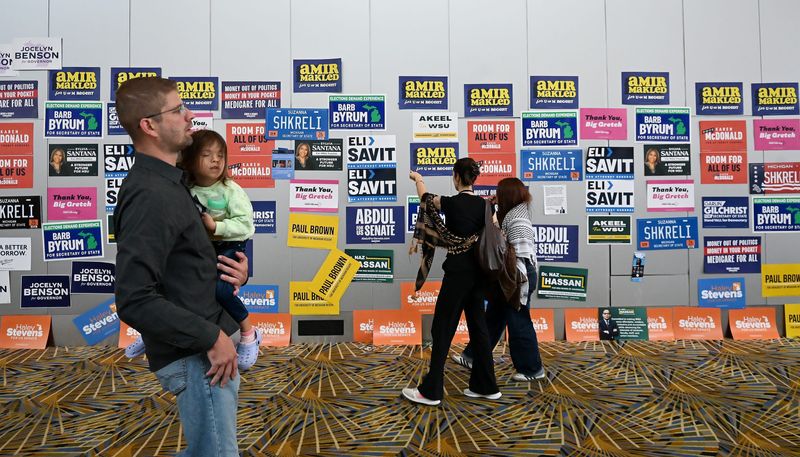
The chosen nominees come as the state approaches massive midterm elections, in which every statewide seat is up for grabs in the November election, as well as the 148 seats in the state House and Senate, where Democrats hope to capture a majority in both chambers.
In caucus rooms at Huntington Place, Democratic leaders urged unity behind messages of affordable health care, accessible housing, opposition to President Donald Trump’s executive actions and a commitment to sweeping statewide seats in November. There was also recognition, in some meeting rooms on Sunday, of the issues that divided the party in 2024 amid protests of the Biden administration’s support of Israel in the Israel-Hamas war, and the need to fully mend those divisions in advance of the Nov. 3 election.
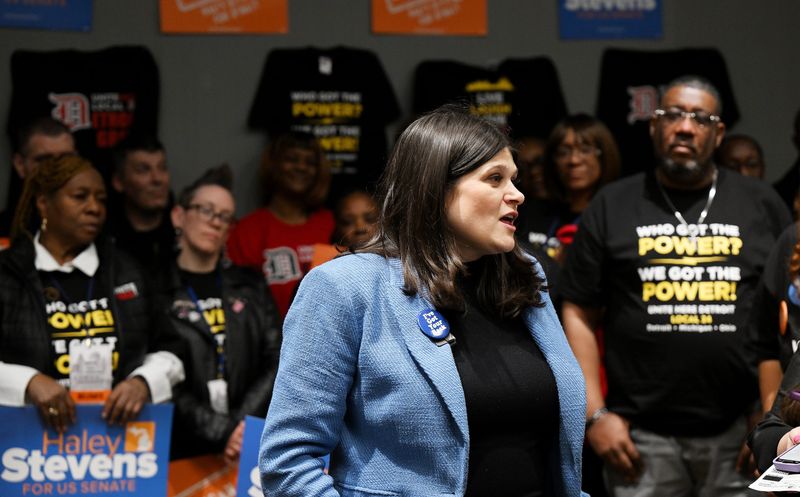
During the convention program on Sunday, the Israel-Hamas conflict appeared to remain a sensitive issue among some convention-goers. Protesters shouted repeatedly for a point of order, with one holding a sign that said: “Put the Palestine human rights resolution back on the agenda.” And the loudest booing, by far, occurred when U.S. Rep. Haley Stevens of Birmingham and Acker of Huntington Woods, both pro-Israel candidates, were announced on stage in their respective U.S. Senate and Board of Regents races.
Malinda Salameh was among those booing at Huntington Place, in part to protest the candidates’ support from the American Israel Public Affairs Committee (AIPAC). The 31-year-old University of Michigan alumnus registered too late to be a delegate on Sunday, but attended as a guest and intends to vote in the U.S. Senate primary. Stevens has long been aligned with AIPAC, while her two Democratic primary rivals, physician Abdul El-Sayed and state Sen. Mallory McMorrow, have sworn off AIPAC’s campaign cash.
“Unfortunately, they need to understand that we as people cannot stand for this anymore,” Salameh said. “We don’t want any foreign interests messing with our politics. We want money out of politics. And I think that people are sad because they’re not being heard.”
During Acker’s nomination speech, as crowds booed, Wayne County Commissioner Jonathan Kinloch warned that the delegates were not learning from the party’s 2024 electoral losses.
“There’s one thing that November 2024 should have taught us, is that the enemy is not in this room,” Kinloch said.
In caucuses, Democrats reckon with a divide
Abbas Alawieh, a cofounder of the Uncommitted National Movement, active in the 2024 election, told delegates, while campaigning for a state Senate seat Sunday morning, that he remained determined to ensure the Arab-American and Downriver communities are represented within the party.
He told The Detroit News Sunday that the party had done a good job over the past two years in making more room for all members. The record attendance, he said, is proof the Michigan Democratic Party is “trying to be the big tent party and we’ve got to continue growing that.”
“It’s clear that anti-war voters of all stripes, including Arab Americans in Michigan, are going to be critical to our path forward as Democrats,” Alawieh said. “As Democrats, we have to be proactive about reaching out to disaffected voters and voters that we’ve lost to the Republican party.”
U.S. Rep. Rashida Tlaib, D-Detroit, pushed delegates to ask candidates seeking their vote real questions about actions to combat neighborhood pollution or their stances on federal actions in the Middle East. Pushing for those discussions among the candidates will ultimately help improve the party, she said.
“We’re not anti-Democratic Party,” Tlaib said. “We’re trying to make the Democratic Party better.”
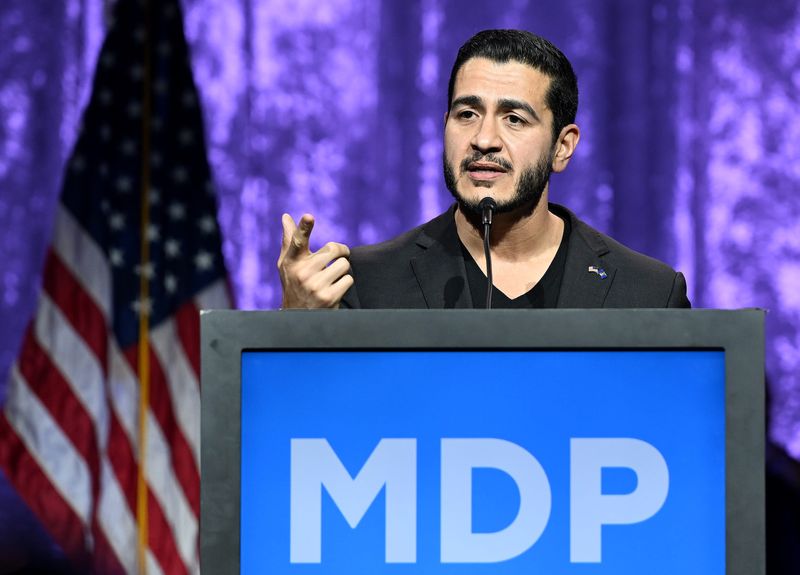
El-Sayed, a Muslim Democrat from Ann Arbor running for the U.S. Senate, told members of the party’s Jewish Caucus that he would focus on issues affecting all communities, including allying against “anti-religious bigotry.”
“A lot of folks want us to pay attention to things that we might disagree on happening 6,000 miles away rather than reminding us about the things we agree on happening right here in our state,” El-Sayed said.
Regent candidates debate ‘elephant in the room’
Earlier in the day, the state party’s Jewish Caucus also heard from candidates who expressed a commitment to maintaining a place within the party for Jewish candidates and voters.
Acker, a Jewish Democrat fighting to retain his seat on the University of Michigan Board of Regents, and his fellow incumbent Paul Brown argued Acker had been targeted as a regent and in the nomination race. Brown called it the “elephant in the room.”
Acker and Brown were running to retain their seats against Makled, a Dearborn attorney who represented several students who faced charges after protests calling on UM to divest from weapons manufacturing and Israel.
Brown argued that Acker had borne the brunt of attacks during the campus unrest and the nomination campaign. His home and the law office where he works have been vandalized.
“There’s one difference between Jordan and I,” Brown told members of the Jewish Caucus, “and that is, Jordan is Jewish, and I am not.”
Acker, a personal injury lawyer, said he wouldn’t be cowed by efforts to oust him from the board and credited Jewish Democrats with being significant leaders in civil rights fights over the decades.
“We have a message that we can send today, that we will not be pushed out of this coalition,” Acker said.
Makled, for his part, encouraged members of the Arab American Caucus also to hold their ground within the party.
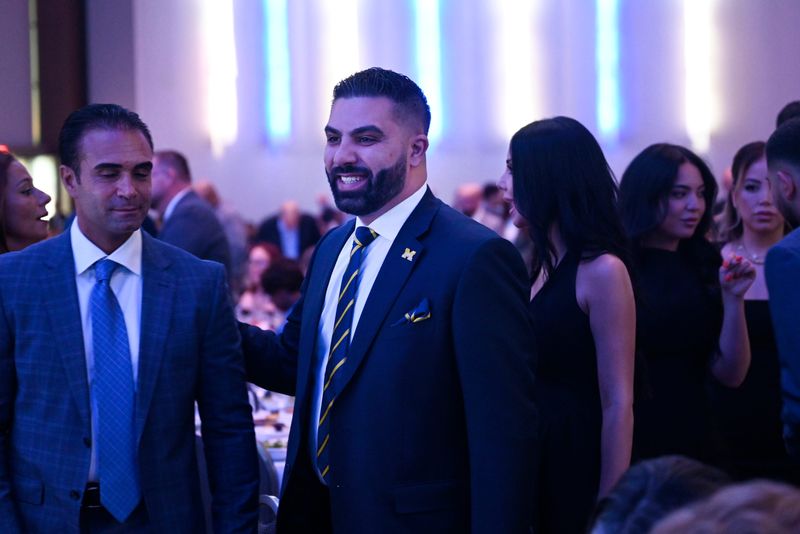
“We want to make sure this electorate, this convention is giving an image of unity to the Democratic Party, that we’re collectively trying to push the better foot forward, but we’re also not afraid to stand up and speak for our issues as Arab Americans,” Makled said.
The contest between Makled and Acker was particularly heated.
Makled was criticized for reposting and later deleting praise for Hezbollah, designated a terrorist group by the U.S. State Department, and antisemitic remarks on his social media account.
And The Guardian on Friday reported that Acker appeared to have made obscene sexual comments about a Democratic Party strategist and lewd comments about a female UM student in Slack messages.
When asked Sunday about the messages by The News, Acker said the allegations were “ridiculous” and “fake.”
Acker’s attorney, Ethan Holtz, later sent a statement to The News alleging Acker “has never been on Slack” and that the messages contained elements that appeared to be “doctored.”
eleblanc@detroitnews.com
This article originally appeared on The Detroit News: Michigan Democrats seek to mend old divides at contentious convention
Reporting by Beth LeBlanc, The Detroit News / The Detroit News
USA TODAY Network via Reuters Connect