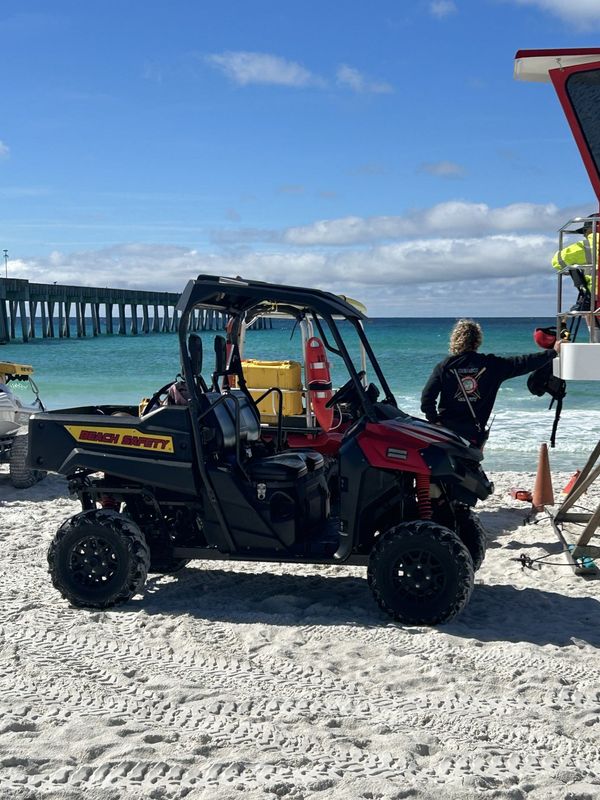
PANAMA CITY BEACH − Local lifeguards kept the coast safe in March despite an increase in spring breakers.
March is historically known for being one of the busiest tourism months for the Panama City Beach area. Each year massive crowds of spring breakers flock to the area to enjoy the Gulf Coast. While this boosts the local economy, it also creates larger crowds of people on the beach.

With more people comes an increased chance of water emergencies. That said, local lifeguards were so proactive during the month that only one person needed rescuing. Here’s what we know:
What were the stats?
According to past reports, lifeguards with Panama City Beach Fire Rescue’s Beach Safety Division performed 63,694 preventative actions, 11 public assists, only one rescue and no drownings during March. These are among the main statistics tracked by the department.
Preventative actions are when lifeguards educate beachgoers to prevent them from needing assistance. Public assists are when lifeguards enter the water to prevent rescues. Rescues are when someone is pulled from the water who likely would have otherwise drowned.
When rescues are low, that means lifeguards are doing a good job of informing beachgoers of risks and preventing emergencies.
What is the biggest risk?
The main risk to beachgoers swimming in the Gulf along PCB is rip currents. These are fast-moving currents created by channels in surrounding sandbars. These channels often run perpendicular to the shoreline and cause water to funnel faster out into deeper waters of the Gulf.
The best thing someone caught in a rip current can do is swim parallel to shore, meaning toward the left or right of where they are in distress. If they do this, they often can break free from the current, even sometimes landing on a sandbar where they can stand. If they still cannot stand, they will at least be in calmer water where it will be easier to make it back to shore.
It’s important to note that the color of beach safety flags throughout the area are not based on wave heights, but the strength of rip currents.
What is the beach flag warning system?
The beach flag warning system is the city’s first line of defense when it comes to preventing water emergencies. It’s also a great way to know what current water conditions are like.
Common colors used in beach flag warning systems to identify rip current conditions are: a green flag for a low hazard, a yellow flag for a medium hazard, one red flag for a high hazard and two red flags for very dangerous conditions.
Bay County and Panama City Beach, however, never fly green flags because local officials have said they believe beachgoers should be cautious anytime they enter the Gulf. It is illegal year round in Bay and PCB to enter the Gulf under double-red-flag conditions. Violators can be ticketed up to $500.
Those interested in staying up to date on beach flags can sign up for daily text alerts by texting “PCBFLAGS” to 888777.
This article originally appeared on The News Herald: Check it out: PCB lifeguards had only 1 rescue in March, no drownings
Reporting by Nathan Cobb, Panama City News Herald / The News Herald
USA TODAY Network via Reuters Connect