Dr. Pam Vogel is right about one thing: accountability in education matters. Where her arguments fall short is in the assumption that private schools — particularly those participating in Iowa’s Education Savings Account (ESA) program — lack it.
In reality, private schools are accountable in ways that are both rigorous and responsive to families. More importantly, her argument treats state accreditation as the only meaningful standard, without ever explaining why that should be the case.

Many private schools in Iowa are accredited through independent accrediting agencies recognized by the State Board of Education. These organizations require in-person site visits, continuous improvement, and demonstrated progress toward goals, including the one that matters most: student outcomes. According to the Iowa Association of Christian Schools (IACS) 2025/2026 Annual Survey, most of Iowa’s protestant schools report accreditation through organizations such as Christian Schools International, the Association of Christian Schools International, and National Lutheran School Accreditation.
That raises a simple question: Why should government accreditation be assumed to be more rigorous than independent accreditation?
Dr. Vogel never answers that question — she simply assumes it. But independent accreditation is a higher bar of accountability, often more specialized, and (unlike state accreditation) occasionally results in schools losing their accreditation. The system works. This is not a lack of accountability — it is serious, layered accountability, where schools answer to accrediting bodies, governing boards, and ultimately, families.
That last piece — families — is central.
Critics often argue that “market accountability” only works if families can easily leave. It’s a fair concern in areas with limited options or for families with financial constraints. But this is precisely where the ESA program, open enrollment, and other options change the equation.
By making private education more affordable, ESAs expand access and increase demand. And when demand increases, supply follows.
We are already seeing that play out across Iowa.
In fact, 186 rural public school districts have seen an increase in students enrolling in nonpublic schools since the 2022-2023 school year, and 25 districts that previously had no participation now do.
At the same time, 60% of IACS schools now identify as rural, reflecting a steady expansion of private education into communities that previously had limited or no access.
Choice is not fixed — it is increasing.
Ames illustrates how this works in practice. While not a rural community itself, it functions as a regional hub for surrounding areas. Families there have access to ESA-eligible options like St. Cecilia School and Ames Christian School, both of which serve students from multiple districts.
St. Cecilia School enrolls 127 students from six different public school districts. Ames Christian School enrolls 105 students from 11 different districts. Additionally, students who reside within the Ames Community School District are enrolled in seven different accredited nonpublic schools.
That is not limited access — that is regional opportunity. Families are already crossing district lines to find the best fit, and schools are responding to that demand.
Financial barriers are also being addressed. ESAs, combined with school-based scholarships and tuition assistance, are making private education accessible to more families than ever before. Survey data shows these funding streams remain critical in helping lower- and middle-income families afford tuition.
This is how market accountability strengthens over time: more access, more participation, and more options.
Dr. Vogel also raises concerns about transparency. But accountability does not only flow through government reporting systems. Public schools report upward to the state. Private schools report outward — to families. If a school fails to deliver academically or operationally, families can and do leave. That is direct, immediate accountability.
Private schools are also serving increasingly diverse populations. Non-white student enrollment in IACS schools now mirrors the state average at approximately 15%, and most private schools provide additional financial aid to ensure access across income levels, especially for those with multiple children.
Finally, ESA funds are not unregulated. They are restricted to approved educational expenses and administered through state-managed systems. Accountability is essential. But it does not have to look identical across every type of school to be effective.
Private schools are accredited. They are evaluated. And they are chosen — or not chosen — by families every single year. That is accountability in action.
The real question for Iowa is not whether accountability exists. It’s whether we are willing to recognize that expanding opportunity — and trusting families — is one of the strongest ways to ensure every child has access to a quality education.
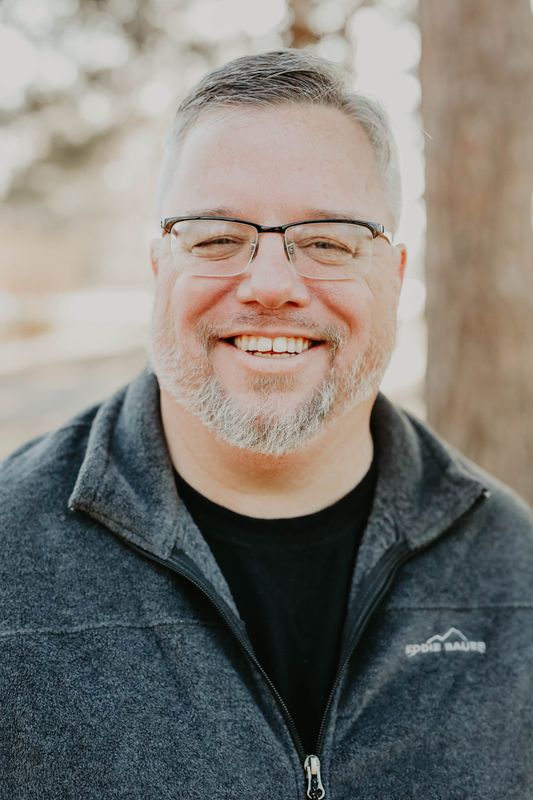
Shane Vander Hart is the communications director for Iowa Association of Christian Schools
This article originally appeared on Ames Tribune: Accountability, access, and the reality of school choice in Iowa | Guest Column
Reporting by Shane Vander Hart, Special to the Ames Tribune / Ames Tribune
USA TODAY Network via Reuters Connect