For Ieasha McNeal, the outcome of a court case may within months make a difference in how she balances expenses for even the most basic household needs.
A 37-year-old single mom, McNeal works full time in the health insurance field and had been doing OK until her overtime hours were cut, she told the Caller-Times on Feb. 16.

But when she lost those overtime hours, the financial demands led her to consider taking a second job — although, she added, that really hadn’t been very feasible when taking into account caring for her elementary-aged daughter.
Then, came along an unexpected opportunity — in her lease renewal, information about a workforce housing program.
The initiative subsidizes rent for households earning 80% or lower of area median income.
McNeal had hesitated to apply, she said — in part, because of embarrassment, and in part because she was doubtful she would be approved.
She isn’t eligible for government assistance, such as the Supplemental Nutrition Assistance Program, McNeal said; her income is considered high enough that she doesn’t qualify.
“I’m still sometimes grasping for straws even though I’m working,” she said. “There should be no reason that I’m working 40 hours a week and sometimes more, if it’s available, and still trying to figure out how to pay this and how to pay that.”
The workforce housing program, for her, dropped rent from around $1,900 per month to about $1,600 per month, McNeal said — a $300 difference that has had a significant impact on how she can allocate her budget.
“That means groceries,” she said. “That means the expensive electric bill can get paid or I can pay for aftercare for my kid. That means we get to eat, pretty much.”
Whether that lifeline may be taken away will likely rely heavily on the judicial system.
A controversial endeavor, the Workforce Housing Opportunity program had initially created by the Corpus Christi Housing Authority in 2024.
A civil case filed against it — now in mediation, according to court records — has left its future in question.
Emergency relief granted by judges, meanwhile, means the CCHA cannot undo the agreements associated with the program.
The pushback
The program had been intended to help people like McNeal — those whose salaries were too high to qualify for government assistance programs and traditional low-income housing but who don’t earn enough to consistently cover housing costs while also budgeting for other living costs, sometimes those as critical as adequate health care.
Generally, experts say the “workforce” descriptor has been designated as households with incomes ranging between 60% and 80% area median income, often those with employment such as nurses, teachers and first responders.
The workforce housing program had aimed to serve an income bracket that has historically been overlooked, supporters have said — the “rent burdened,” or people paying more than 30% of their income for housing and utilities.
Federal guidelines identify affordable housing as when a household is not spending more than 30% income on housing and utilities combined.
The workforce housing program was originally endorsed by a previous slate of Corpus Christi Housing Authority board members, three of whom were replaced amid consternation over the initiative.
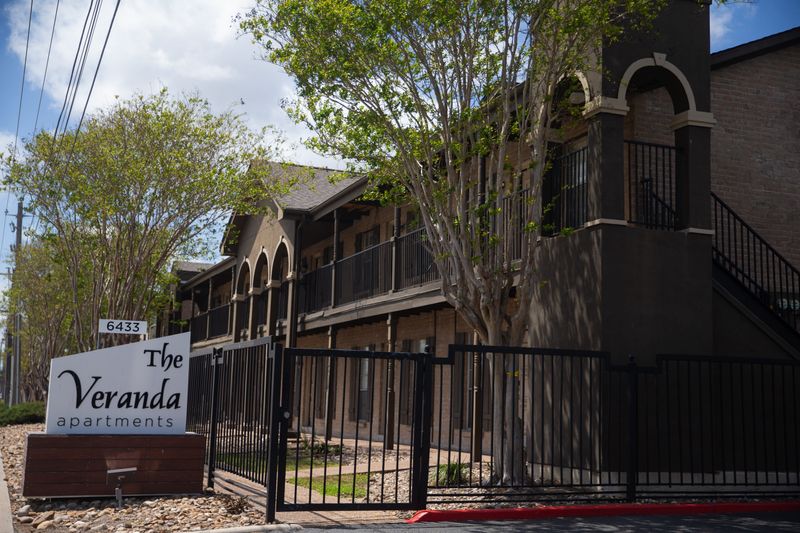
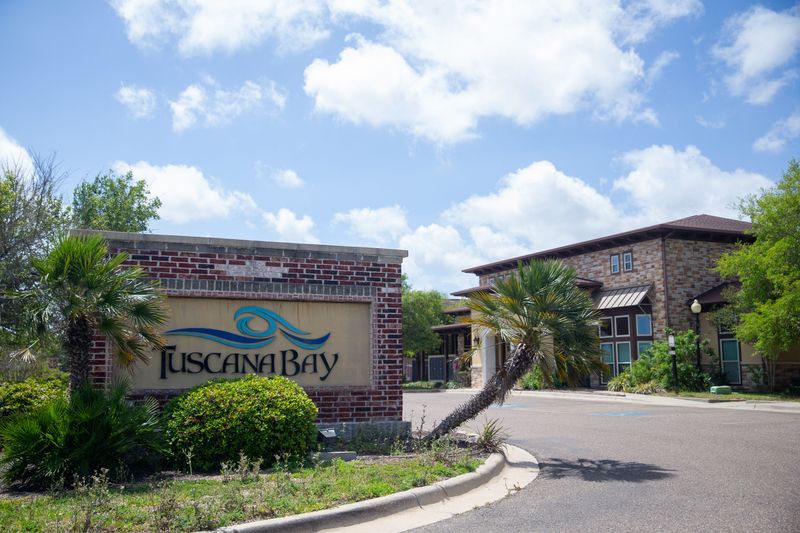
The endeavor, spearheaded by Gary Allsup, then the housing authority’s president and CEO, involved the housing authority acquiring 13 private market-rate apartment complex properties.
Apartment complex owners committed to earmarking half of their unit inventory for households earning 60% to 80%, offering reduced rents.
They totaled about 1,500 units, according to the Save Workforce Housing Coalition.
In return, CCHA officials had promised owners property tax exemptions.
Controversy arose as local taxing entities learned of the prospective property tax exemptions for the 13 apartment complexes. Total valuations reached around $330 million.
It would take a sizable bite out of the budgets of the city of Corpus Christi, Nueces County and Del Mar College, which rely heavily on ad valorem tax revenue as the cornerstone of annual budgets, officials said.
The program also came under scrutiny over questions on whether the endeavor aligned with the housing authority’s mission, and accusations that open meetings notifications had fallen short. The latter was the basis of allegations made in the lawsuit filed by Nueces County against the CCHA in late October.
All of the property exemptions have been denied by the Nueces County Appraisal District, officials have said.
The CCHA’s current slate of board members voted in January to void the contracts, citing open meetings act concerns.
Allsup, who was terminated in September for reasons not discussed publicly in detail, had maintained that all open meetings requirements had been met.
In its January vote, the board reversed course, stating that the public had not been adequately notified of the agreements.
Apartment owners in attendance of the meeting raised concerns that residents participating in the program would be priced out of their units and potentially displaced, according to previous Caller-Times reporting.
Several who said they had been approached about the program by the CCHA also raised concerns on how the situation would impact their financial positions, earlier articles state.
The court case
A court case on the program is still tied up in the civil processes, without a clear timeframe for resolution. Most recently, it was sent to the 13th Court of Appeals, where judges have ordered mediation.
In the original suit, filed in October, Nueces County officials had accused the CCHA of violating the open meetings act, contending that it meant the agreements with apartment complex owners were void.
CCHA’s response, filed Nov. 21, shows a general denial of the allegations and also asserts that the district court doesn’t have subject matter jurisdiction, claiming immunity as a local governmental agency.
Intervenors in the suit — a coalition of owners or those otherwise affiliated with the apartment properties in question — filed a petition with the court Nov. 19.
In part, it asserts that CCHA had met open meetings act requirements and argues that even if it had not, it would not void the contracts.
In the documents, attorneys describe the purpose of such programs.
“There is a reason that Housing Authority property is tax-exempt: alleviating Housing Authority property of tax burdens stimulates the development of affordable housing,” the petition for intervenors states. “Absent such an exemption, fewer apartment complexes would enter into workforce-housing agreements, gutting the supply of affordable housing throughout Texas.”
The day after the CCHA board voted to void the contracts, attorneys for the 13 apartment complex owners filed a cross-claim against the housing authority, asserting among claims the “breach of the MOUs, ground leases, and operating agreements.”
The case was sent to the 13th Court of Appeals for a ruling on a plea to the jurisdiction — apartment coalition attorneys filing for emergency temporary relief shortly afterward — asserting that undoing the contracts “would cause irreparable harm and render any eventual judgment meaningless.”
The intent, the records state, is “to restrain CCHA and the Board from taking any action to terminate the agreements or to deprive the affected properties of their property tax exemption,” asserting that “CCHA’s threatened actions would trigger defaults under loan agreements, risk foreclosure on the properties, and potentially force one principal into personal bankruptcy due to personal guarantees on the loans.”
The CCHA, “now that the political winds have shifted, is trying to use TOMA as an escape hatch,” the court records contend.
“Local officials later became fixated on the loss of tax revenue resulting from the conversion of market-rate apartment complexes to tax-exempt affordable housing,” the court records state. “Accordingly, they launched a coordinated political campaign to unwind the agreements.”
In response to the request for emergency temporary relief, CCHA attorneys responded to the questions about the open meetings act.
There wasn’t “dispute that, other than the MOUs – which are not contracts but rather agreements to make other agreements – none of the contracts or other legal documents executed by CCHA’s former CEO were ever the subject of an agenda item or required public vote of the CCHA board,” the court documents state.
“In laundry-listing a supposed parade of possible horribles, Appellees state, at best, garden variety breach of contract claims for attenuated, consequential economic damages that are remote and contingent on potential actions of third parties, none of which Appellees have submitted evidence showing a realistic potential let alone any immediate threat,” CCHA attorneys wrote.
Judges granted the emergency temporary relief, according to documents, restraining CCHA from “taking any action to terminate, void or repudiate agreements with appellees that are the subject of this appeal,” as well as taking action to either “impair the operation of affordable housing projects” or “affect tax exemptions of subject property.”
Mediation was ordered, court records show.
Jeff Lehrman, among the attorneys representing CCHA, wrote in a March 25 message to the Caller-Times that the housing authority, in mediation, “will participate in good faith.”
“However, the housing authority remains confident in its legal position as outlined in its briefing in the trial court and court of appeals,” he wrote.
Johnny Carter, an attorney representing the apartment complexes, wrote in a March 25 email to the Caller-Times that he had no further updates.
A new direction
As the court case continues, the CCHA has swiftly pivoted the center of its attention.
Earlier this month, both CCHA board members and the agency’s new CEO and president described a focus on the housing authority’s existing clients and assets — a return to core functions, some said — such as undertaking condition assessments of the housing authority’s 15 managed public housing properties, officials said.
Clientele for the 15 properties serve very low- and extremely low-income households, according to CCHA materials.
Rhen C. Bass Sr., appointed by the CCHA board as CEO and president of the agency in February, said among the efforts launched in recent months have been leveraging nonprofit and community organization resources focusing on health care and education, preparing to upgrade lighting at all the properties, and ensuring high standards of the agency’s repairs and maintenance to its properties.
Some of the CCHA’s properties were built in the 1940s.
He is seeking to restore confidence in the agency, Bass said.
“The people we serve, our mission providing housing for low-income families, that’s one of the most critical public services that is offered in this city by the Corpus Christi Housing Authority,” he said. “So those are the things foundational, making sure that we’re doing our core responsibilities and performing them at a high level.”
CCHA officials declined to speak at length about the controversial workforce housing program, citing the ongoing litigation.
The concept of the workforce housing program had “sounded good,” said Joe McComb, a board member who was appointed after the program had been created and had criticized its creation.
“But I think it didn’t pan out the way that it … appeared,” he said, “Unfortunately, there were some people that got caught in the middle.”
Reporter Olivia Garrett contributed to this story.
Kirsten Crow covers city government and water news. Have a story idea? Contact her at kirsten.crow@caller.com.
Consider supporting local journalism with a subscription to the Caller-Times.
This article originally appeared on Corpus Christi Caller Times: Here’s where controversial Corpus Christi housing program stands
Reporting by Kirsten Crow, Corpus Christi Caller Times / Corpus Christi Caller Times
USA TODAY Network via Reuters Connect