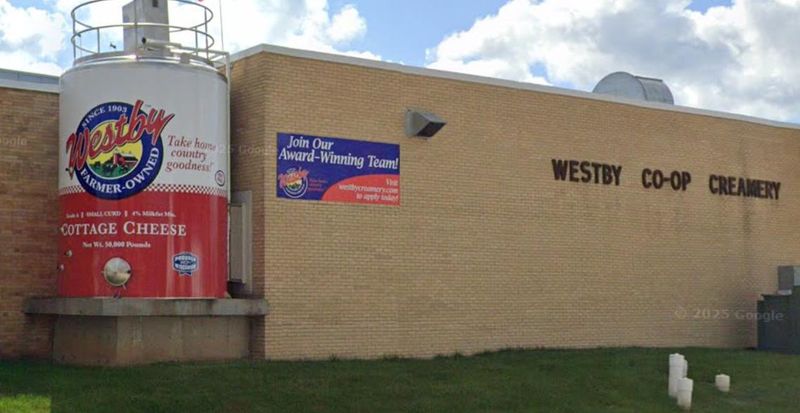
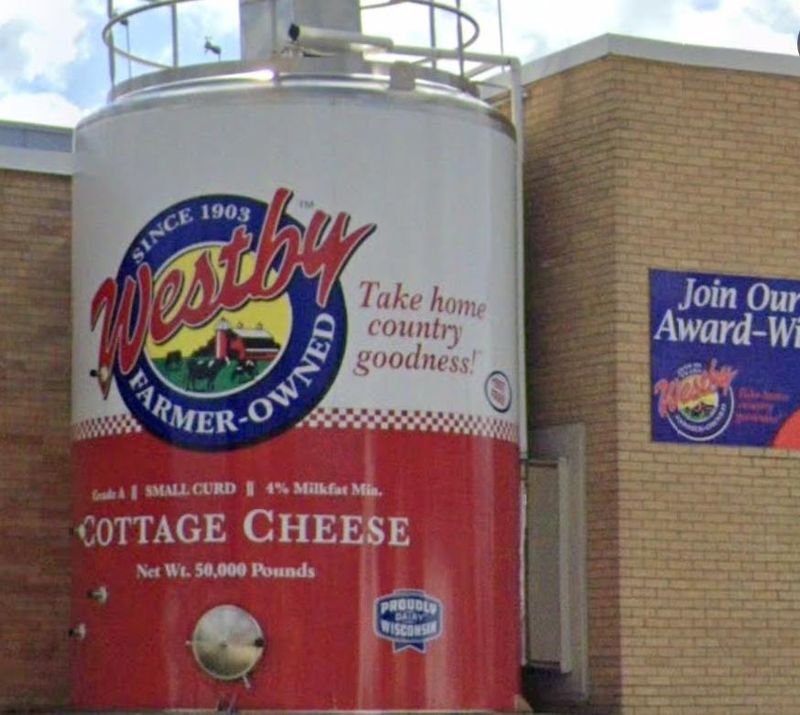
Retail sales of cottage cheese in the United States are hot and getting hotter. Sales are so good, in fact, that the only cottage cheese manufacturer in Wisconsin (for now) has announced plans to spend $14.1 million to modernize its Westby manufacturing plant. Cottage cheese accounts for about 60 percent of production at the Westby Cooperative Creamery – and they still can’t make enough.

The farmer-owned Westby Cooperative Creamery, in business since 1903, is embarking on a plant modernization to improve both production efficiency and the safety of its plant employees, boost food safety efforts and most importantly, to ensure long-term stability for the cooperative’s member-owners.
The primary goal of the project is to modernize aging infrastructure and align its production capacity with increasing consumer demand for cottage cheese.
The co-op’s CEO and President J.D. Greenwalt said the expansion represents a significant shift toward automation and efficiency. This will be the largest investment in the co-op’s history to modernize production equipment. “We’ve been making cottage cheese the same way for 100 years,” he said. “This new system reduces the physical strain on employees and enhances consistency in product quality.
“Our current equipment is continuing to age, so before it meets end-of-life, we want to modernize and, just as important, we want to meet consumer demand for this dairy food,” Greenwalt said. The investment will make it the first creamery in the United States to utilize close-vat technology for making cottage cheese.
Efficiency is a cornerstone of $14.1 million project
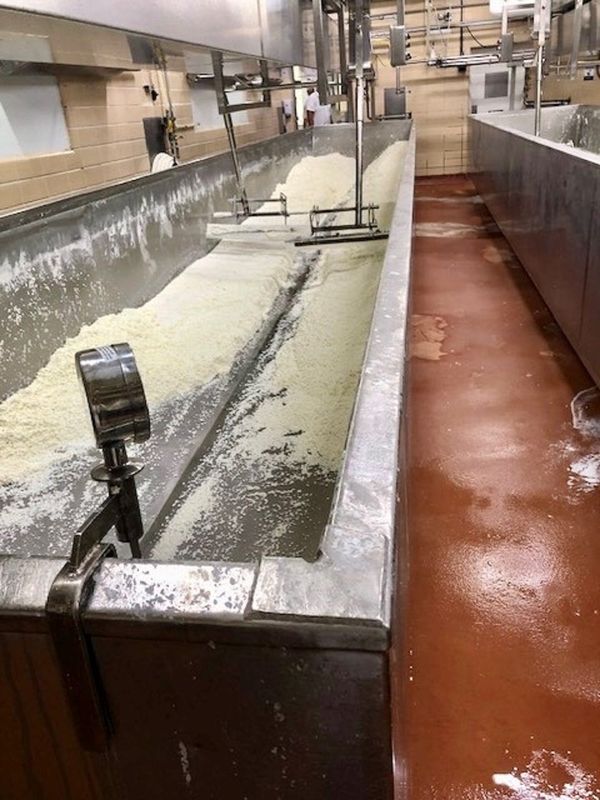
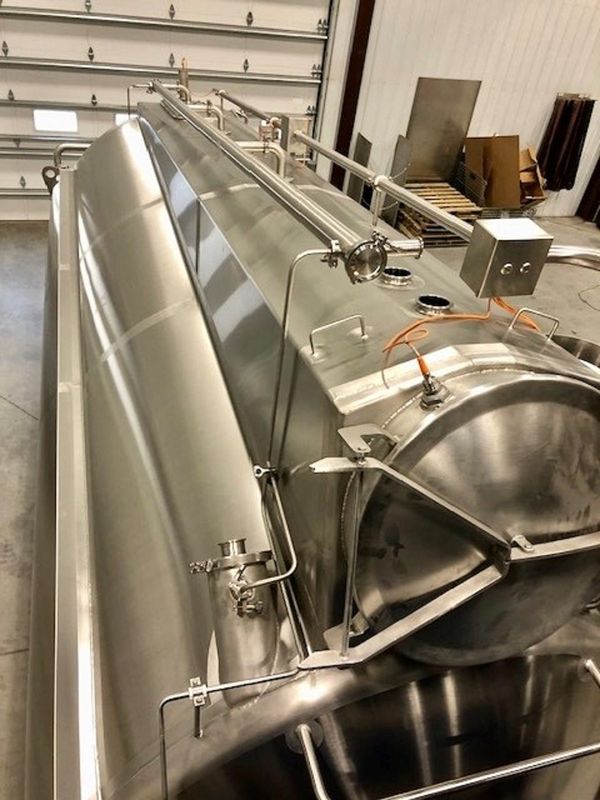
With the new equipment, workers will be able to use less water and less energy and the handling of the curds will be gentler, resulting in a greater yield of product. Westby currently makes cottage cheese in open vats, a labor-intensive process. As part of its modernization project, the co-op is purchasing enclosed vats that will save energy, produce more cottage cheese than the open-vat system and reduce production time from 16 hours to eight.
The enclosed system will allow the operators to automate ingredients, testing and sanitation. The yield will also increase, producing 10-15 percent more cottage cheese from the same amount of milk.
Oldest cooperative in Wisconsin
Westby is the oldest dairy cooperative in Wisconsin and has been the state’s only manufacturer of cottage cheese. The co-op has been producing cottage cheese since 1942, when there was a call for it during World War II. (In light of the current demand for cottage cheese, some other plants in Wisconsin have announced plans to make cottage cheese by converting cheese plants to cottage cheese production, but are not yet online.)
According to the cooperative’s website, the project is expected to be completed in August 2026.
Greenwalt said that even with the new cutting-edge equipment, which will double their capacity, he anticipates they will sell out of the newly trendy product right away. Plans are already in place to add even more capacity at Westby.
Consumer demand for cottage cheese continues to grow, driven by social media trends and increased consumer focus on high-protein, low-fat foods. By February 2025, store-brand cottage cheese sales rose 6.5 percent from a year earlier and some nationally advertised brands rose more than 25 percent. All of Westby’s current cottage cheese capacity is sold and they are constantly being contacted by vendors looking for more.
Greenwalt noted that one reason consumers are drawn to Westby’s product is the fact that it is made in Wisconsin, which carries a sterling reputation for dairy products. Because of current demand, cottage cheese shelves in stores are often empty or half-empty, and retailers are scrambling for more.
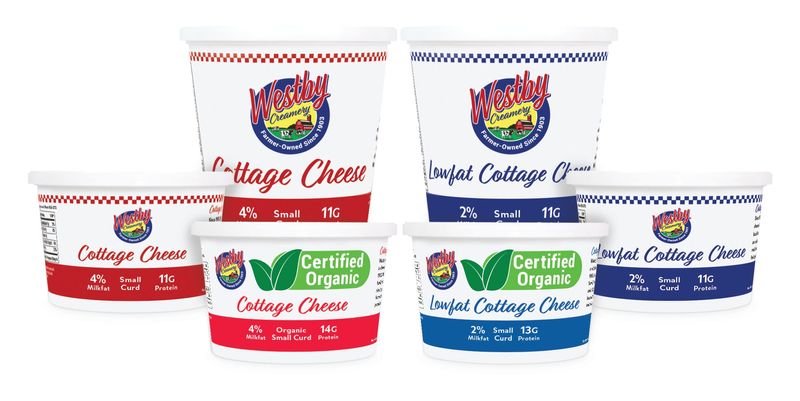
In addition to its own branded cottage cheese product, Westby Cooperative Creamery makes other brands for private label customers.
Manufacturers struggling to meet surge in demand for cottage cheese
A surge in demand for cottage cheese has led to significant sales increases and nationwide shortages as manufacturers try to match supply with demand. High-protein diets are considered to be one of the key drivers of the current demand. Cottage cheese is a versatile, nutrient-dense food that is high in protein – a consideration for consumers who are on GLP-1 medications and for those trying to eat “cleaner”.
Experts point out that social media platforms have helped convert cottage cheese from an “old person’s food” into popular items like wraps, pancakes and pizza crusts. Platforms like TikTok have brought in a new, younger demographic. Cottage cheese is versatile, suitable for both sweet and savory recipes, which broadens its appeal.
Some grocery retailers are working to build supplies amid skyrocketing demand, which is up 65 percent since 2021.
The current craze for cottage cheese follows a 20-year decline in production and consumption of the product. It wasn’t “trendy” and now it is. There is so much demand for cottage cheese that there is no remaining production capacity for it.
According to cheese industry experts, there were 80 cottage cheese plants in the United States 20 years ago. But as consumer demand declined, plants closed and last year, there were only 48 such plants. Through it all, Westby has made cottage cheese.
According to published market analysis, the U.S. cottage cheese market was valued at $1.85 billion in 2025, with a projected year-over-year growth in dollar sales of 16 percent.
Westby’s expansion project includes a new food-grade room within the existing facility, installation of four fully enclosed new vats that will each produce up to 9,000 pounds of cottage cheese per run. The co-op will also have two new cream tanks with 10,000-gallon capacity and one new 30,000-gallon milk silo. In addition, there will be upgraded refrigeration, sanitation and auxiliary equipment.
Center for Dairy Research at the University of Wisconsin-Madison lends a hand
When considering the expansion, Westby sought advice from the Center for Dairy Research at the University of Wisconsin-Madison. Greenwalt commented that in Europe, cottage cheese is made in closed vat systems, but it isn’t commonly done that way in the United States. The CDR helped the co-op to find the right systems for its expansion.
Closed vats are used for other types of cheese, but Westby will be the first in the United States to use that technology for cottage cheese.
The project is designed to cause minimal disruption to Westby’s existing operations, with construction happening in a walled-off portion of their building. Some preliminary work has been done, and key pieces of equipment are set for delivery in April, May and June. Greenwalt expects their project to be complete in August 2026.
Greenwalt said that this investment will create a legacy that continues the multi-generational history for farmers who own the co-op. Westby has 88 small family farms that are member/owners with four in Minnesota and the rest in Wisconsin, with an average herd size of 38 cows.
Westby plant supports small dairy farms
If it weren’t for their cooperative, Greenwalt says many of those farmers would not be able to continue milking cows, since their herds are small enough that other handlers wouldn’t pick up their milk.
About 55 percent of the co-op’s production is organic and 45 percent is conventional and cottage cheese is made (and will continue to be made) to serve both of those markets.
“We have a 100-year-old dairy plant, but when we are done with the modernization, we will have the most modern dairy plant in the state,” Greenwalt said. It is also sized to accommodate increased capacity, as demand for cottage cheese continues to rise daily.
All of his co-op’s board members are farmers and many are part of families that have been with the Westby Co-op for 50 or 75 years. When Greenwalt joined the co-op three years ago, it wasn’t a tough sell to get the board to go for the modernization plan.
“I told them we have two choices – create an exit ramp for the next ten years and the end of many of their farms or modernize.”
Greenwalt said that he’s not worried that trends will change and his co-op’s cottage cheese capacity will be left behind.
“There is so much pent-up demand for cottage cheese right now,” he said.
The expansion in cottage cheese production coincides with the big demand for “clean” foods with minimal ingredients.
“Cottage cheese is hot,” says Westby’s sales and marketing manager Emily Bialkowski. “All current cottage cheese capacity is sold and we are contacted each week by organizations looking for more. High-protein and clean-label food trends are here to stay.”
The expansion project will allow Westby Creamery to keep pace with this surge in demand, she added.
This article originally appeared on Wisconsin State Farmer: Westby Creamery first U.S. plant to use closed‑vat cottage cheese technology
Reporting by Jan Shepel, Correspondent / Wisconsin State Farmer
USA TODAY Network via Reuters Connect