Cannabis sales at retail stores in Redding have dipped each of the past two years, according to the latest statistics released by the California Department of Tax and Fee Administration.
The results come about a year after the Redding City Council increased cannabis taxes amid pushback from the industry.

Money raised by the cannabis sales tax goes into Redding’s general fund.
In addition, fees assessed on the local cannabis industry for business license permits have in the past been used to cover a pay raise for Redding legal staffers as they took on supervising cannabis code enforcement division staff.
“Obviously, any tax revenue is positive for cities. But also, tax revenue from cannabis has a cost to it as well in public health and in outcomes for people,” said Lynn Silver, senior adviser with the Public Health Institute, a cannabis research nonprofit that studies California.
“So it’s not an ‘all good, the more cannabis tax revenue the better.’ I don’t think people should be upset that tax revenue fell,” said Silver. Her group recently released information about how the industry and local regulators in Redding, Shasta Lake and Anderson are not doing enough to keep cannabis products from underage youth.
For Redding, cannabis sales tax collections represent “a relatively small portion of General Fund revenues, but still, if those revenues are down, other revenues will need to increase or expenses will need to decrease to ensure the City’s budget remains balanced,” said Jeremy Pagan, director and building official with the Redding Development Services Department.
Details on Redding’s cannabis tax
At its meeting in March 2025, the council voted 3-2 to raise the cannabis sales tax from 5% to 6%, increase the manufacturing and processing, distribution rate from 3% to 4% of gross receipts and boost the cultivation rate from $3 a square foot to $5 a square foot.
Redding’s higher cannabis tax rate took effect in July 2025.
At 6%, Redding’s cannabis sales tax is now the same as the city of Shasta Lake’s. The commercial cultivation rate in Shasta Lake is $5 a square foot.
In Redding, sales taxes paid by cannabis establishments brought in $1.5 million to the city last year, compared to $2.1 million in 2022, according to the city’s department of finance.
The Redding council’s decision last year to raise the city’s cannabis sales tax led some cannabis industry advocates to argue that the increases could drive regulated pot-related businesses out of the city amid tough times for the industry.
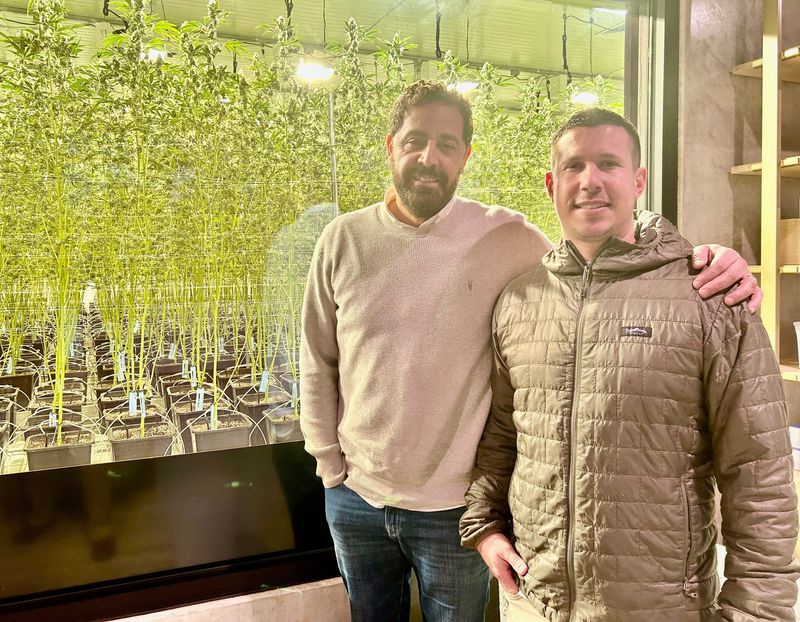
“The black market has no tax or regulation,” Joe Baker of cannabis cultivation business Legacy Gardens told the council last year about his business’ unlicensed competitors that don’t pay taxes and sidestep high compliance costs. “This is what we’re up against.”
Throughout the U.S., oversupply, falling retail prices and heavy debt have left some retail cannabis operators struggling, according to a Forbes report late last year.
In addition to local licensing and other fees and taxes, California cannabis businesses must also pay taxes to the state.
Legal cannabis sales have been allowed in Redding, Shasta Lake and Anderson since 2018, after California voters approved the recreational sale and taxation of marijuana two years before.
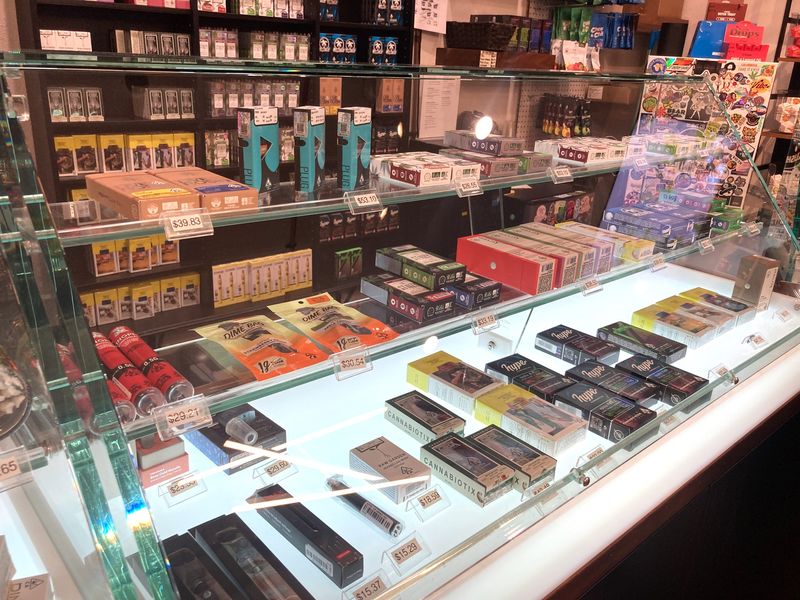
Five licensed cannabis retailers operate in Redding, according to the city’s cannabis regulation officials.
In Redding, total taxable sales at cannabis shops — including everything from edibles to non-cannabis-containing beverages — was $27.1 million in 2025, according to results released in February by the California Department of Tax and Fee Administration.
That was down from $26.2 million in 2024 and $29.7 million in 2023, state figures show.
Uneven trends emerged in Shasta County, where cannabis is also being sold legally in Shasta Lake and Anderson.
After hitting total taxable sales of $37 million in 2023, Shasta County’s sales slid to $34 million in 2024 before rising slightly to $36.1 million last year, the state said.
Looking at pot products only, sales at licensed outlets in Redding reached $23.1 million in 2025.
That’s a drop from $23.4 million in 2024 and $25.9 million in 2023, according to the state’s report.
In California, where wholesale cannabis once cost more than $1,000 a pound, prices had collapsed to about $250 a pound last summer, said Ross Gordon, a policy analyst at Origins Council, which represents the state’s small cannabis farmers. That’s likely below the cost of production for the majority of small farmers, Gordon said at the time.
Including retailers, distributors and growers, about 27% of cannabis operations were profitable last year, Oregon cannabis economist Beau Whitney said in August. About one-third were losing money while the rest were breaking even, Whitney said.
In Shasta Lake, there are two licensed retail cannabis dispensaries, according to Shasta Lake City Clerk/Permit Center Manager Charity Tatlow.
Previously, 530 Collective, doing business as High Times, operated under a third retail license that was suspended on July 29, 2024 and subsequently revoked, Tatlow said. The city plans to reopen the application process with the goal of issuing the available retail license, said Tatlow.
Sales for Shasta Lake’s two stores are not broken out separately in the state’s report to avoid potentially disclosing confidential taxpayer information, said Steve Bunnell, a spokesman for the California Department of Tax and Fee Administration.
No physical cannabis stores are licensed in Anderson, where sales take place by delivery only. Retail sales results from Anderson are included in the state’s overall report for Shasta County.
Unincorporated Shasta County prohibits commercial cannabis cultivation, manufacturing, testing, distribution and retail sales including delivery. Personal cultivation of a limited number of indoor plants is permitted by adults 21 and older who are in compliance with local zoning rules.
Michele Chandler covers public safety, reports on trials in Shasta County Superior Court, writes about restaurants and handles whatever else comes up for the Redding Record Searchlight/USA Today Network. Accepts story tips at 530-338-7753 and at mrchandler@gannett.com. Pleasesupport our entire newsroom’s commitment to public service journalism by subscribing today.
This article originally appeared on Redding Record Searchlight: Redding cannabis sales still sagging after city tax increase
Reporting by Michele Chandler, Redding Record Searchlight / Redding Record Searchlight
USA TODAY Network via Reuters Connect