Following a routine colonoscopy in January last year, St. Clair Shores resident Britta Wofford learned doctors found a mass in her colon that they suspected was cancer.
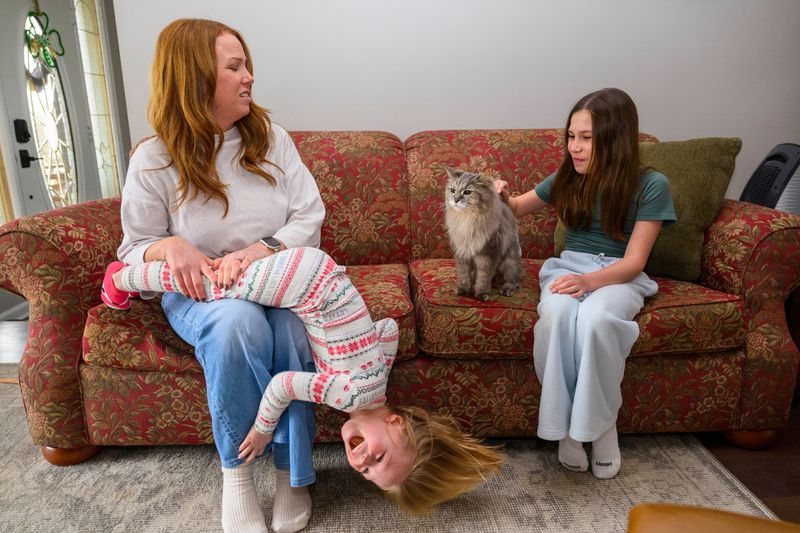
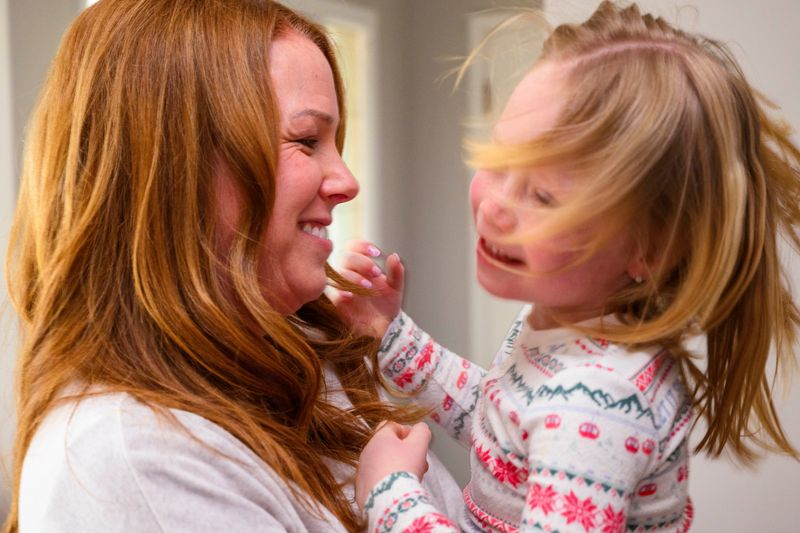
They biopsied it, and they were right. Wofford, a wife and the mother of three young girls, was diagnosed with Stage I colon cancer. She was only 45.

“It was shock and disbelief,” Wofford recalled of how she felt at the time. “I have a young family and was thinking, ‘How can this be me?'”
The following month, doctors at Corewell Health William Beaumont University Hospital in Royal Oak removed a portion of Wofford’s colon, including the tumor. They also removed lymph nodes in that area. Doctors tested them, and they came back negative for cancer.
Wofford has been cancer-free since then, but her diagnosis is an example of how colorectal cancer rates are surging in people under the age of 50, baffling experts who believe several factors may be to blame. Colorectal cancer is now the most common cancer-related cause of death for people under 50 in the U.S., according to an article published in the Journal of the American Medical Association in January.
Amid the rising rates for younger people, some local health systems are hiring more cancer doctors or realigning resources to meet the demand for colorectal care. Corewell Health, one of the state’s largest health systems, has hired three new colorectal surgeons at its Royal Oak campus in the past five years. Three such surgeons also joined UM Health-Sparrow in Lansing on Jan. 1, though they were already serving in the Lansing area before then as private practice doctors.
Doctors said education is also a key factor in patients protecting themselves from colorectal cancer, and younger patients need to be aware of earlier screening guidelines.
Dr. Daniel Coffey, a colorectal surgeon at UM Health-Sparrow, urged everyone who is 45 years old to undergo a colon cancer screening. The recommended age changed from 50 to 45 in 2021, according to UChicago Medicine.
Coffey also said people under 45 with symptoms such as rectal bleeding, unexplained abdominal pain or changes in the characteristics of their stool need to inform their primary care doctor.
“And you’re probably going to need to be worked up for that, just … to rule out the more serious problems,” he said.
Rising colorectal cancer rates, more doctors
The American Cancer Society estimated that 154,270 people in the U.S. would be diagnosed with colon and rectal cancer in 2025, and 52,900 would die from the disease. Former “Dawson’s Creek” star James Van Der Beek died last month after a roughly three-year battle with colorectal cancer. He was 48.
According to the Cancer Research Institute, 1 in 5 people diagnosed with colorectal cancer is now under the age of 55.
In Michigan, the incidence rate of colorectal cancer has more than doubled for people younger than 50 over a 38-year period, according to data tracked through 2023 by the Michigan Department of Health and Human Services. The rate of invasive colorectal cancer grew from 4.2 cases per 100,000 Michiganians below 50 in 1985 to 10.5 cases per 100,000 in 2023.
As rates have risen among young people, local health systems are bolstering the number of colorectal doctors and examining how they deliver care.
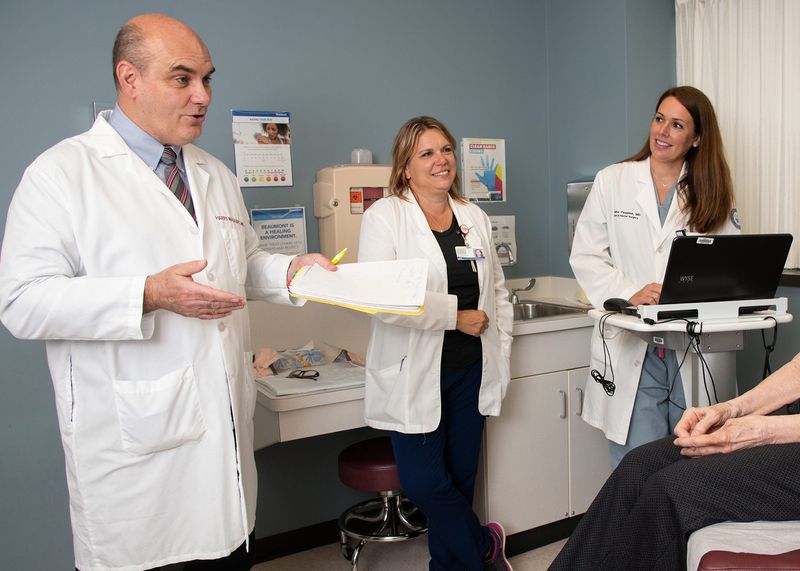
Dr. Harry Wasvary, medical director of the Colon and Rectal Multidisciplinary Cancer Clinic at Corewell Health in southeast Michigan, said his health system has increased recruiting of colorectal surgeons at its Grosse Pointe, Downriver and Dearborn locations. Corewell has nine colorectal surgeons at its William Beaumont University Hospital in Royal Oak, three of whom were added in the past five years.
They were hired to treat both young and older patients for cancer and to screen patients to help them avoid cancer, he said.
“Certainly, we hire to meet the demands of the community,” said Wasvary, adding that the volume of younger patients has increased.
Detroit-based Henry Ford Health has doubled its number of medical oncologists specializing in gastrointestinal malignancies, including colorectal cancers, since 2022, said spokesperson Magdalena Wegrzyn.
And Livonia-based Trinity Health Michigan has hired two additional colorectal surgeons in the last two years, said Dr. Melissa Chang, a colon and rectal surgeon for Trinity Health IHA Medical Group. One was hired to care for patients at the health system’s Livonia facilities, and the other is working at Trinity Health Ann Arbor Hospital in Superior Township.
Realigning doctors to make care easier
At UM Health-Sparrow, Coffey said he is one of three colorectal surgeons who joined UM Health-Sparrow on Jan. 1. They transitioned from working in private practice to being employed by the health system, which should streamline care for patients.
The three joined the hospital’s one existing colorectal surgeon, who was hired by Sparrow a year and a half ago.
The rising incidence of colorectal cancer among younger people was one of the “driving factors” behind the hiring, Coffey said. The surgeons also take care of diseases such as diverticulitis and inflammatory bowel disease, conditions that require more treatment, in the Lansing area, he said.
When Coffey and his colleagues were in private practice, they would still perform surgeries at Sparrow. But as health system employees, they now have access to all of a colorectal patient’s records under “one electronic roof,” he said. If all of a patient’s providers are at Sparrow, all of their medical records would be in Sparrow’s electronic system, making coordination easier between doctors.
“There’s no: ‘I had a colonoscopy done across the street. I had my CAT scan done somewhere else,’” Coffey said.
In a larger hospital, there is “much better coordination of resources” and better communication between specialists than when doctors are working in private practice, he said.
“If you have a patient that needs to see oncology, it’s much easier to close the loop that they’re seen by that specialist and then receive the communication electronically from the specialist,” Coffey said.
Patient shares experience with cancer
Detroit resident Dan Austin, 45, has been battling Stage 4 colon cancer since 2024.
After his friend died of colorectal cancer in 2020, Austin, a longtime Metro Detroit journalist and historian, went in to see his primary care physician and asked to get a colonoscopy. He was told that because he was only 40, health insurance wouldn’t cover the colonoscopy. He also didn’t have any family history of colon cancer, but he had been experiencing digestive issues.
“Had I gotten the colonoscopy at 40, I would have caught it at Stage I, II, maybe even III, and I wouldn’t be sitting here doing end-of-life planning at 45 years old,” Austin said.
One of his co-workers was diagnosed with colorectal cancer in 2024, and he had continued to experience digestive issues, so he and his wife scheduled colonoscopies. In August 2024, he was diagnosed with Stage IV colon cancer that had spread to his lungs.
He started chemotherapy in late 2024 and then underwent radiation in early 2025. After the treatment was finished, the cancer spread more. Since then, he has been taking a biological agent and a chemo pill.
Dr. Najeeb Al Hallak, Austin’s medical oncologist at the Karmanos Cancer Institute in Detroit, said the biological agent is not a cure, but it can shrink the cancer. He said Austin is responding “very well” to the treatment, and he could go into remission. But Al Hallak needs Austin to stay on the treatment for more time before he can stop it.
Austin said his message is, “Don’t be like me,” and urged people to get screened for colorectal cancer.
“If you’re going to get cancer … this is one that you can beat if you catch it early enough,” he said.
Increasing education
Dr. Philip A. Philip, chair of hematology and oncology at Henry Ford Health, said the health system is educating the community — and doctors — about colorectal cancer no longer being a disease of middle-aged and older people.
“Of course, we see it,” Philip said about middle-aged people, “but for the first time over the last couple of decades, we’re seeing patients who are younger, and sometimes much younger than the average age who we have been seeing … in the older days.”
Henry Ford Health is informing patients about the new screening age of 45 and the importance of not ignoring symptoms, he said. If a person has blood in the stool ― and especially if they have other symptoms, too ― that should be “a red flag” that causes a closer examination, even if the patient is in their 20s or 30s, Philip said.
The health system is also educating patients about lifestyle issues that need to be addressed to reduce the risk of cancer, he said. Those issues include obesity, excess alcohol and smoking.
“There’s also evidence nowadays that exercise, regular exercise, can help to prevent cancers, obviously with additional benefit for cardiovascular diseases,” Philip said.
Centralizing cancer care
Corewell Health’s Wasvary said the health system aims to “centralize” cancer care. In other words, patients will get “the same uniform care” and “the same best practice guidelines” applied to them every time they go to one of Corewell’s two accredited facilities for rectal care, he said.
Corewell Health’s Colon and Rectal Multidisciplinary Cancer Clinic holds a weekly meeting of about 30 experts, such as surgeons, radiologists and oncologists, who talk about individual patients’ cases.
“It allows us, in real time, to debate what we’re going to do,” Wasvary said, adding that with 30 experts, “you’re going to get agreements and disagreements.”
“And then ultimately, you’re going to learn a lot more,” he said.
The clinic was created almost 20 years ago. But Corewell Health is now “centralizing care even more,” as two of its hospitals have received a national accreditation that requires them to meet 20 best-practice guidelines in rectal cancer care. Corewell’s Royal Oak hospital received the accreditation in 2021 and was reaccredited in 2024. The Troy hospital got the accreditation in 2024.
Wasvary said Corewell partly pursued the accreditation because of the rising incidence of colorectal cancer among younger people.
Caring for younger patients
Chang, the colon and rectal surgeon for Trinity Health IHA Medical Group, said she and her colleagues try to tailor their “process of cancer care” for the younger population. Many patients are working and caring for families.
“Oftentimes, they’re primary caregivers; they’re building their careers,” she said.
Trinity Health providers also talk about fertility with younger patients. Chang said 100% of patients who would receive radiation therapy for rectal cancer, for example, will go into menopause. The doctors can partner with their gynecology colleagues to temporarily move the ovaries outside of the field of radiation, she said.
Karmanos’ Al Hallak said patients under 50 are “different” than older patients.
“They have to work to get their insurance. … Otherwise, they cannot afford coming even to the doctors or getting treatment, right?” he said.
Karmanos pays “strong attention” to these patients, Al Hallak said. The cancer institute’s social workers help people apply for insurance and will talk to their employer’s human resources department, for example. Al Hallak and social workers also counsel patients on how to break the news of their cancer diagnosis to their children.
Al Hallak said he has also done informational sessions in Novi, Dearborn and other areas about colorectal cancer and the importance of screening. Karmanos is scheduled to do a community conversation on March 18 at the Detroit Public Library’s main branch called “The Road Ahead: Understanding a Colon Cancer Diagnosis and Exploring Treatment.” One of Al Hallak’s colleagues will be presenting.
Bringing awareness
Wofford, who had Stage I colon cancer, said she met with her primary care provider in November 2024 and reported that she was having a harder time having bowel movements and would occasionally see blood in the stool. She also was almost 45. The doctor said she should get a colonoscopy, which she did the following January.
She had a follow-up colonoscopy last week that showed no signs of cancer.
She said her experience has helped bring awareness to the importance of getting screened for colorectal cancer among her family and friends.
“A lot of people have come to me and said, ‘You know, now I’m getting my scan. I’ve got it scheduled,’ …. or, ‘My scan was good. I just wanted to let you know,'” Wofford said.
asnabes@detroitnews.com
This article originally appeared on The Detroit News: How Michigan hospitals are responding to alarming trend in colorectal cancer
Reporting by Anne Snabes, The Detroit News / The Detroit News
USA TODAY Network via Reuters Connect