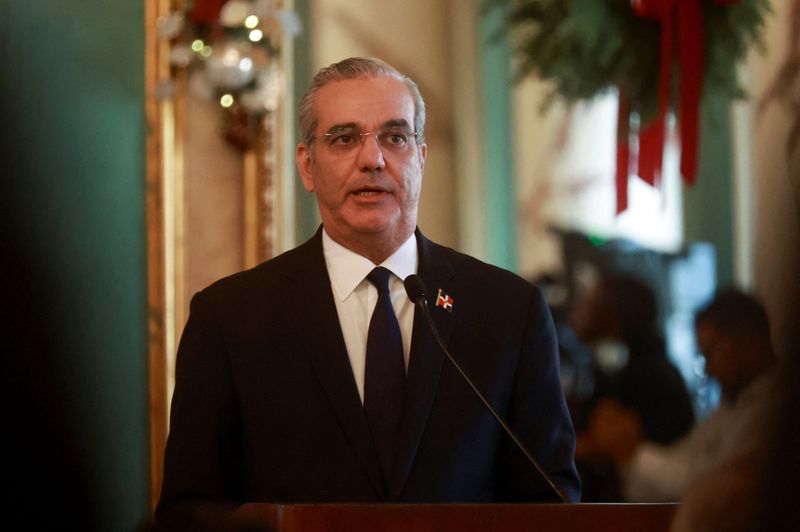
SANTO DOMINGO, Feb 27 (Reuters) – The Dominican Republic has identified rare earth deposits that could position the Caribbean nation as a significant future supplier of minerals critical to high-tech industries, President Luis Abinader said on Friday.
Preliminary studies indicate gross deposits exceeding 150 million tons of rare earth elements, comprising 17 metals that can be used in semiconductors, aerospace applications, and military equipment, according to a government statement.

During his annual State of the Nation address to Congress, Abinader set a goal to finish assessing mineral deposits this year and certify reserves by early next year, a necessary step for large-scale extraction and refining.
It is unclear how much of the 150 million tons could be viable for commercialization.
The president linked development of the deposits to a broader strategy of energy transformation and “responsible use of natural resources,” which he said would strengthen Dominican sovereignty, reduce external dependence, cut emissions and boost competitiveness.
The United States has signaled strong interest in the Dominican deposits, located in the border province of Pedernales.
U.S. Secretary of State Marco Rubio said in February last year that the world will need access to such resources to develop key technologies in this century, and stressed that the rare earths “belong to the Dominican Republic and its people,” while offering U.S. support as a partner in their development.
(Reporting by Paul Mathiasen in Santo DomingoEditing by Rod Nickel)