In recent years, we have observed a major transformation going on at the Oakdale Mall – or, as I should call it, Oakdale Commons.
In another look at a familiar landmark and its many lives, let’s stroll down history’s path and see what has transpired at that corner of Harry L. Drive and Reynolds in the Village of Johnson City.

Today, the owners of the Oakdale Commons are working diligently to remake the space into a mixed commercial, services, and, possibly, residential profitability. Yet, that corner of land has a rich and varied history. By the 1850s, Oakdale was a small farming community with a scattering of houses in that area. There was an abundance of lumber on the hillside around this region.
It was in this environment that two brothers, Simon and William Bigler, saw an opportunity in the Oakdale area. They, along with their brother James, had been involved in the Binghamton area. They were volunteer firemen, and as the crisis of the Civil War loomed, James moved to the city of Newburgh on the Hudson to start a shipbuilding business. Simon and William built a steam sawmill operation in Oakdale, at the meeting of what became Harry L. Drive and Renolds Road.
A steam sawmill did not require water to operate, and the abundant lumber provided fuel to a growing business that opened in 1851. In 1853, Simon Bigler filled an order for a piece of pine that was 90 feet long. This enormous piece of wood would eventually make its way via the Chenango and Erie Canal down the Hudson to New York City and over to London for the World’s Fair.
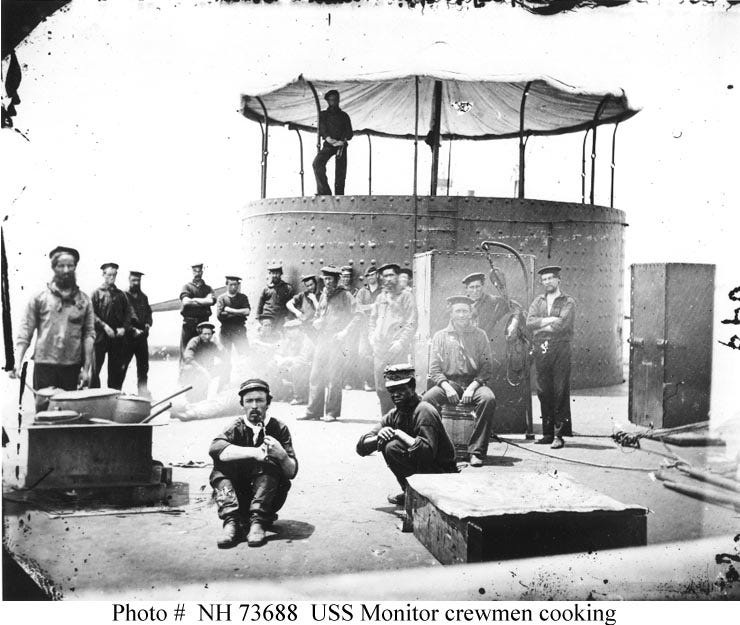
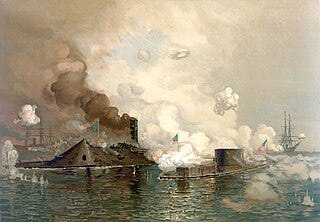
Late in 1861, Bigler received an order for a single piece of oak that was to be 60 feet long, and several feet wide and deep. The mill filled their order, and the piece had to be moved on two flatbed packet boats up the Chenango Canal and across the Erie Canal to be floated down the Hudson. It was to be used as a support beam during the construction of a secret ironclad ship designed by John Ericsson. This would be named the Monitor and would be involved in a major battle with a Confederate ship, the Virginia – or as the Union forces called it, the Merrimac.
By the time that the piece of oak had been secured, Bigler was already exhausting the available oak trees in the area. At the conclusion of the Civil War, the Biglers would close the mill operation and move back to Binghamton.
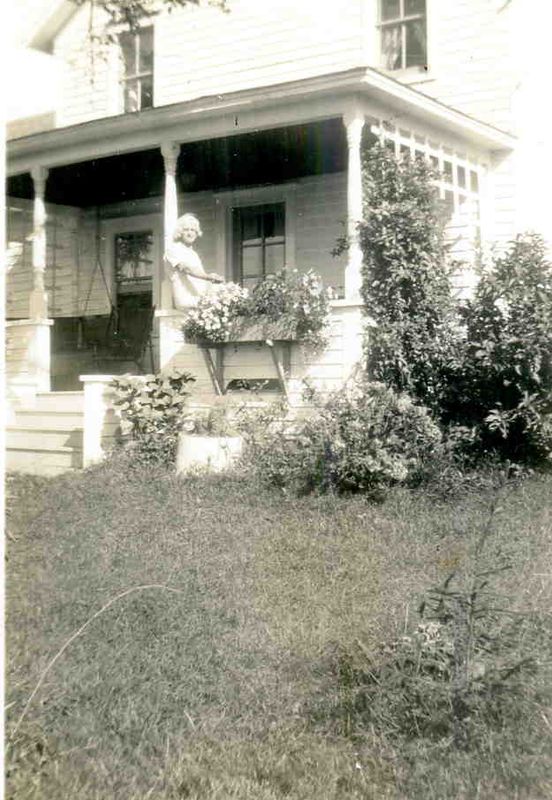
The mill buildings survived, as did a small number of mill workers’ homes constructed during the height of the business. This writer’s great-grandmother, Maude Pierce, lived in one of those homes with her son and daughter living in homes on either side of her.
Once again, the land went largely unused, and it was purchased by the Vashina family. Mr. Vashina ran a coal delivery business and was well known around the region. His son, Stanley, built a brick and stone home on the corner of the lot in the 1950s.
The coal business closed in the 1960s, but by then, the younger Vashina was aware of the discussions about the construction of a new Route 17 that would eventually become an interstate. Realizing the potential, he lobbied for an exit in the Oakdale area, while promoting the site of the old Bigler Mill for a new retail operation. He also purchased what is known as Carpathian Hill up the hill on Reynolds Road.
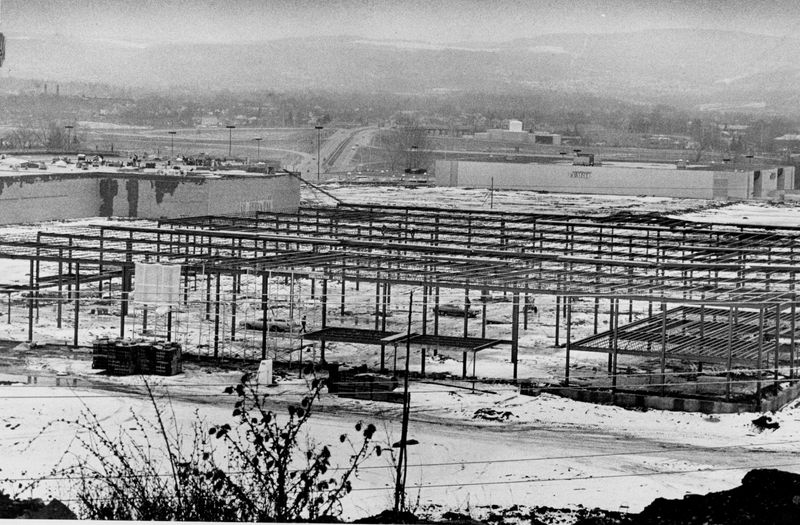
By 1967, road construction was underway with the new exit to be opened by 1969. That same year, Montgomery Ward relocated to what would be built in four phases and become the Oakdale Mall. Fifty years later, what once had more than 100 stores had lost many of those retail tenants. A new vision for the large structure was on the horizon.
New owners, Spark JC, are underway bringing in a mix of usage at the site. Anchor tenants like Sears, Macy’s and others are gone, while Dick’s House of Sport, the Beer Factory, BJ’s Wholesale and others bring a fresh look to an old friend.
Search through the Press & Sun-Bulletin archives
Gerald Smith is executive director of the Tioga County Historical Society and a former Broome County historian. Email him at historysmiths@stny.rr.com.
This article originally appeared on Binghamton Press & Sun-Bulletin: Oakdale Commons, from mill to mall and beyond | Spanning Time
Reporting by Gerald Smith, Special to the Press & Sun Bulletin / Binghamton Press & Sun-Bulletin
USA TODAY Network via Reuters Connect