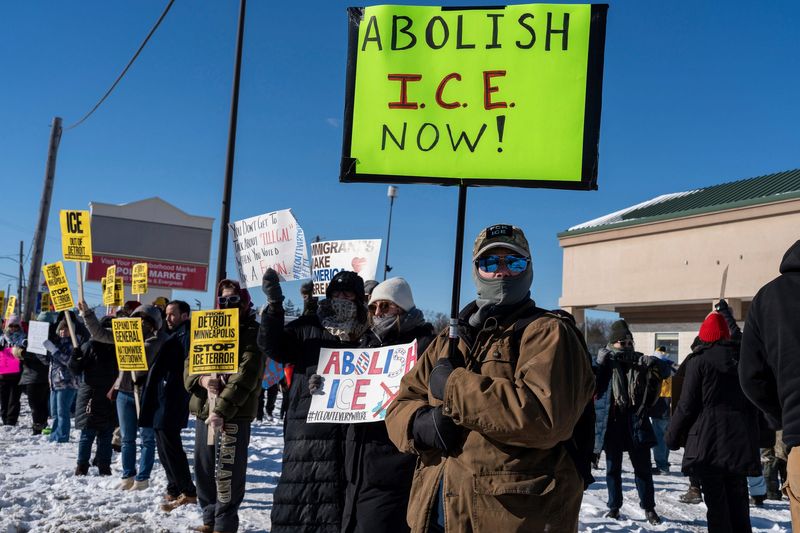
Nationwide immigration enforcement actions showing people being taken from their vehicles or off the street, mass deportations and the killing of two Minnesota residents by federal immigration agents has heightened tensions and sparked calls for action among many Detroiters, with some calling for policy changes within their own local government.
As a result, city officials are now exploring tangible ways to alleviate fears and protect concerned residents — especially among Detroit’s immigrant communities — while still abiding by the law, including urging the Detroit Police Department to publicly clarify how and when it cooperates with federal Immigration and Customs Enforcement (ICE) and Border Patrol agents.

The issue of Detroit police cooperation on immigration enforcement gained increased attention Feb. 12 when Chief Todd Bettison announced the suspension of two officers for coordinating with federal immigration authorities, a violation of department policy.
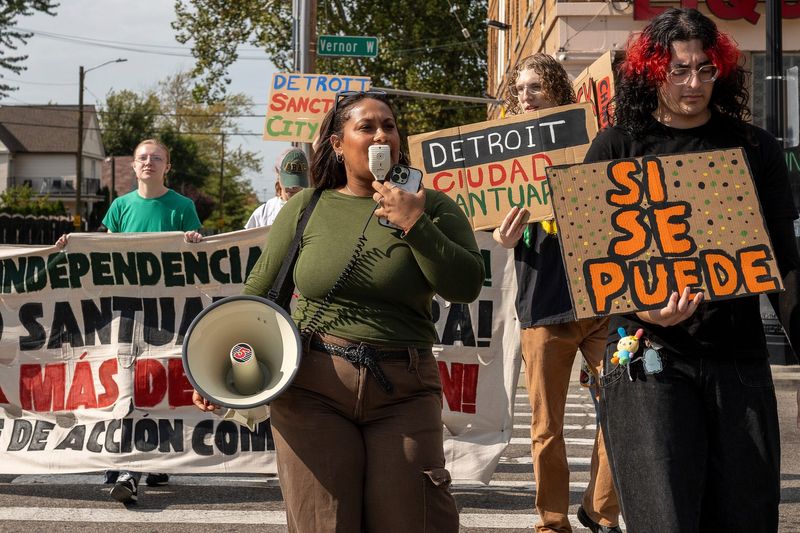
Spurred by what is taking place across the country, including in Michigan, several residents have called for Detroit to become a so-called Sanctuary City, which obstructs cooperation with federal agencies in enforcing federal immigration law. But such a move comes with its own set of problems, namely a potential loss of federal funds for essential city programs and projects. President Donald Trump’s administration already has threatened such penalties for other self-proclaimed sanctuary jurisdictions.
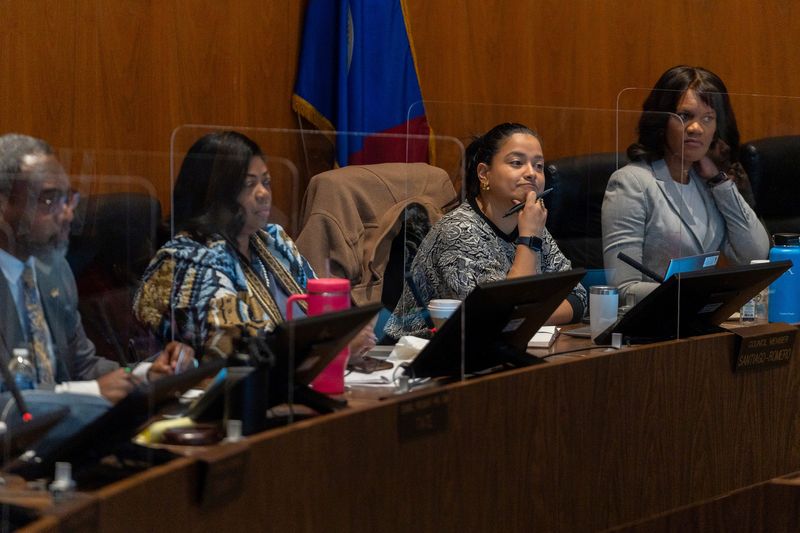
However, there are measures residents can take to feel safe, Detroit City Councilwoman Gabriela Santiago-Romero said.
“As a whole, I think the city can have sanctuary policies and can essentially be a sanctuary city without the name. And what I want the public to be OK with is: Can we have policies to protect, and can we do a job to protect people ,without calling it a thing that we know will automatically bring the target to people’s back” she queried after the City Council’s Jan. 13 meeting, where dozens of protesters and residents packed the chamber’s 13th floor auditorium, calling for ending ICE activity in Detroit.
Kassandra Rodriguez, an organizer with the Detroit Community Action Committee, said she recognizes other cities are being targeted, but disagrees with the sentiment that Detroit will be targeted if it seeks to formally end ICE activities within its boundaries.
“I think the attitude of, ‘This is going to put a target on our back,’ is a little disingenuous just because that’s already the case, we’re already getting targeted. ICE is here. People have a misunderstanding that they feel like ICE is not in Detroit, ICE is not in Michigan, and that’s not the case at all,” Rodriguez said. “People are getting deported almost every day.
“Now, it’s more about whether we want more protections for those people to be able to combat this.”
Santiago-Romero, who has spoken out regarding concerns over ICE agents going to residents’ homes in areas like southwest Detroit, with its large immigrant population, particularly Latino residents, submitted a memo to the Detroit Police Department seeking answers to a dozen questions surrounding the department’s cooperation with and policies for handling matters with ICE.
DPD, for instance, cannot ask for a person’s immigration status or use its resources toward federal immigration enforcement, she said. Chief Bettison, on Feb. 6, told the City Council during his reappointment confirmation that the only extent to which DPD cooperates with ICE is when they issue a detainer request signed off by a judge.
“And, at that point, we would honor that only after we have adjudicated the individual for what we locked them up for. It has to go through our process,” Bettison said in the council meeting, after Santiago-Romero and Council President James Tate sought clarification on the department’s involvement with immigration enforcement. “And we also will not hold the individual any longer, even if a detainer is issued, than our mandate of 72 hours.”
DPD previously told the Free Press the department does not enforce federal or immigration laws, but is not a sanctuary city. Bettison said the two recently suspended officers were the result of two incidents in the past two months.
On Feb. 9, a Detroit police sergeant called U.S. Customs and Border Protection (CBP) after an officer requested translation services during a traffic stop of an individual who did not speak English. Border patrol determined the person was not a U.S. citizen and took the individual into custody.
A Dec. 16, 2025, coordination between DPD and CBP was discovered during a body-worn camera audit, in which the officer was “investigating an individual on a felony warrant” and contacted federal authorities after believing the person was not a citizen, Bettison said at a Detroit Board of Police Commissioners meeting on Feb. 12. CBP responded and took the person into custody. Bettison emphasized he will hold his officers accountable if they violate department policies.
Santiago-Romero, alongside Council President Pro Tem Coleman Young II, submitted another memo to David Whitaker, legislative policy division director, and Corporation Counsel Conrad Mallett on whether the city can ban or limit ICE operations with the city, and which sanctuary city policies Detroit lacks compared with other major cities.
Despite ample calls to end ICE activities, Santiago-Romero said many of her constituents are against sanctuary status due to the potential implications of losing federal resources for vital community programs, like affordable housing.
The U.S. Department of Justice, in August 2025, published a list of sanctuary jurisdictions, indicating it filed numerous lawsuits against those cities, seeking to compel compliance with federal laws and threatening the loss of federal funding. More recently, in southeast Michigan, the Washtenaw County Commission approved a resolution that prohibits ICE from entering or using any county-owned, leased or operated property, unless it has a valid judicial warrant.
Rodriguez emphasized that if the city does not adopt such policies or follow examples of other “progressive mayors,” problems could ensue later on.
“I think Detroit has a chance to follow that and be able to place these restrictions on ICE before we get to a place where what we’re seeing happening in Minneapolis happens here. We want to prevent that from happening here. And sanctuary city ordinances are preventative … they’re meant to prevent that type of escalation from happening,” Rodriguez said.
In a statement to the Free Press, Mayor Mary Sheffield’s spokesman John Roach said: “The City’s approach, so far, has prevented the kind of surge in activity in Detroit that other cities have experienced. We see maintaining this approach as the best way to keep vulnerable residents safe. The Mayor is closely monitoring the situation with our law enforcement agencies and remains in communication with councilmembers and other interested parties.”
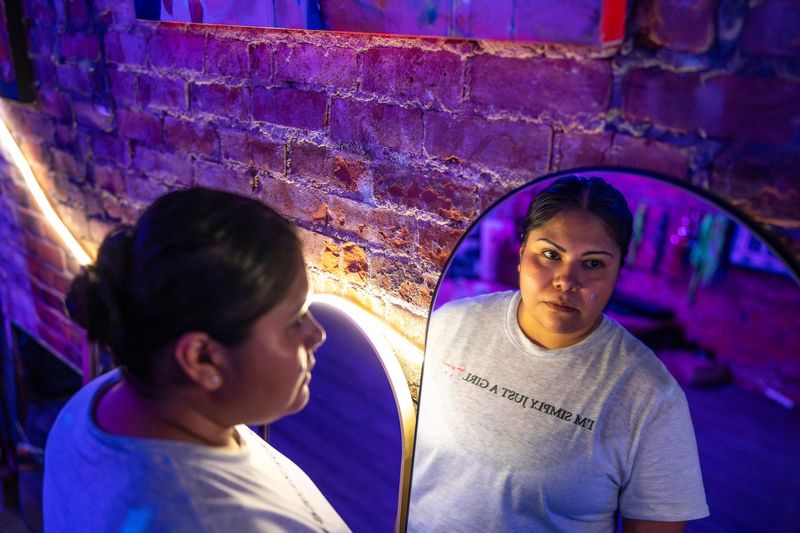
Suri Benitez, 35, was born in Mexico and lived in different parts of the United States before settling in Detroit. The mom of three leads a fitness class at a studio inside Vamonos, a local healthy eatery that also provides creative space to the southwest community. Benitez said she also involves herself with the Urban Neighborhood Initiatives, a nonprofit in southwest Detroit that delves into community and neighborhood issues, and teaches English and Spanish language classes.
Benitez said she would support Detroit becoming a sanctuary city — though, even if were to become one, it may not be enough, she said.
“No one is going to feel 100% secure unless it is guaranteed that ICE is not going to come, honestly. That’s the fear,” she said. “My son is 10, he’s in fifth grade. He will be talking to his friends and whenever Trump came (to Detroit) … immediately, right away, rumors: He’s like ‘Mom, I don’t want to go to school tomorrow, no one is gonna go,’ and I was like ‘Why?’ He’s like, ‘Well, because they’re saying since Trump is coming, ICE is gonna be all over the place, in school.’ That’s the scary thing, when your children start being scared.”
Part of the fear stems from warnings — true or not — spread on social media and within the community of claims that federal agents will be raiding common places nearby, urging residents to stay inside their homes. Benitez said it’s easy for residents to believe it, even if it’s untrue, because news media has been flooded with reports of such actions that have taken place across the country.
But having further clarity on DPD’s role might help.
“A lot of people look at the (local) police just like if they were ICE. Because they feel, now, if they get pulled over, something happens immediately, ICE is going to get called. I feel like it would make a big difference if they didn’t feel that way about the (local) police,” Benitez said.
Challenges also persist between different generations. Benitez said there is a lot of crucial information online about what to do if confronted by local police or federal agents, including in English and Spanish. But much of the community, particularly the older population, might not use social media and seeks more traditional forms of communication, like word of mouth. And the community will continue to worry, unless ICE is out, she added.
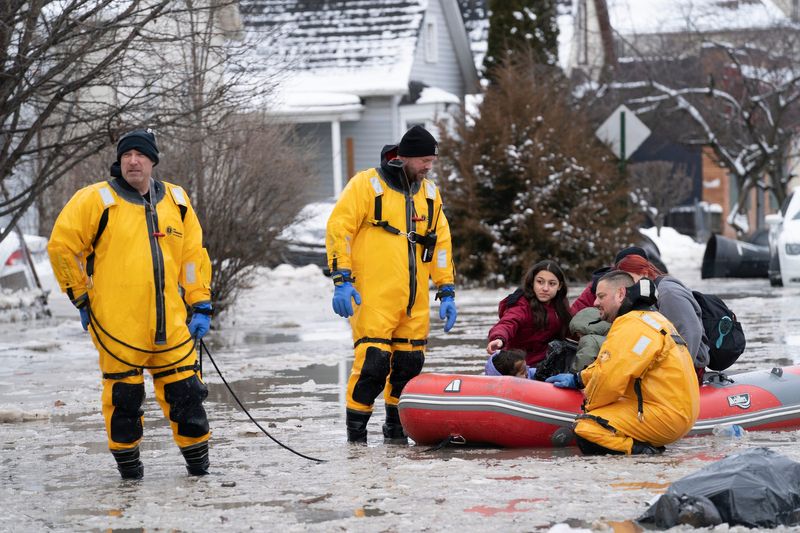
Last winter, dozens of southwest Detroit residents were displaced and devastated when a water main break flooded homes and destroyed furnaces, while also locking cars parked on the street in ice as the water outside froze in the midst of a stretch of bitter cold. While many families were forced to evacuate their homes for lack of heat, several stayed in their homes, despite the dangerous weather conditions, fearing federal agents would be lurking to detain them.
“Some people went out on foot, knocking door-to-door to see if everyone’s OK. I know that they were scared. They were scared that they would get tricked. No one actually saw anything (detainments), I believe, besides the tragedy itself. But everyone was scared,” Benitez said.
Seeing media reports of arrests and deportations nationwide is all she said she and others in her community can think about.
“It’s like a cloud over you. You could be having a good day, but right before you go to sleep, you’re like, ‘Dang, what about tomorrow? Or the day after that? Or how long is this good feeling going to last? Today, I’m enjoying my dad; tomorrow, who knows? Is he going to get snatched up from work?’ ” Benitez wondered aloud.
Santiago-Romero reiterated that she hears residents’ needs and cries for their local government to help protect them, but adopting sanctuary city status is not necessarily the solution, she said. However, providing greater protection could mean adopting sanctuary-like policies, such as zoning changes — particularly after the federal government listed Highland Park as a potential site for a detention center, which that city’s mayor opposed — and providing “Know Your Rights” training on ways to respond when a person’s rights are under threat.
“We’re trying to figure out, is there any zoning that we could do? I know there’s the fear of Highland Park creating its detention center. It’s within the city of Detroit (Highland Park is surrounded on all sides by Detroit). What if we said, you can’t build any of these detention centers within 5 or 10 miles of the city?” Santiago-Romero queried. “It’s about having those conversations about how we utilize policies, zoning and executive orders creatively.
“But these things take time.”
Though zoning modifications in the city take longer to process and Santiago-Romero said her office is looking into what can legally be done policy-wise, she said some immediate actions could involve civic leaders and residents becoming more vocal and working collaboratively on the community’s issues to develop robust mutual aid efforts, and to boost the city’s Office of Immigrant Affairs.
“Prior to this, I believe it (Office of Immigrant Affairs) was just like a shell of a department. Now, we’re pushing that it be resourced, that it be given power to do things,” Santiago-Romero said. “We did set money aside to do an evaluation, a needs assessment of the city for immigrants. It did not go very well last time … hoping that this time, we have new leadership, they can do the work.”
Mutual aid programs for the community, which involves providing resources and services, can be difficult because it relies on community trust, the council member said.
Santiago-Romero said she is trying to work with local organizations, “but they see me as an enemy for not making the city a sanctuary city. I’m trying very hard to have this work together because we can offer ‘Know Your Rights’ training, which we already did last year … but what if they (community groups) would be willing to work with every single (city) office, every district to do a mutual training.”
She cited examples such as signing up for Migra Watch training, an initiative to learn how to spot ICE agents in the neighborhood; neighbors being on-call for other neighbors who need help with daily tasks, like going to the grocery store or providing rides to school or the doctor’s office.
“People need groceries, they’re not even going out to get groceries,” she said.
Santiago-Romero noted that the city would have to work hard to find more creative solutions, and potentially look into how the budget can be used for aid.
“I’ve talked with the mayor about this to see if we can do that. The caution always becomes if we do this publicly, if we say we’re setting aside this money to support families that have been impacted by immigration … there’s already language at the state level and at the federal level of threats of removing funding for any municipality that wants to help, essentially, migrants,” Santiago-Romero said.
“But there is a willingness to figure out a way, maybe we give it to a nonprofit. … I am pushing the administration, if we can’t be forward about what we’re doing, to at least be connected to the organizations that are doing this work.”
She also said she expects the council to issue a resolution soon supporting legislation proposed by state Sens. Mary Cavanagh, D-Redford Township, Stephanie Chang, D-Detroit and Jeremy Moss, D-Southfield, establishing policies that would prohibit law enforcement from handing over identifying information for the purposes of immigration enforcement without a warrant; prevent officers from wearing masks to conceal their identity while exercising authority, and designate places of worship, hospitals, courthouses, and organizations providing services to pregnant women, crime victims, or individuals with disabilities, as protected spaces from ICE, unless it’s in the case of exigent circumstances.
Council member Mary Waters proposed a similar ordinance, dubbed “Alex Pretti Detroit No Masks” in honor of Pretti, 37, who was an intensive care nurse for the local Veterans Affairs hospital before he was shot and killed on Jan. 24 in Minneapolis by masked federal agents amid a government crackdown on immigration that spurred widespread protests. Pretti’s killing came shortly after federal agents shot and killed Renée Good, a 37-year-old mother, in Minneapolis. The council is expected to refer Waters’ proposal to committee in the coming weeks to set a public hearing.
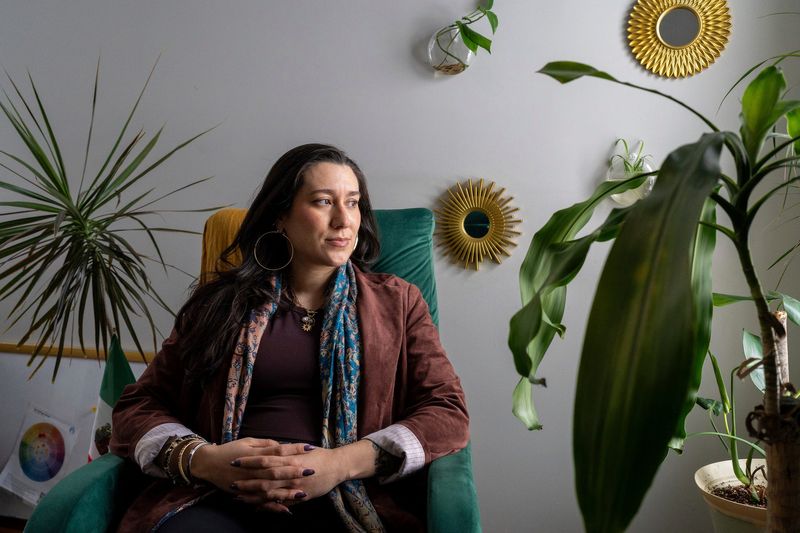
Yaxenia Vanegas, 34, is a clinical social worker, whose parents immigrated to the United States from Colombia.
Vanegas said she often deals with several clients — in and out of the country — struggling to have conversations with their kids about potentially being detained and deported.
Some of those conversations include what to do in the event their kids come home from school and their parents are not there, “or who are they going to sign power of attorney to for their kids,” she said. She also specializes in helping those with autism, ADHD and other special needs.
“For parents with special needs kids, it’s not easy. Sometimes, they have services or severe needs requiring specialization. That has been challenging to figure out how to plan around,” Vanegas said. “There’s a lot of anxiety happening because of that. I have different families who, parents cannot go out on their own. They have to always have one parent at home (so that) just in case something happens, there’s a parent still here and available with the kid.”
Vanegas said she has to be realistic with them.
“I’m not a neutral or apolitical therapist. I very much have my politics, and I let parents know they’re not crazy, and it’s not silly or dumb for planning something like this. It’s a lot of affirming, and talking about the political moment that we’re in, and coming up with best-worst case scenarios to have a plan,” Vanegas said.
Ideally, there would be more done to help people feel safer walking on their streets, Vanegas said. She recalled attending a community event last year involving police and public safety, where she was asked what police could do to make her feel safer.
“I was like, ‘Well, if there’s an ICE raid or something, can we call you to help us?’ And obviously they can’t. But, ideally, can we count on you to not cooperate with ICE?,” Vanegas said, adding that certain zones should be considered safe spaces and prohibit federal agents, including religious spaces, schools, hospitals, community centers and other places where people congregate and seek services.
Though, in the meantime, Vanegas said city officials should boost mutual aid development and support local organizers and social workers on the ground to have more capacity to help their communities.
Additionally, the Detroit Community Action Committee prepared an ordinance for the city to consider. It lists restrictions, such as preventing city collaboration or information sharing between any of its departments and ICE; prohibiting immigration authorities access to city facilities and databases without a judicial warrant; stop making individuals in city custody available to federal immigration authorities and limiting contact during immigration-related interviews and more.
“What a sanctuary city policy will do is, it would prohibit our city from giving them (ICE) any resources in terms of letting local PD help them — in terms of funding them, helping them get new buildings, new detention centers — that funding would be harder for them,” Rodriguez said. “We want a situation where its really difficult for ICE to operate.”
Dana Afana is the Detroit city hall reporter for the Free Press. Contact: dafana@freepress.com. Follow her: @DanaAfana.
This article originally appeared on Detroit Free Press: Detroit urges transparency from DPD, questions limiting ICE operations
Reporting by Dana Afana, Detroit Free Press / Detroit Free Press
USA TODAY Network via Reuters Connect