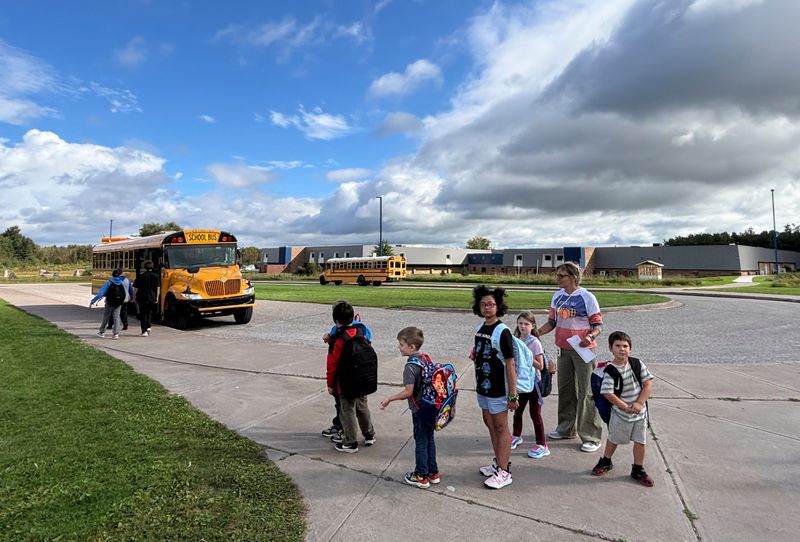
Drummond Island ― School starts at 8:30 a.m., but Mother Nature has the final word on when students actually make it to their seats in this remote district at the eastern end of Michigan’s Upper Peninsula.

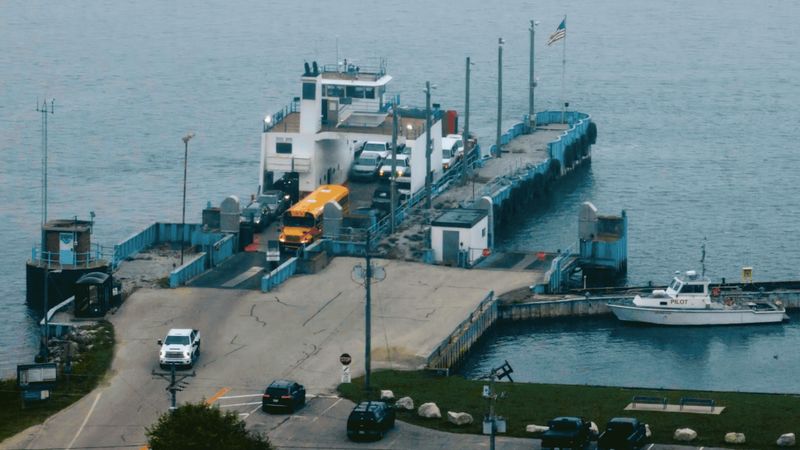
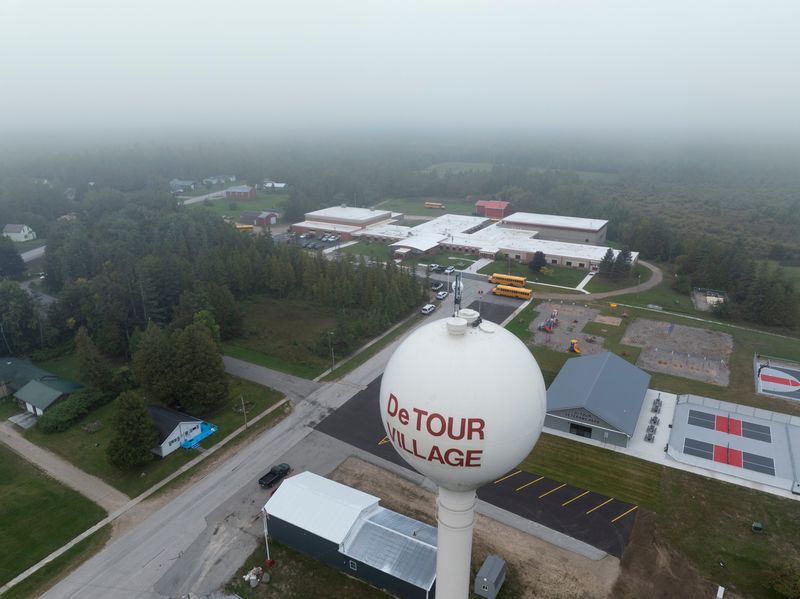
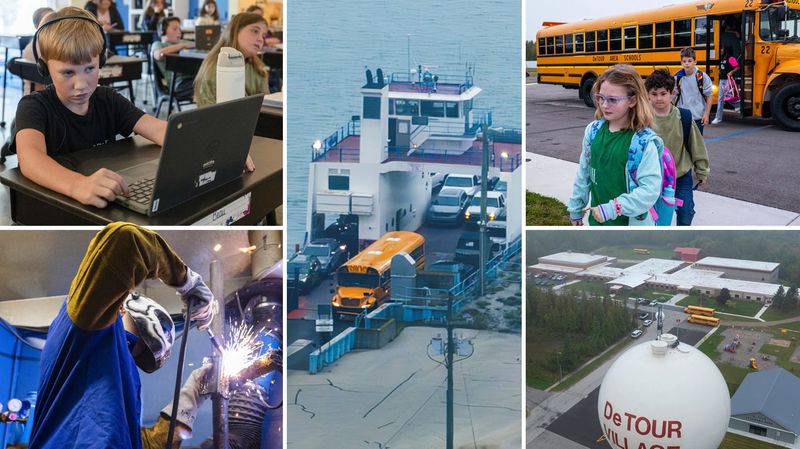
DeTour Area Schools spans 367 square miles, includes an island and is bisected by the St. Mary’s River. For students on the mainland, this means bus routes up to 90 miles long. For islanders ― students who call Drummond Island home ― it means boarding a ferry each morning to cross a mile of the international waterway to get to high school on the mainland.
During the school bus journey, students on the ferry might encounter rough seas and winds up to 40 mph. The river is solid ice this winter, other than a narrow channel, carved by the ferry’s icebreaker hull and just wide enough for the boat to navigate back and forth to the docks.
“Our school time is essentially dictated by a ferry boat, and we live by that ferry boat,” Superintendent Robert Vaught told The Detroit News during a recent visit to his district. “It’s where our population lives and our teaching staff. We have teachers come over each day. They’re up bright and early, and they get home late.”
The business of educating children in rural, remote and sparsely populated areas of Michigan brings distinct challenges and higher operational costs than in other parts of the state, and transportation is just one of the reasons school officials are lobbying Lansing for more money to support the vital role they play in their communities.
To highlight the challenges and opportunities facing remote districts, The News traveled to the eastern Upper Peninsula to visit DeTour Area Schools, Mackinac Island Public Schools and Sault Area Public Schools this fall, spending mornings and afternoons with educators, superintendents and students inside school buildings and along winding bus routes and ferry boat trips.
Isolated districts with smaller student populations face greater challenges in achieving economies of scale in supplies and services, which drives per-pupil costs higher. Smaller tax bases make it harder to cover operating costs, let alone unexpected expenses such as repairing a roof crushed by heavy snow. Geographic isolation makes it harder to attract and keep teachers.
A lack of affordable housing in remote areas of the state means educators have nowhere to live in their district communities ― some have commuted by ferry every day.
By the third week of January this year, ferries stopped running to and from Mackinac Island, where enough ice has built up in the Great Lakes that locals expect an “ice bridge” to form, a passage that allows snowmobilers to cross.
That means the sole public school on the island must get food and supplies delivered via airplane. Even student-athletes travel by air to competitions when ice makes passage impossible. But the challenges don’t end there. Once items make it to the airport, they still must be sorted and delivered to the school via horse-pulled wagon, Mackinac Island Schools Superintendent Kelly Lipovsky said.
“With the severe, cold temperatures, sometimes our food items are frozen when they arrive, so we have to be mindful of what we plan for in the winter months,” she said.
To address these hardships, rural district leaders say they need more financial help from Lansing at a time when school budgets are stretched throughout the state.
“We are everybody’s playground up here, but we often get forgotten,” Vaught said.
During its visit to these districts, The News spoke to many who find joy amid living north of the 45th parallel and embrace a different, slower-paced life. Many have families who have lived in the eastern U.P. for generations, and others have come to the U.P. from downstate cities and have no plans to return to life south of the Mackinac Bridge.
Maddix Morse, one of two seventh graders at Mackinac Island Public Schools, says attending school on an island gives him a level of freedom he never experienced downstate near Grand Rapids, where he once lived.
“It’s pretty fun to hang out with people. Where I’m from, you couldn’t go around, run around on the roads. It’s really dangerous,” said Morse, who drives a snowmobile to school in the winter. “But up here, everyone knows you, and you can do whatever you want.”
‘We have to remain relevant’
But that choice comes with a cost amid the constant battle for state funding to keep their tiny districts open and thriving.
Superintendents from these districts told The News that while their schools are the centers of their remote communities, they often get short shrift during legislative debates in Lansing on issues such as funding gaps and improving educational outcomes.
“One of the things that we have to do is we have to remain relevant out here, and that takes a lot of legwork,” Vaught said. “I drive down to Lansing many times with other superintendents in our area. There does seem to be a disconnect north of Bay City. Everybody likes to come to Pure Michigan, but they don’t want to hang out here all winter long.”
The need for bus drivers in the DeTour district, for example, is so acute that one of Vaught’s kindergarten teachers drove 96 miles one-way to Petoskey on a Sunday in November to take a driving test to become a school bus operator to help the district.
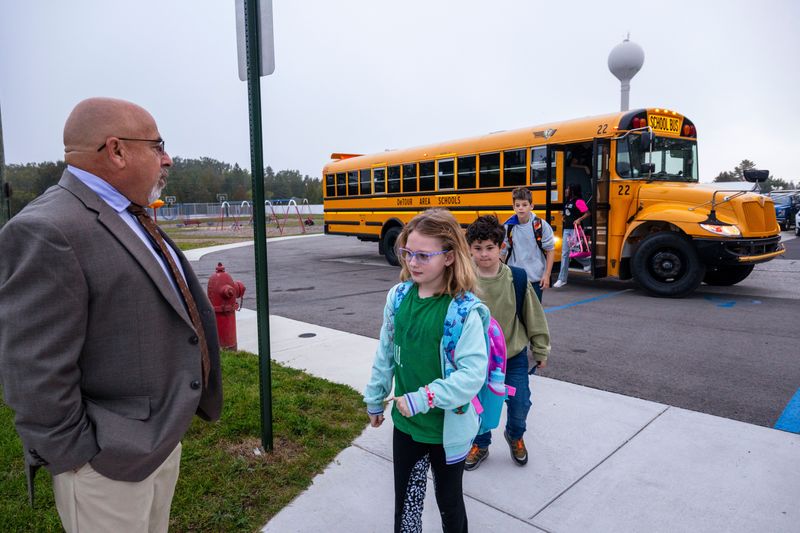
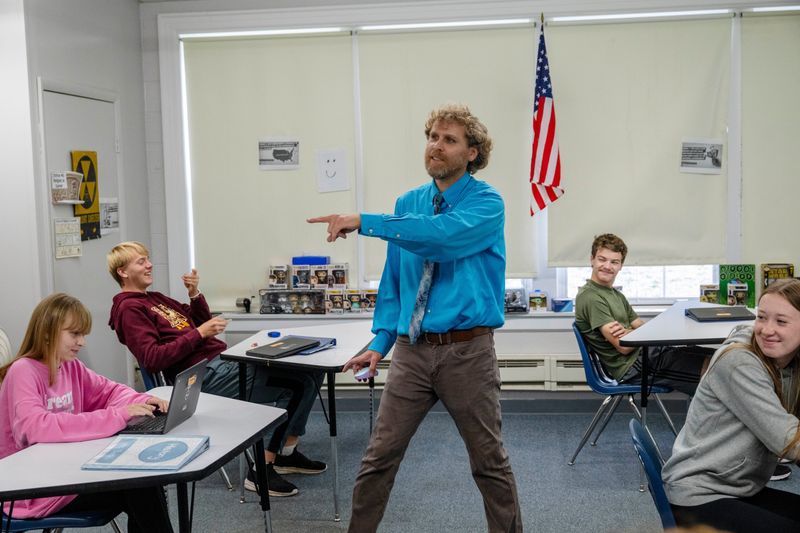
During The News’ visit to DeTour, Vaught stood at the door of DeTour Arts and Technology Academy, greeting wave after wave of students and sending them off to class with high fives. It’s a guess many days as to when they will all arrive. Many get home after dark. Bus rides on the mainland can be 90 miles one way.
“We’ve got to know exactly when we bring our kids over on the boat, and we know when we have to get them back,” said Vaught, who has the ferry’s schedule memorized and radios the staff about its departure. “I mean, there’s a general rule of thumb, we want our kids home by 6:30 on any given night. It’s not always possible.”
Michigan’s rural schools matter greatly for community life, says David Arsen, a professor of education policy at Michigan State University who has led studies on key long-standing challenges in rural schools.
They are crucial settings for developing and enhancing social ties among local residents and are intricately tied to a community’s identity. Schools also serve as vital sites for civic engagement and democratic decision-making, Arsen said.
“They have dedicated educators, leaders. They’re committed to their communities. They are absolutely key institutions in these communities, in terms of sites for civic engagement, for recreation, and for family and social support,” Arsen said. “They are one of the largest, if not the largest, employer in nearly every rural community.”
Michigan’s public school system educates 1.37 million K-12 students in its traditional public schools and charter schools. Roughly two-thirds of Michigan’s districts are classified as rural, though they enroll less than one-third of the state’s schoolchildren.
About 292,000 students attend schools in rural areas of Michigan, ranging from the state borders of Ohio, Indiana and Wisconsin to Michigan’s Thumb to the Upper Peninsula.
In some of the state’s farthest-flung districts on islands and along rural routes, classrooms can host as few as a handful of children, but the cost to educate them can be higher than for those in urban and suburban classrooms.
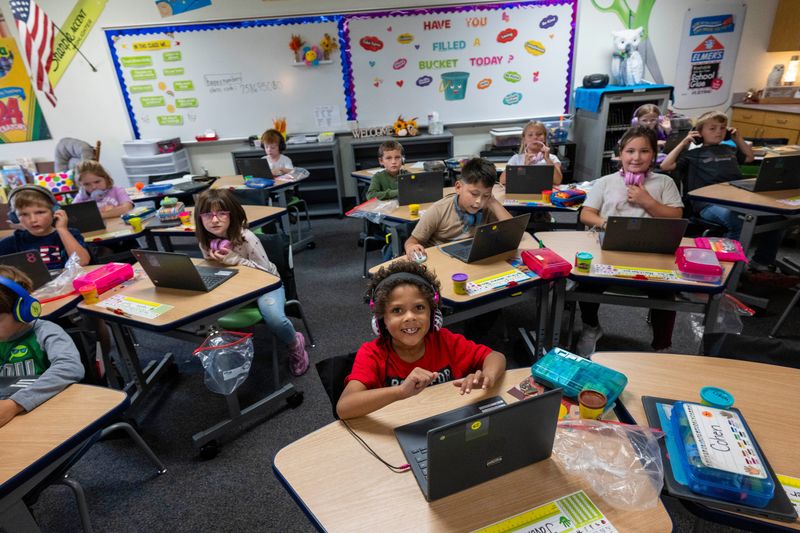
DeTour operates two districts, a traditional and a charter, that serve about 152 students. Mackinac Island has 75 students in a single school building, while the Soo educates about 1,800 students in three buildings.
Lipovsky, the only school administrator in a district of 75 students, has no problem attracting applicants for teaching positions. But she can’t hire educators unless they have a place to stay on Mackinac Island, which has a housing shortage.
One of her elementary teachers started the school year commuting to the island from the Upper Peninsula community of St. Ignace each morning and afternoon via a 16-minute ferry. In bad weather, the teacher would sleep on a friend’s couch on the island.
The Mackinac district owns a duplex on the island for teacher housing in a neighborhood called Harrisonville, but it was already occupied.
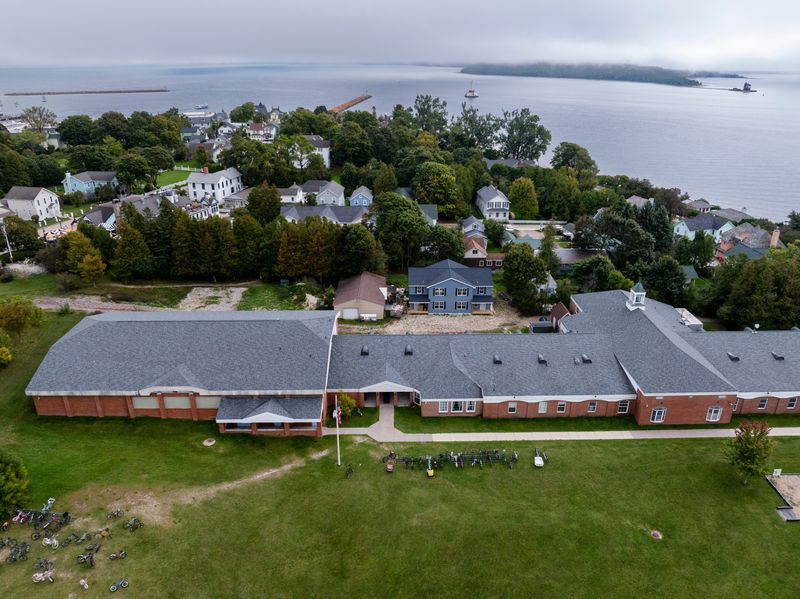
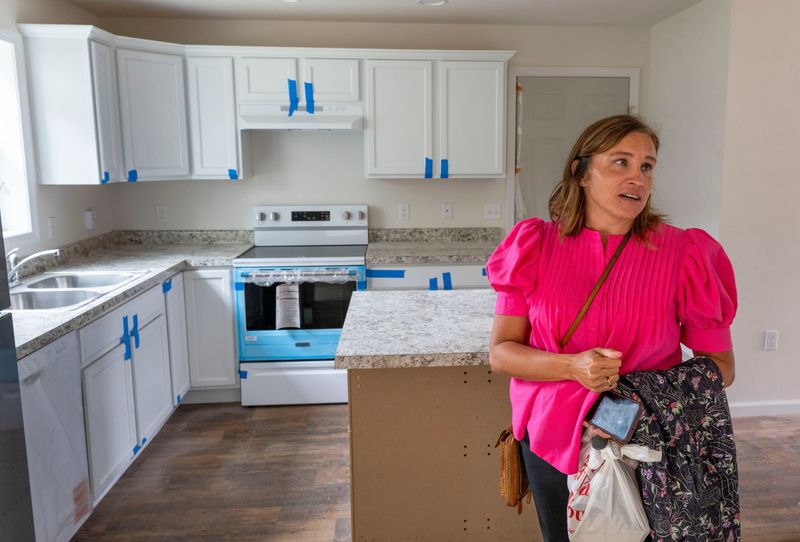
So this school year, Lipovsky used district funds to build a second duplex behind the island’s single K-12 school on Main Street, where draft horses clop down the road and Lake Huron laps the shoreline nearby. Teachers and school staff moved into the housing in January; Lipovsky declined to disclose the cost.
“There’s a debate whether you can spend that money on housing or not across the state, because you’re supposed to spend things on the direct needs of kids,” she said. “But if we don’t have the housing, we don’t have a school, because logistically, it’s very, very difficult for staff to come across on a ferry, and then in the wintertime, we’re paying for flights, and that’s not very reliable.”
Proposed legislation from Sen. John Damoose, R-Harbor Springs, that would allow districts to use district funds to build housing for employees remains stalled in committee.
The fight for extra funds
The state defines rural districts in multiple ways and does provide extra funding to accommodate their unique needs, though officials say it’s not enough.
The National Center for Education Statistics categorizes rural districts into three groups — distant, fringe, and remote — based on their degree of geographic isolation from urban centers. The NCES is a federal statistical agency responsible for collecting, analyzing, and reporting data on the condition of U.S. education.
In Michigan, 154,000 rural students attend fringe districts, which are outside urban areas within 5 miles of a city with a population of 50,000 or more. Nearly 103,000 attend distant districts, which are outside urban areas within 25 miles of a city with a population of 50,000 or more. About 35,000 students attend remote districts, which are more than 25 miles from a city with a population of 50,000 or more.
In the Eastern Upper Peninsula Intermediate School District, 6,000 students are enrolled across 19 districts. The smallest is Bois Blanc Pines School District, with six students, and the largest is Soo schools, with 1,800 students.
Michigan school districts transport an average of 500,000 students annually, cover over 100 million miles and spend an average of $628 million to ensure students attend school, according to the state Department of Education.
But rural districts have only recently been able to benefit from a new funding model that takes their special needs into account.
For nearly the last three decades, districts with massive transportation costs were on their own to figure out how to cover ballooning budgets, often spending between 10% and 15% of their general fund just to get a student to the classroom.
It wasn’t until 2023 that the Michigan Legislature appropriated $350 million to reimburse all districts for general education transportation based on a formula involving riders per square mile and the cost per rider. Lawmakers allocated $125 million a year for budget years 2024, 2025 and 2026.
State Rep. Betsy Coffia, D-Traverse City, introduced the 2023 bill to address the need for equitable funding for rural school transportation, creating the tiered per-pupil-per-mile funding model. The state’s previous models did not account for the unique challenges rural districts face, Coffia says, leaving students shortchanged.
“Rural school districts don’t have their own lobbyist. They don’t have some of the same resources that larger districts who are even just closer and can come talk to their rep at a random event,” Coffia said.
“(School transportation) is not a sexy topic, but it is really fundamental for making sure that rural school kids, that we’re investing equitably in their education. Free up those dollars that are going into the gas tank to actually go into art and music in college prep and field trips.”
Amy Scott-Kronemeyer, superintendent of the Sault Area Public Schools, says transportation funding has a major impact on her far-flung district.
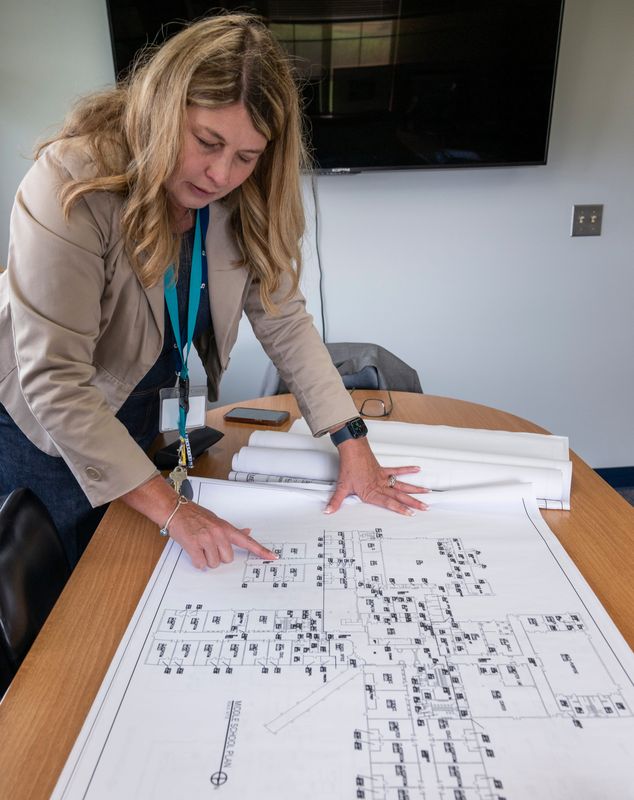
The Sault school budget is $30 million, with $1.03 million going to transportation last year. Her bus drivers covered 158,916 miles of student routes last year. The district lowered that number to 112,812 after revising its transportation plan to accommodate a reconfigured campus last summer that included closing two buildings.
“We’re 274 square miles that we need to bus daily. We have, in some places, less than one student per square mile, and that is a unique challenge,” Scott-Kronemeyer told The News during an interview in her office in September.
“So we have to allocate more revenue towards busing and transportation. We also have to allocate more revenue towards professional learning for our teachers to get the same training downstate as other teachers. It takes a lot more resources to do that, almost double the cost of attending a conference because of the travel.”
Aside from special considerations for transportation funding, the state also provides an extra annual allocation to small, geographically rural and isolated districts in Michigan.
This funding is for districts accessible by bridge and with fewer than 10 pupils per square mile. It goes to five rural districts, each receiving about $780,000. Another 208 districts receive a total of $8 million in formula-based funding.
The funding is designed to help these districts cover the higher operational costs associated with serving a dispersed student population and maintaining multiple, distant school buildings with low enrollment numbers. The state has increased the allocations over time, but rural educators say it still isn’t enough to cover needed expenses.
In 2022, districts received $8.42 million in that special funding, or about $61.84 per student. The amount increased to $11.6 million in 2024, and in October, lawmakers approved nearly $12.9 million for districts for the 2025-26 school year.
State Superintendent Glen Maleyko said he is a strong proponent of ensuring equity in school funding. The state education department has successfully advocated for more equitable funding and targeted support for rural schools to address higher transportation costs, support teacher recruitment and retention, expand access to mental health supports for students and increase access to career and technical education programs, Malyeko said.
Maleyko said earlier this year that the department shared its 2026 legislative priorities with state lawmakers, including continued adequate and equitable funding for pupil transportation, which is especially critical for rural districts that must transport students across greater distances.
“They also include continued support for the Michigan eLibrary, or MeL, which provides equitable access to high-quality information resources for students, educators, libraries, and communities across the state, including in small and rural districts,” Maleyko said. “These priorities reflect my broader commitment to ensuring that a student’s ZIP code does not determine the quality of education they receive.”
In Michigan this past fall, many superintendents in Michigan’s rural areas held their breath as state lawmakers delayed approval of a school aid budget until October.
That’s because House Republicans had passed a 2025 budget proposal that aimed to consolidate and eliminate many so-called supplemental grants — 128 in all — that cover specific expenses like transportation. The plan was to take that pot of money and use it for funds for all students across the state, regardless of need and location.
That proposal never came to fruition, but rural districts that rely on the supplemental funding to defray their higher costs were alarmed.
“Even with free meals last year, we still had to supplement 60% from our general fund just to offer the free breakfast and lunch, because we get the same amount that anyone else does, even though we have all these additional costs,” Mackinac Island’s Liopovsky said. “And so that’s really why the isolated school money is super helpful to pick up some of those additional costs. … Everything that comes across my desk is much more expensive than you anticipate it’s going to be.”
Damoose, the Harbor Springs lawmaker who represents communities in the northern Lower Peninsula and part of the Upper Peninsula, said he fought against proposed categorical cuts, which he said would have been catastrophic to rural districts.
Damoose said he asked superintendents from his district to prioritize several categories of targeted funding. They landed on transportation, school safety, mental health, and school meals.
“Those were the four that we were most concerned with, and we got all four of those back (in the 2025 state budget). That said, there is a movement to get rid of these categoricals that I think we’re going to have to just keep pushing back on every year,” Damoose said. “Because this idea of rolling up the categoricals into one big supplement isn’t going to work for our districts. We have unique challenges.”
Solutions for rural schools
Districts in rural areas are susceptible to severe teacher shortages due to their smaller size and a limited supply of new teachers and credentialing institutions in their local area, according to a 2025 study by MSU’s Education Policy Innovation Collaborative. The study found rural districts were more likely to experience high turnover and vacancy rates and often relied heavily on under-credentialed teachers.
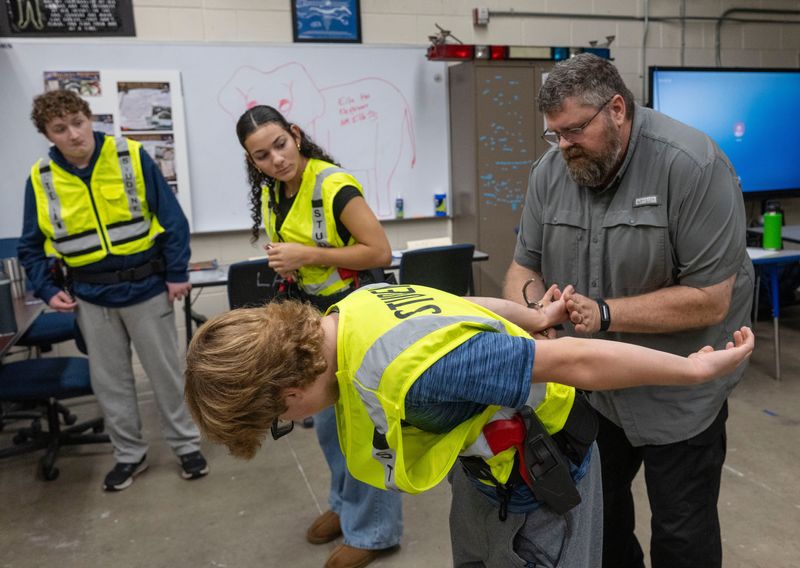
In recent years, lawmakers have introduced solutions, including increasing teacher pipeline grants, known as “Grow Your Own,” which encourage districts to train their own educators within their student and staff populations. The state is also working to add or expand career and technical education programs in areas that lack them, often in rural communities.
Another way to address the problem was the creation of a no-cost “hub” to credential teachers in mid-Michigan. Through the Michigan Legislature, the state Department of Education awarded a $15 million grant to Central Michigan University to address certified teacher shortages in rural school districts.
At the MiCAREER (Michigan Consortium for Addressing Rural Education Expansion and Retention) hub, school staff who are not yet certified and prospective teachers in rural communities can earn educator licenses at no cost.
Kathryn Dirkin, MiCAREER’s director of partnerships and programming, said that since starting the program in August 2024, the hub has been working with 200 applicants seeking credentials. Many are veteran teachers seeking additional credentials, others are working in districts on temporary credentials and some need help finishing their bachelor’s degree or are coming from out of state.
The hub is funded with a four-year state grant and is expected to support hundreds of educators and thousands of students in its first few years. Dirkin said she has learned a lot about the challenges and assets of rural educators.
“Teachers are asked to wear multiple hats — that is a unique constraint to a rural district. They roll up their sleeves and they work together,” Dirkin said. “We are learning there are amazing people working in these areas, connecting with their communities in fabulous ways.”
Scott-Kronemeyer, from the Soo, says two years ago her district was in a staffing crisis. So they started programs and partnerships to help train and retain staff, including with Teacher for America Detroit, a regional branch of a national organization that recruits, develops, and supports teachers, especially in high-need schools.
“(It) changed the trajectory of many of our teachers wanting to stay in the district,” she said. “We’ve received Grow Your Own grants to help our paraprofessionals and other partners within the district grow into educators. They’re here. They want to be here. They love this community. They’re raising their children in this community. We’re growing them as teachers as well. That’s been huge.”
Sometimes, attracting and retaining teachers has more to do with people not being able to thrive in an environment where deer, elk, moose and bears are more common than humans on some days. Or a drive to the grocery store is more than an hour.
“We lose people because they fall in love or it’s too small for them,” DeTour’s Vaught said. “They grew up in a different area, and they’re not used to being geographically isolated, with snowmobiles and pickup trucks everywhere, and they want to be near a city, so that’s what we have a problem with.”
The future of rural education
With smaller budgets, rural schools often face the challenge of offering a wide range of courses, extracurricular activities such as traditional athletics, and support services like college counseling or mental health services.
All three superintendents said their districts offer a world-class education experience — even if their size sometimes requires creativity.
DeTour’s high schoolers are headed to France this spring on a study abroad program, for example, but the district had to merge its football team with a nearby rival and play eight-man football, instead of the traditional 11. Soo schools has built a robust career-technical education program that draws students from across the eastern U.P., but was forced to consolidate its five schools into three to save on operating costs.
Mackinac Island students get the services of a social worker up to a day a week, but have the support of the Mackinac Island Community Foundation, which makes grants available for students’ immediate needs. Last year, juniors and seniors traveled to Washington, D.C., through those grants.
Graduation rates for the three districts are on par with the statewide average of 82.8%. In the Soo, the graduation rate has been around 87% for the last three school years, with 189 students graduating. Graduation rates at DeTour Area schools and Mackinac Island school were 100% last year, with each district having fewer than 10 students in the senior class.
Educating young people in Michigan’s rural areas is also affected by declining population growth and federal funding cuts that have targeted public education, experts say. On average, residents of Michigan’s rural communities are older, have lower levels of postsecondary educational attainment, and lower incomes than nonrural residents, MSU’s Arsen said.
“They’re falling further behind, and it’s very difficult for their school systems to match the opportunities that are available in better-resourced metropolitan schools,” Arsen said.
According to a June report by the nonpartisan Center for American Progress, the Trump administration’s plans to abolish the Department of Education and slash its workforce pose a serious threat to public education and will harm rural districts that rely heavily on state and federal funding and lack local revenue.
The 2025 Rural Policy Action Report, released in October, called for strengthening public schools amid attacks on public education, increasing universal pre-K, funding teacher recruitment and retention, and making college and vocational programs more affordable through federal Pell grants.
As the federal government continues to downsize the U.S. Department of Education, Coffia, the state representative based in Traverse City, sees Michigan’s role as counterbalancing what she called federal chaos. Coffia said rural schools need targeted support to meet their unique needs compared to urban and suburban schools.
“You know I would challenge anyone who says they care about kids and education to look me in the eye and tell me it’s OK to underfund rural children,” Coffia said.
jchambers@detroitnews.com
This article originally appeared on The Detroit News: Rural schools face down bears, budget shortfalls in Michigan’s most remote corners
Reporting by Jennifer Chambers, The Detroit News / The Detroit News
USA TODAY Network via Reuters Connect