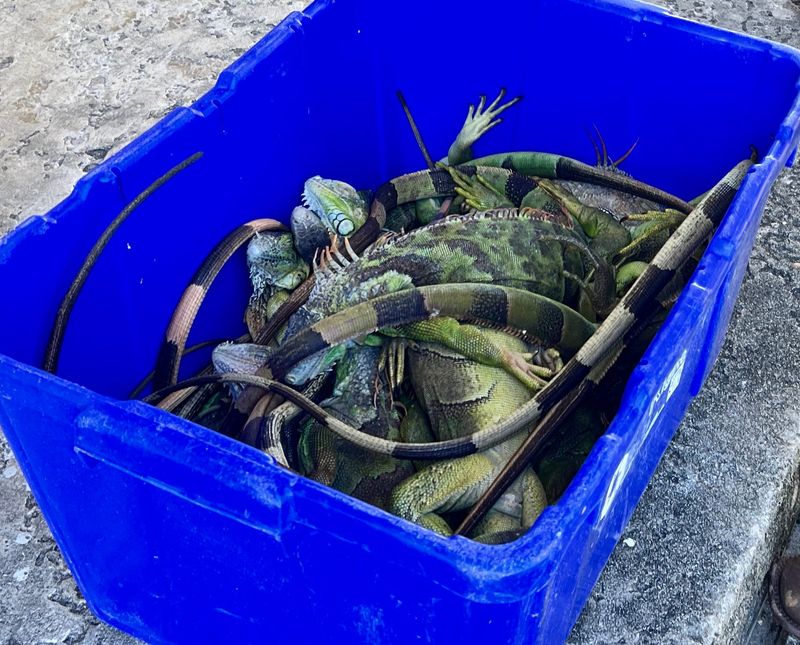
Hundreds of cold-stunned iguanas were dropped off at Florida Fish and Wildlife Conservation Commission offices Feb. 1 after a historic cold front sent temperatures plummeting to record or near-record lows.
The commission issued an executive order Jan. 30 temporarily allowing the transport of the invasive species without a permit to five designated FWC sites throughout South Florida, including one in Tequesta where a steady parade of iguanacicles were dropped off in coolers, recycle bins and pillowcases.

The iguanas, which were recently added to the state’s Dirty Dozen invasive species list because of their growing population and the increasing damage they are doing, will be humanely euthanized by FWC officials.
Thomas Reinert, FWC regional director for the southern region of the state, said he wasn’t sure what to expect after the order was made public late Friday.
But two hours after opening the Tequesta office, he said about 50 iguanas had been brought in with hundreds more left at the Sunrise office.
“We haven’t had this kind of weather for about 15 years and the iguana population really has expanded a lot and they are having a very negative impact on the environment,” Reinert said. “They are having an impact and this is a unique opportunity to collect them when they are easy to get.”
Iguanas can become either immobilized or sluggish when temperatures hit between 40 and 50 degrees. Longer cold snaps with overcast skies that prevent basking for warmth can be deadly as the paralyzed iguanas become easy prey to vultures, bobcats and coyotes. Also, when the lizards are immobilized by the cold, their digestive systems sour and they can die from bacterial infections.
They can reanimate if it’s a short cold spell and they warm up, which is one reason FWC asked that people bring the iguanas in cloth bags and sealed in a plastic container.
But officials weren’t about to turn away iguanas that came by other transport.
Tony More, of Lake Worth Beach, picked up more than 25 iguanas and brought them in a blue recycle bin to the Tequesta office.
“It wasn’t hard, they were just everywhere,” More said. “We probably won’t get many opportunities like this to get these invasive species out of here, so you take advantage of the fact they are catatonic because any other time they are very elusive and hard to catch.”
The five drop-off locations will also be open Monday, Feb. 2 from 8 a.m. to 4 p.m. and include:
While it can be a novelty to see an iguana prowling in the backyard or joke about them falling from trees during cold snaps, the proliferation of iguanas has become a systemwide problem in the Everglades and urban areas.
They burrow into canal banks and levees that control South Florida’s flood system, eat expensive landscaping, cause power outages, and can mean pricey fixes to equipment damaged by feces or nesting.
Reinert didn’t think the cold weather would completely kill off the iguana population, but it could put a good dent in it, he said. The executive order expires Monday.
Temperatures around South Florida on Sunday hit record lows in the 30s with wind chill temperatures in the 20s.
In West Palm Beach, the overnight low of 31 degrees as measured at Palm Beach International Airport broke the record of 36 degrees set for that day in 1909.
Miami also broke its 1909 record cold of 36 degrees by hitting 35 early Sunday.
Naples and Fort Myers reached 39 and 35 degrees, respectively, which was far below average but a few degrees shy of record breaking.
Kimberly Miller is a journalist for the USA TODAY NETWORK FLORIDA. She covers weather, the environment and critters as the Embracing Florida reporter. If you have news tips, please send them to kmiller@pbpost.com. You can get all of Florida’s best content directly in your inbox each weekday by signing up for the free newsletter, Florida TODAY, at https://palmbeachpost.com/newsletters.
This article originally appeared on Palm Beach Post: Hundreds of cold-stunned iguanas dropped off at FWC offices in South Florida
Reporting by Kimberly Miller, USA TODAY NETWORK – Florida / Palm Beach Post
USA TODAY Network via Reuters Connect