Snapshot Wisconsin, the statewide trail camera project led by the Department of Natural Resources in coordination with about 1,800 volunteers, is expanding.

No, not into Minnesota or even that portion of Michigan to the north that if it weren’t for the Toledo War and Frostbitten Convention of 1836 would likely be part of the Badger State.
Snapshot is growing in Wisconsin by adding to its quiver of data collection capabilities.
As you likely know, since 2015 the project has used trail cameras to gather images of wildlife across the state. In 2025 it celebrated its 10th year of operation and 100 millionth image captured. The data is supporting DNR management decisions for 14 species, including by assisting with fawn-to-doe ratios for white-tailed deer.
After celebrating those milestones, Snapshot organizers set their sights on the next chapters.
Late in 2025, some project volunteers began deploying more equipment at their trail camera sites: snow stakes, temperature sensors and audio recorders.
The additions will allow researchers to broaden the scope of Snapshot Wisconsin to study phenology, or the cyclical timing of natural events.
“We’re working to gather a better-than-ever understanding of seasonal changes and how flora and fauna respond, not just in winter but year-round,” said Kyra Shaw, DNR research scientist and Snapshot Wisconsin phenology project coordinator.
The Snapshot Wisconsin phenology effort is funded by a grant from the NASA Citizen Science for Earth Systems Program.
Shaw, who holds a doctorate from the University of Wisconsin-Madison, helped roll out this latest initiative of the project over the last year or so.
Snapshot has 1,824 trail camera hosts who have 1,851 trail cameras deployed statewide, Shaw said.
The cameras are in each Wisconsin county except Menominee. Seventy-five percent of the trail cams are on private property.
The phenology aspect of Snapshot started last winter with a pilot project involving 24 volunteers who put out snow stakes. Based on feedback, a couple modifications were made and in fall 2025 Shaw organized the official expansion.
Three hundred eleven hosts in 61 counties now have installed snow stakes, 200 have added temperature sensors and a smaller number have received or will get audio recorders.
Trail cams have become ubiquitous in the last couple decades and have revolutionized remote wildlife observations for biologists, hunters and others.
The new equipment, though, will add substantially to the Snapshot project, Shaw said. The work is being conducted in partnership with UW-Madison staff and graduate students.
“We’ll be looking at things like the timing of spring green-up and the period that snow is on the landscape,” Shaw said. “Also, the sound data will help us pick up the presence and timing of animals like songbirds and amphibians that might be too small to be captured on the trail cameras.”
In addition, having an array of cameras and sensors in the understory will allow information to be gathered in microclimates and other areas not accessible by satellite imagery.
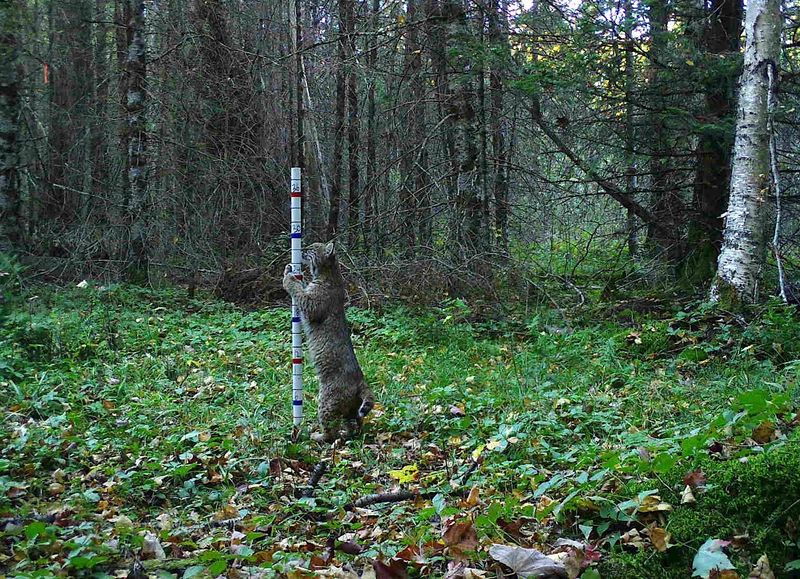
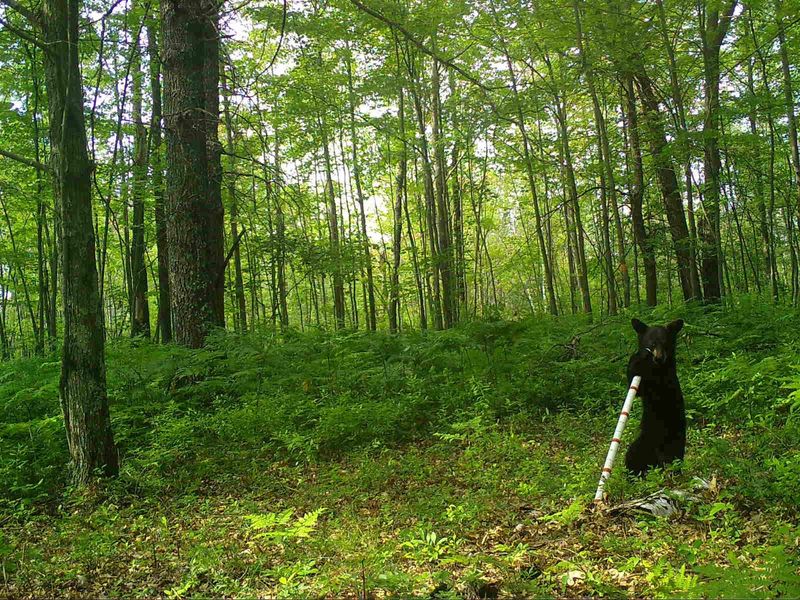
The snow stakes are 3-foot-tall PVC pipes, marked every 2 inches and held upright by a piece of rebar sunk into the ground. Snapshot researchers will use images of stakes to measure the depth of snow at each site. The cameras are programmed to take one image each day specifically for this purpose, Shaw said.
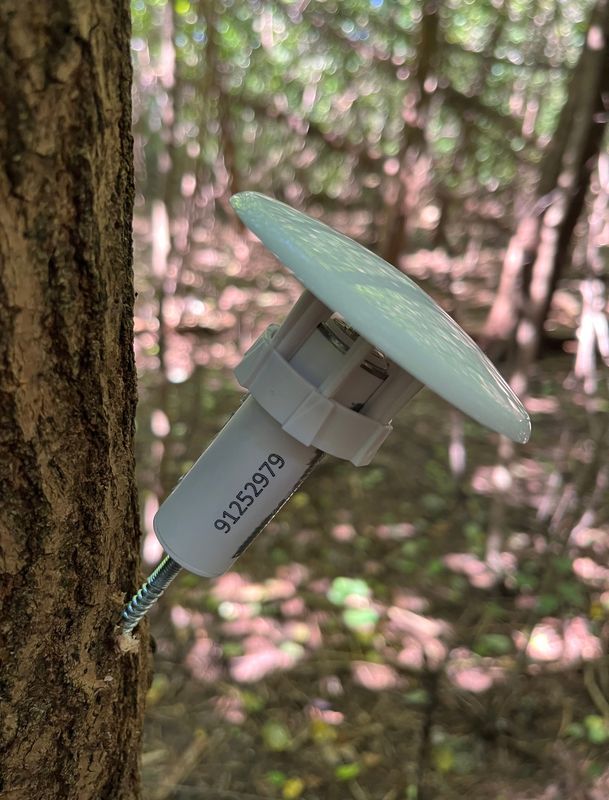
The temperature loggers are small cylinders screwed directly into the side of a tree near the trail cam. These sensors record the air temperature once every 15 minutes, which will allow for detailed exploration of daily and seasonal temperature variation, as well as temperature extremes at each site, according to Snapshot literature.
In addition, some sites have placed or will be installing audio recorders to pick up animal sounds, Shaw said.
The units will record the soundscape over the annual cycle, which will provide valuable information on some of the species that would be missed by the trail cameras.
Acoustic data could also help researchers improve monitoring of some vocalizing game species, such as wild turkeys. And these recordings will help understanding how seasonal changes affect Wisconsin’s soundscapes, Shaw said.
The trail cams are already supplying some entertaining images of wildlife interacting with the new equipment.
Wonder how tall a bobcat can stand? Courtesy of a trail cam in Oneida County, the answer is at least 30 inches.
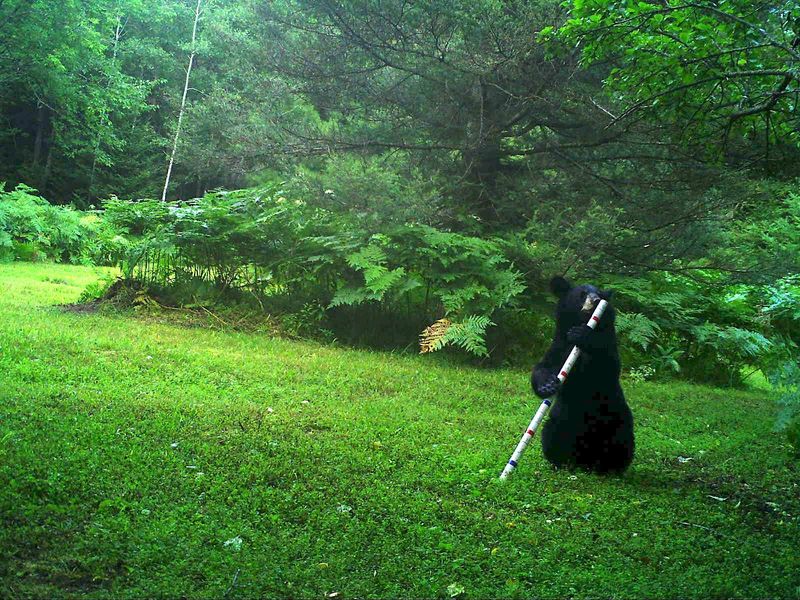
It’s probably a good thing black bears spend the winter in dens.
Last summer the curious animals were captured in several images messing with the snow stakes, including a bear cub in Wood County. No harm, of course, because snow had yet to fly.
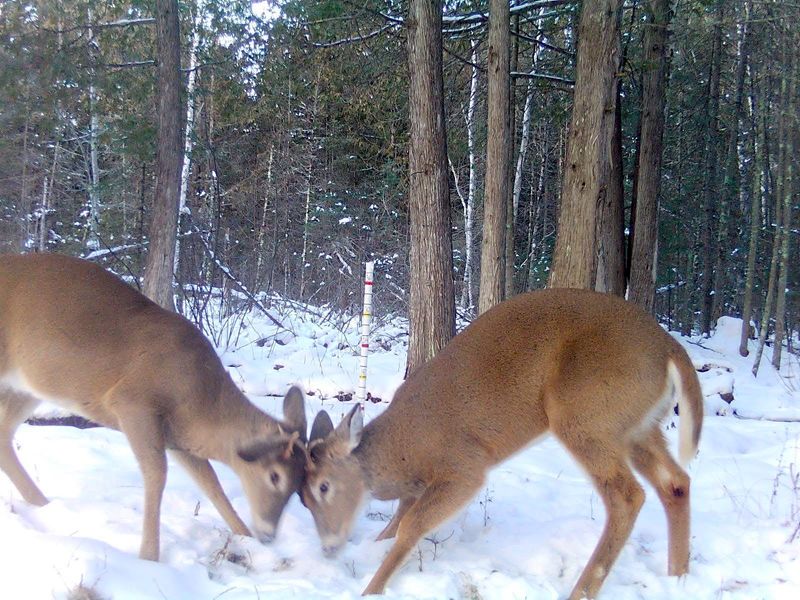
Another striking scene captured by a Snapshot trail cam shows a pair of white-tailed deer sparring in front of a snow stake in Marinette County.
Wildlife, snow depth and temperature in one Wisconsin moment. It’s a prime example of the type of data Snapshot Wisconsin will be collecting for years to come.
“We’re excited to see what the data tells us and what insights it gives into the science of phenology in Wisconsin,” Shaw said. “It also adds more ways for volunteers to engage with the project and learn more about their properties and the natural world in general.”
To learn more about Snapshot Wisconsin, visit dnr.wi.gov.
This article originally appeared on Milwaukee Journal Sentinel: Smith: Snapshot Wisconsin expands to add snow, temperature, sound data
Reporting by Paul A. Smith, Milwaukee Journal Sentinel / Milwaukee Journal Sentinel
USA TODAY Network via Reuters Connect