Sometimes we say things that we don’t understand.
Daily language is filled with idioms that pop up at random. Cat got your tongue? A fly in the ointment. A feather in one’s cap.

Who comes up with these things?
We asked Beacon Journal readers to submit some favorite sayings that they have always wondered about. Let’s see if we can find some answers.
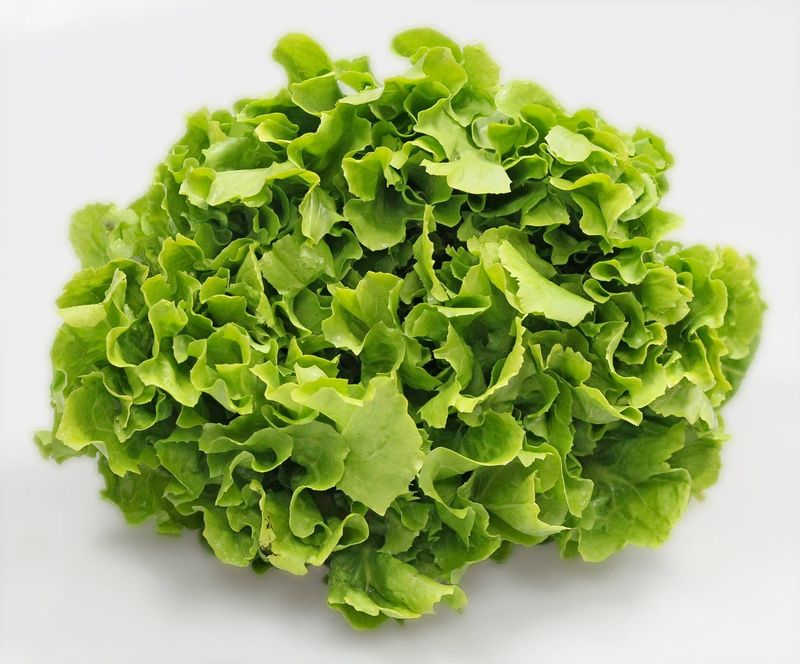
Word salad
Denise Casalinuovo has been making a list of idioms for the past year or so. She’s now up to 1,633!
“I started the list after thinking about how difficult it must be for immigrants to learn the English language when much of our communication is consisted of idioms,” she explained. “It’s been a fun hobby and I continue to think of new ones almost daily.”
She has many favorites, but she thinks that “word salad” is at the top of her list. Where did it originate?
According to merriam-webster.com, “word salad” began as a psychiatric term to describe the nonsensical syntax of the mentally ill. As far back as the 19th century, German psychiatrists used “wortsalat” while French doctors called it “salade de mots.”
Only specialists used the term until recent decades when it evolved to mean something closer to “nonsense,” the dictionary notes.
The best thing about word salad? It doesn’t require any dressing.
A Mexican standoff
Christine Klecic asked about the phrase “Mexican standoff,” which Webster’s defines as “a general statement, often with the threat of violent confrontation.”
“My husband used that term (I’ve heard it before but never said it myself) when we were trying to get out of a crowded parking lot and everyone was blocked in,” she wrote. “I’m sure that’s NOT what it means but it seemed to fit. I’d appreciate the history and definition!”
According to etymology website wordhistories.net, the phrase originated in the fictional tale “A Mexican Stand-Off,” published March 19, 1876, in the New York Sunday Mercury newspaper.
J. Harvey Smith’s story, set in Mexican, involves a bandit robbing an American traveler, but letting him escape.
“Go,” the robber says. “We will call it a stand-off, a Mexican stand-off, you lose your money, but you save your life!”
It evolved from there.
The phrase isn’t considered politically correct today and could be perceived as derogatory. Maybe it’s better to just say standoff.
Getting off scot-free
Cathleen McHugh hoped we could determine the origin of the expression “getting off scot-free,” often misspelled “as Scott-free.”
The website phrases.org.uk notes that people have been trying to get off scot-free since at least the 10th century in Great Britain.
A scot is an English tax assessed on one’s ability to pay. The word was anglicized from the Scandinavian “skat.”
Originally, “getting off scot-free” meant not paying taxes. By the 16th century, its meaning widened to include avoiding punishment or repercussions for committing a crime.
No matter how it sounds, Scotland had nothing to do with it.
A chip off the old block
Rick Brown had a lot of suggestions.
Cream of the crop. Hit the sack. Cool your jets. Hot as a two dollar pistol. Living high on the hog. Scraping the bottom of the barrel.
But topping his list was “a chip off the old block,” a phrase that usually means a child who closely resembles a parent in behavior or physique.
It’s an analogy to a chip of wood or stone that shares similarities with the larger block from which it came. Surprisingly, the idiom dates back to ancient times.
Greek poet Theocritus phrased it as “chip of the old flint” in his “Idyls” from around 270 B.C., according to Christine Ammer’s “Dictionary of Cliches.”
It’s a shame that “chip off the old baklava” didn’t catch on in Greece.
Folksy sayings
Copley resident C. David Post, 91, shared a couple of folksy sayings from his mother. Both involve food.
Mary Hoffmeyer Post, who was born in 1902 and grew up on farms, died in 1993 at age 90.
Ever heard of these?
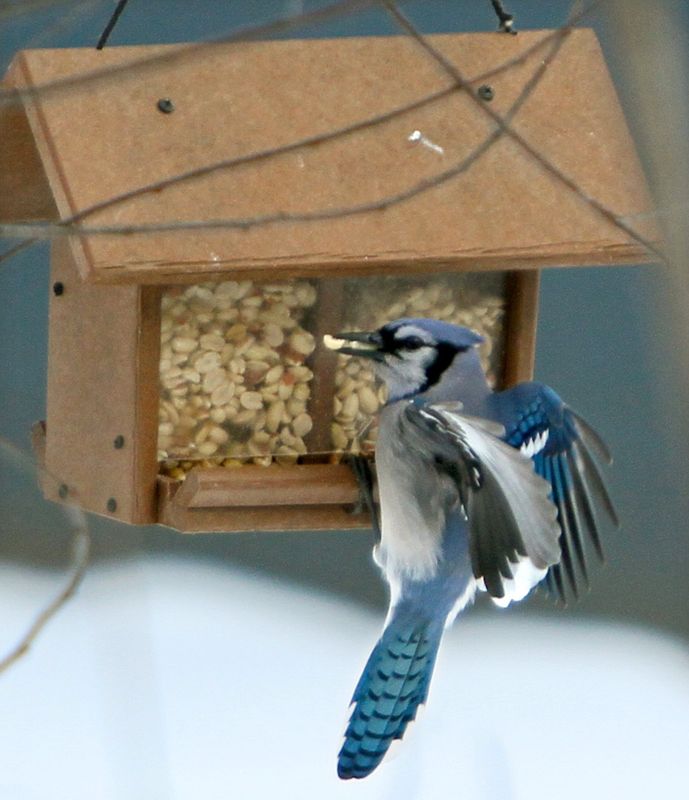
“Why, you haven’t eaten enough to physic a jaybird.”
Post says his mother used that phrase to encourage others to eat more.
“Why, there’s enough food here to feed thrashers (threshers).”
She uttered that exclamation in praise of others who provided large meals for guests.
Post traced the origin to his mother’s youth when groups of men with workhorses and threshing machines moved from farm to farm to provide services. Farmers’ wives joined together to provide huge lunches for them.
Hopefully they ate enough to physic a jaybird.
Mark J. Price can be reached at mprice@thebeaconjournal.com
This article originally appeared on Akron Beacon Journal: Say what? Idioms deciphered from ‘word salad’ to getting off ‘scot-free’
Reporting by Mark J. Price, Akron Beacon Journal / Akron Beacon Journal
USA TODAY Network via Reuters Connect