LANSING — Another night of objections to a proposed $120 million data center in downtown Lansing resulted in mixed messages from the Lansing Planning Commission.

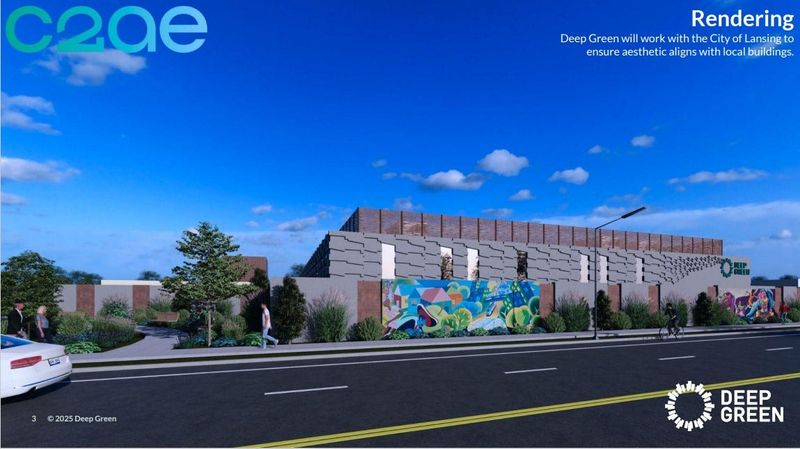
Commissioners voted 4-3 on Dec. 2 against United Kingdom-based Deep Green’s conditional rezoning request to turn four parcels totaling 2.7 acres into industrial property to accommodate a two-story, 25,000-square-foot, 24-megawatt data center. The property is currently zoned “downtown core.”
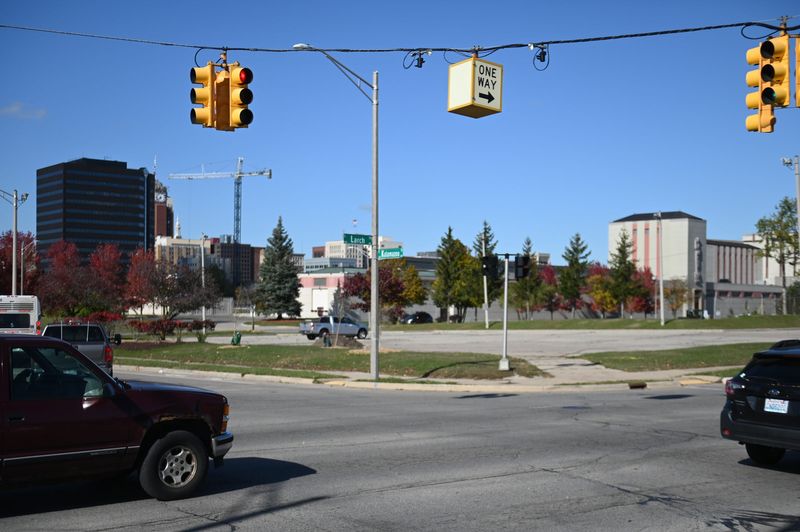
They voted 5-2 in favor of the city selling three of the four parcels on the north side of Kalamazoo Street, between South Cedar and Larch streets, to Deep Green. A Deep Green official said the company will pay $1.4 million for the land which is currently mainly used as parking lots.
The ultimate decision rests with the Lansing City Council.
The fourth parcel is associated with well-known local developer Pat Gillespie, according to the Michigan Department of Licensing and Regulatory Affairs’ online database. He has not responded to messages for comment.
Ariana Brown, a Lansing resident who has been concerned about a data center’s environmental risks, was pleased with the rezoning vote and planned to keep fighting the facility that would rest across from the Lansing Board of Water & Light’s John F. Dye Water Conditioning Plant.
Deep Green plans to loop into BWL’s water systems to supply free, carbon-neutral hot water, rather than BWL heating water with natural gas to provide steam heat for downtown buildings.
Brown remained concerned after planning commissioners made their votes at the Neighborhood Empowerment Center on West Maple Street.
Commissioners John Ruge, Spencer Lippert, Katie Alexander and Monte Jackson voted against the rezoning, with Ruge raising concerns about land use and the data center’s proximity to the Stadium District. Alexander and Jackson also voted against the sale.
“People talk about this as being sustainable and I really want to think about the entire life cycle of this proposed data center and also what things could go wrong,” Brown said. “Of course, I’m still concerned.”
Heather Shawa, BWL’s assistant general manager, declined comment after Tuesday’s planning commission meeting while Rawley Van Fossen, the city’s economic development and planning director, and Jack Pressman, Deep Green’s development manager for the Lansing site, remained optimistic.
“They denied the zoning request but they just approved the right to sell it to us,” Pressman said. “It’s the process of a municipality. In this case, the city came to us and offered the land. It meets all of the zoning requirements. We’ll let the city council make the final determination. Obviously, we’re not going to buy it unless we get the city council’s vote on the rezoning.”
Van Fossen perceived Tuesday’s votes optimistically.
“As the chair of the planning commission stated so eloquently tonight, this is just the first step,” he said. “I think what we saw from the planning commission tonight when they voted in favor of the sale was that they agreed with the city that something has to happen here. When you look at the conditional rezoning vote, I don’t think I saw opposition from the planning commission. What I heard was a desire to know more and learn more.”
Planning commissioners tabled their decision on the rezoning on Nov. 5 after listening to about 20 people raise concerns about the environmental impact, land use, noise levels and security risks that would come with Deep Green’s data center.
Dick Peffley, BWL general manager, and Mark Lee, Deep Green’s chief executive officer, announced a partnership last month that would provide hot water for downtown buildings and more than $1 million annually in additional revenues to the city. Officials have also said the project would position Lansing as a hub for cloud computing, AI, software development, and other fields and providing the digital infrastructure to support local endeavors in education, healthcare and municipal services.
Lee has said the data center would be Deep Green’s “flagship U.S. facility,” ultra-efficient and the first of its kind in the U.S. because of its “heat network integration.”
Residents with concerns can ask Deep Green and BWL representatives about the project at a 10 a.m. Dec. 6 presentation at Gier Community Center, 2400 Hall St., in north Lansing. Planning for at least one other similar presentation is under way.
Council President Ryan Kost is hosting the Saturday session.
“They’re going to lay out what the project is and isn’t,” he said. “They’re also going to give an opportunity for the public to ask questions, any questions that they may have. It will be an opportunity to have actual input back and forth on this project.”
The Ward 1 council member said city residents seem to have a lot of questions around the heat that would be generated from the servers, water usage and noise levels and Deep Green’s proposed partnership with BWL.
“I think some of it is thinking that this is more like a data center that you hear about in the news where there’s this big thing in the middle of the field vs. what it actually is,” said Kost, who doesn’t expect a final council vote until early 2026.
Proposals for data centers are happening in Michigan and across the Midwest because of the need for computing capacity, particularly artificial intelligence.
BWL public relations specialist Emma McGlocklin has likened Deep Green’s proposed facility in terms of power capacity to an automotive assembly plant and its water usage as comparable to a local fast-food restaurant.
Deep Green’s purchase of 24 megawatts is supposed to mean BWL’s return-on-equity payment to the city should increase by $1 million annually. Peffley said BWL’s partnership with the UK company also should achieve more than $1.1 million in annual natural gas savings for BWL because of a reduced demand equal to about 5,000 homes and a reduction of carbon emissions through recycled heat equivalent to removing 3,000 cars from the road annually.
Rate increases for hot water customers are supposed to be minimized because of the data center. Electric customers should not see any direct increases from the Deep Green project.
Representatives from the Lansing Economic Area Partnership and the Lansing Regional Chamber of Commerce have spoken in favor of the project during the planning commission hearings.
Deep Green’s proposal is small compared to Related Digital’s proposal to build a data center on 250 acres of a 575-acre parcel in Washtenaw County’s Saline Township. The facility would feature more than 1 gigawatt in computing capacity, or the amount of electricity it could potentially draw from the power grid, which Wall Street analysts have previously compared to the output of a nuclear reactor. The Lansing proposal is 24 megawatts, and a gigawatt is 1,000 megawatts.
Also, a major technology company wants more than 1,000 acres rezoned in Livingston County for a data center.
Residents in both communities have criticized the projects.
Deep Green’s Lee has said the Lansing project could be online by the first half of 2027, with construction starting in the spring, if things go as planned.
The project is expected to support more than 50 jobs — over 35 “majority-union construction jobs” and more than 15 long-term technical jobs
Contact editor Susan Vela at svela@lsj.com or 248-873-7044. Follow her on Twitter @susanvela.
This article originally appeared on Lansing State Journal: $120 million Lansing data center gets mixed review from planning commission
Reporting by Susan Vela, Lansing State Journal / Lansing State Journal
USA TODAY Network via Reuters Connect