Though a jury found one of the three corrections officers in the Robert Brooks case guilty of second-degree murder on Oct. 20, there’s still one more case that has to go to court and rumblings of a federal case on the horizon.
Brooks, an incarcerated individual transferred to Marcy Corrections Facility on Dec. 9, was brutally beaten with his hands cuffed behind his back by corrections officers while in custody. He died as a result of his injuries on Dec. 10.

An autopsy was conducted by the Onondaga County Medical Examiner’s Office and, in February, Brooks’ death was ruled a homicide and three of the four corrections officers who had not taken a plea deal with the special prosecutor were on trial; David Kingsley, Mathew Galliher, and Nicholas Kieffer.
On Oct. 20, a jury handed down the verdict for David Kingsley, Mathew Galliher, and Nicholas Kieffer.
The corrections officers indicted
On Feb. 20, the grand jury indictment in the Robert Brooks case was unsealed.
At the time, the charges were the following.
Of the 10 corrections officers charged, six took plea deals.
A look at the plea deals
Special Prosecutor William Fitzpatrick said when Walrath accepted his plea bargain that he had spoken to the family of Robert Brooks and they had accepted the offered plea deal.
Anzalone pleaded guilty to the lesser charge of first-degree manslaughter and will face 22 years in state prison, with five years post-release supervision. He is due back in court on Nov. 21 for sentencing.
Farina pleaded guilty to the lesser charge of first-degree manslaughter and will face 22 years in state prison, with five years post-release supervision. He is due back in court on Nov. 21 for sentencing.
Christopher Walrath pleaded guilty to first-degree manslaughter and will face 15 years in jail with 5 years post-release supervision. He was sentenced on Aug. 4.
Mashaw pleaded guilty to the lesser charge of second-degree manslaughter and will face three to nine years in state prison. He is due back in court on Nov. 21 for sentencing.
Walters pleaded guilty to the lesser charge of second-degree manslaughter and will face two and a third to seven years in state prison. He is due back in court on Nov. 21 for sentencing.
Gentile pleaded guilty to the lesser charge of attempted tampering with physical evidence, a misdemeanor, and accepted a sentence of one year conditional discharge after resigning from his employment from corrections.
Fisher successfully appealed for severance and is due back in court on Dec. 19 at 9:30 a.m., with a trial slated for January.
The trial, what comes next
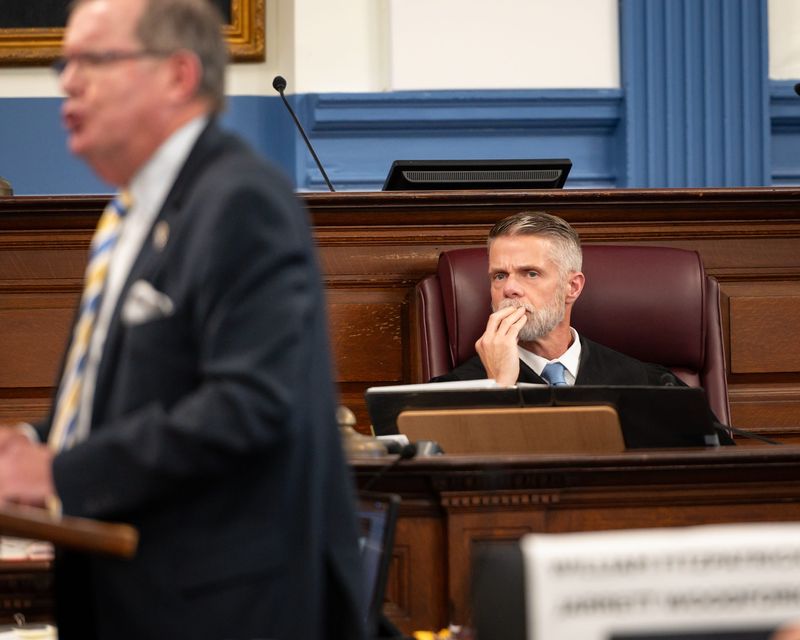
Going to trial on Oct. 6 was Kingsley, Galliher, and Kieffer.
After 11 days of trial proceedings, three of which were jury deliberation, a jury found Kingsley guilty of second-degree murder and first-degree manslaughter. He is facing life in prison.
Galliher and Kieffer were found not guilty and acquitted of all charges.
Fitzpatrick said after the verdict that he respected the jury’s decision and when asked how he felt seeing two people acquitted whom he described as “gang members,” Fitzpatrick said that going into the trial there were four people of interest
“All four of them, Anthony Farina, David Kingsley, Nicholas Anzalone, and Christopher Walrath, will be serving lengthy prison sentences,” Fitzpatrick said. “When we looked at the tape for the first time, those were the main individuals.”
Attorney David Longeretta, who represented Nicholas Kieffer, said he was confident that the body-worn camera would prove his client innocent and was vindicated by the jury’s verdict.
Attorney Kevin Luibrand, who represented Mathew Galliher, said the blame laid on the state and the Department of Corrections and Community Service for “…failing to train, supervise, and provide leadership” and that had they done that, Galliher wouldn’t have been in that position.
Luibrand added Galliher shouldn’t have been charged and like Kieffer, was vindicated by the body-worn camera footage.
Possible federal charges
And while Fitzpatrick said that he couldn’t file an appeal, the special prosecutor said after the trial that “…it’s not the end for Mr. Galliher and Mr. Kieffer.”
Fitzpatrick said that the United States attorney for the Western District of New York is currently investigating the Robert Brooks case.
Additionally, the family of Robert Brooks currently has a federal civil rights lawsuit filed alleging the violations of Robert Brooks’s civil rights and the lawyers in the case are demanding a jury trial.
This article originally appeared on Observer-Dispatch: Plea deals, another trial: What’s on tap in the Robert Brooks case
Reporting by Casey Pritchard, Utica Observer Dispatch / Observer-Dispatch
USA TODAY Network via Reuters Connect