Electric vehicle developments from German automakers made news at Europe’s first auto shows of the fall.
Mercedes and BMW teased new architectures that will spin off multiple vehicles, Porsche embraced a new charging technology, VW showed four very small vehicles and Audi revealed its new face at Germany’s IAA show, now held in Munich after decades in Frankfurt.

Two new Mercedes EVs coming to USA
After initially saddling its EVs with confusing names like EQE sedan and EQE SUV, Mercedes is moving its electric vehicles to familiar model names.
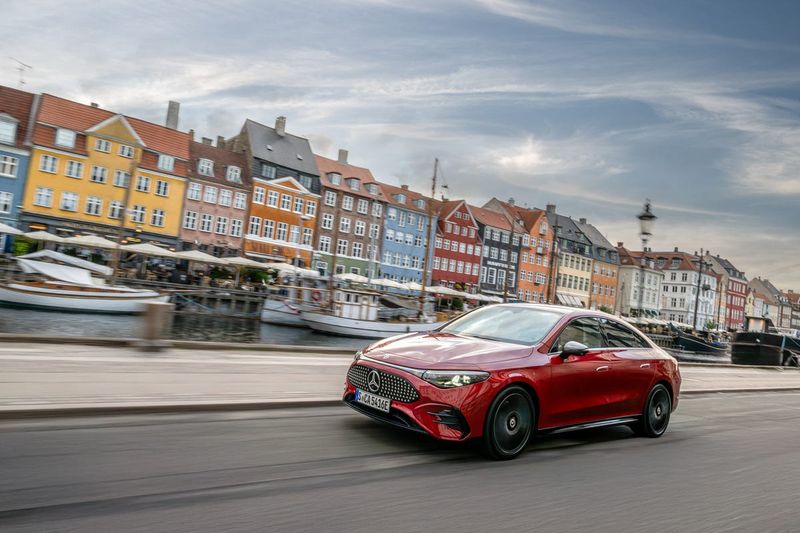
The Mercedes-Benz’s compact GLC SUV and CLA sedan inaugurate the change with varying levels of grace.
Both vehicles offer 800-volt/350 kWh fast-charging capability to shorten stops. Arriving in the U.S. later this year, the CLA has a two-speed automatic transmission. Most EVs thus far operate with single-speed transmissions. Mercedes says its unit “combines dynamic performance with high efficiency for all driving situations.”
The sleek CLA will launch as an EV, with a hybrid coming for the 2027 model year.
The CLA EVs are identified by “with EQ technology” badging, proving Mercedes isn’t done with clumsy EV designations yet: The CLA 250+ with technology and all-wheel drive CLA 350 4Matic with EQ technology.
What I’d give to be Mercedes’ chrome supplier.
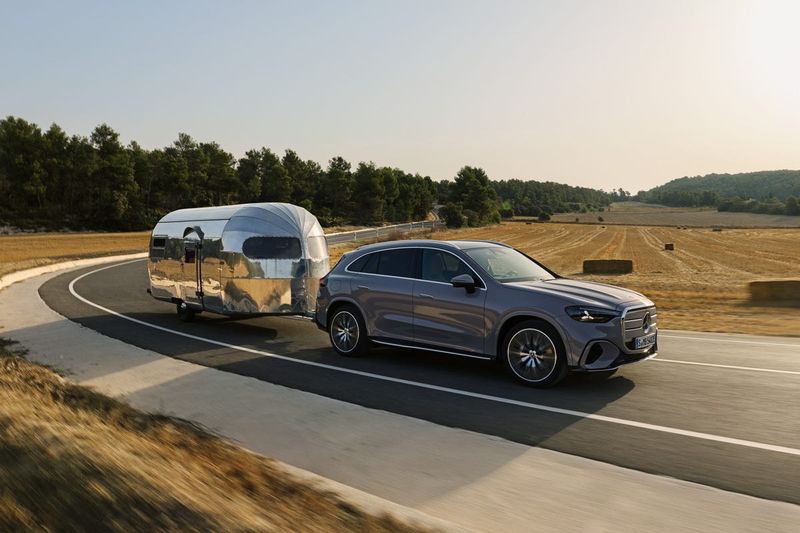
The SUV ― likely to sell better, because, America ― is simply called GLC.
Arriving in the second half of 2026, the GLC SUV will tow 5,291 pounds and offer features including adaptive air suspension and four-wheel steering.
Porsche embraces wireless EV charging
Porsche has backed away from its schedule to cease using internal combustion engines, but the company’s march to electrification continues.
The electrically powered turbocharger that lit up the 911 GTS earlier this year does double duty in the 911 Turbo S twin-turbo, which accelerates to 60 mph in 2.4 seconds, reaches 124 mph in 8.4 seconds and tops out at 200 mph. The all-wheel drive Turbo S develops 701 hp.
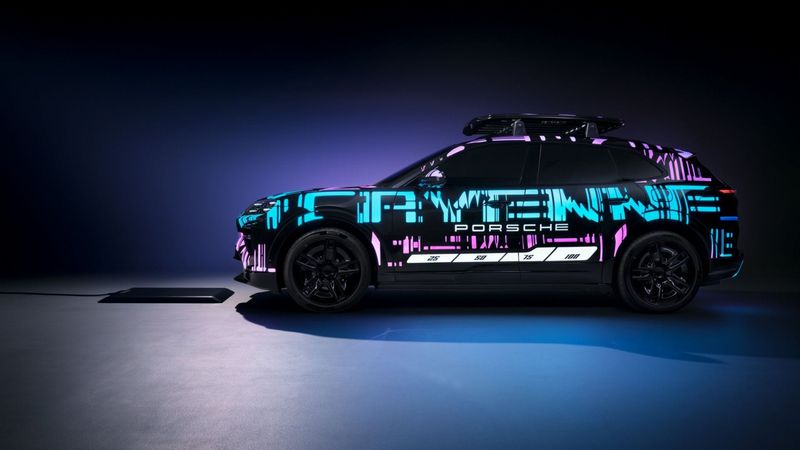
For its purely electric vehicles, Porsche is adding wireless charging.
The system debuts in Europe next year. Other regions will get it later.
Porsche says its “one box” design eliminates the wall unit common to Level 2 240-volt home chargers.
The system will debut on the electric Cayenne, which will be shown later in 2025.
BMW ‘new class’ to underpin dozens of vehicles
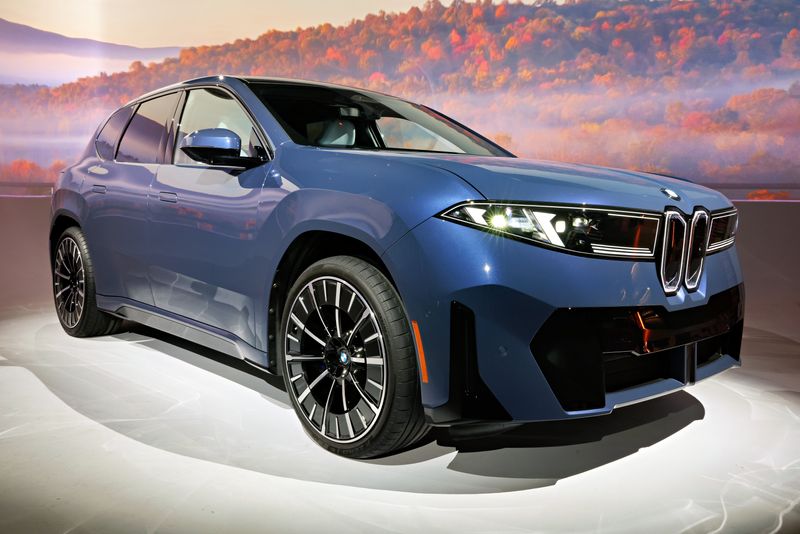
Arriving in U.S. dealerships in 2026, BMW’s iX3 electric SUV is the first of what BMW promises “nearly 40 new models and model updates arriving between now and 2027” using the architecture and technologies in its Neue Klasse, or new class, engineering program.
The iX3 features a welcome departure from the cartoonishly inflated grilles on recent BMWs. The slimmed down double kidney grille gets optional lighting and returns to the vertical orientation BMW used in the 1960s and ‘70s.
At 188.3 inches, the iX3 is about an inch longer than the current X3.
Notable features include 800 volt charging that can accommodate even high levels for brief peaks. BMW promises up to 175 miles range in 10 minutes and 10%-80% charging as quick as 21 minutes.
Also of note:
Production begins in Debrecen, Hungary, early next year.
VW’s shows 4 very small EVs
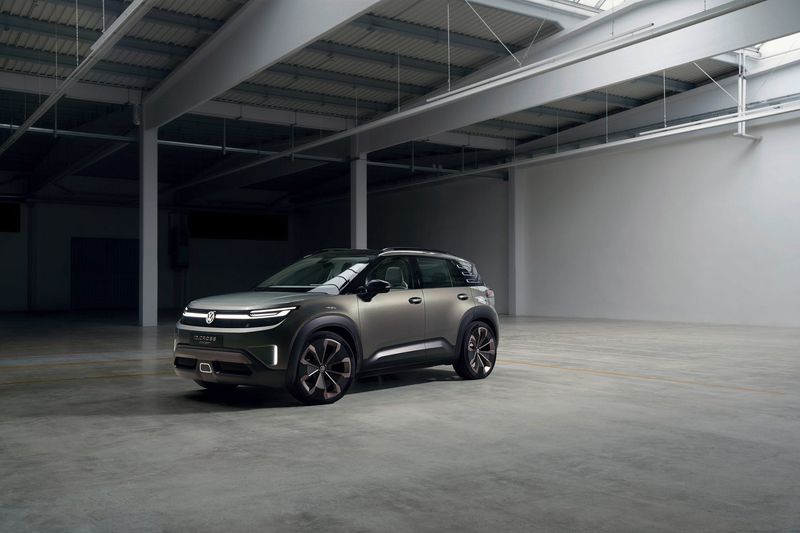
Volkswagen pulled out all the stops with four small EVs slated for production starting in 2026. All are likely too small for U.S. sale.
For instance, the ID Cross SUV — at first glance the concept best suited to American tastes — is just 163.8 inches long.
That’s 15 inches shorter than the subcompact Chevrolet Trax, 8 inches shorter than a Nissan Kicks.
The ID Cross uses a single electric motor for front-wheel drive and has a top speed of 108 mph, but it can tow more than 2,600 pounds up an 8% grade.
VW’s other EV concepts were a pair of subcompact cars, including one with bearing the popular GTI performance badge, and the “entry-level” ID Every1. The Every1 appears to be even smaller than the subcompact ID Polo and ID Polo GTI.
Audi’s future face
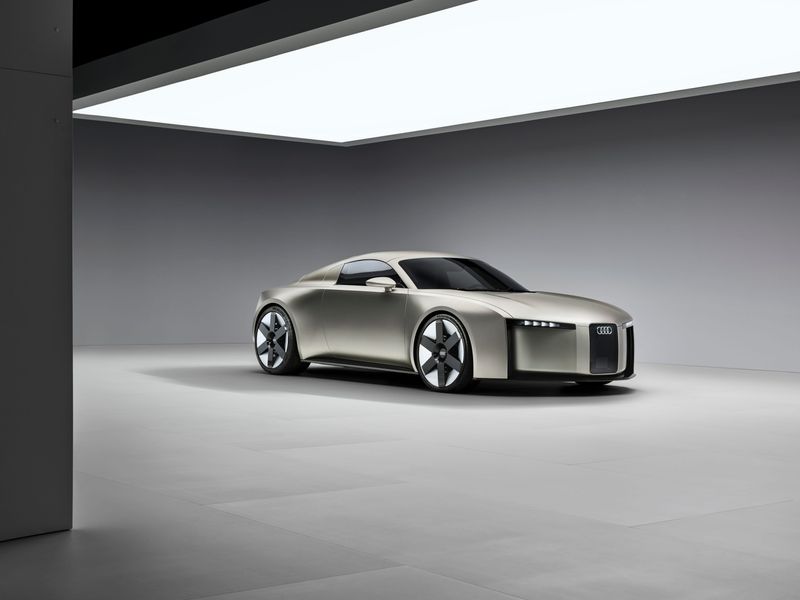
Audi previewed an electric replacement for the discontinued TT sport coupe.
The two-seat Concept C features a retractable hardtop, ground-hugging bodywork, a long hood and short rear deck.
It’s intended to set the direction for an upcoming generation of Audi production vehicles. Audi’s weighing names for a production car based on the Concept C. TT is in the running, but the concept is considerably bigger than that model.
Like the BMW iX3, the Concept C bears a narrow, vertical interpretation of its brand’s current grille.
Contact Mark Phelan: mmphelan@freepress.com. Follow him on Twitter @mark_phelan. Read more on autos and sign up for our autos newsletter. Become a subscriber.
This article originally appeared on Detroit Free Press: New designs and features lead the way as Germany’s automakers roll out next-gen EVs
Reporting by Mark Phelan, Detroit Free Press / Detroit Free Press
USA TODAY Network via Reuters Connect