Way down south and east in Collier County, Florida, in The Everglades, is a town called Chokoloskee that until 1955 could only be accessed by boat. It’s worth the drive to explore this old Florida area with its rich history.
But first, how do you pronounce the name and what does it mean? Pronounced chuk-uh-lus-kee, the name comes from the Seminole-Creek chuku meaning house and liski meaning old, according to the book “Florida Place Names.” Other interpretations are just “home.”

Home for centuries to Calusa Indians, Chokoloskee was “settled” in the 1870s by European travelers. The Calusa were known for their shell mounds, which were places to toss out shells of oyster and conch the Calusa used for food and sometimes built into tools. These mounds built up the islands of Chokoloskee and parts of Marco Island, providing higher ground as protection from hurricanes that hit the area often.
In 1955, a causeway was built to connect Chokoloskee with the mainland. That was replaced with the Chokoloskee Bridge in August 2018 to meet modern standards with increased width and height, according to Fort Myers-based Kelly Brothers, which built the bridge.
History, tradition, and mystery entrenched in Chokoloskee
Chokoloskee was the trade center for homesteaders scattered throughout the Ten Thousand Islands region and a few names stand out as leaders.
The first postmaster was Charles McKinney, who was commissioned on June 30, 1892. George Storter was commissioned as postmaster for Everglades on July 19, 1893. Charles “Ted” Smallwood and George Storter made their living as merchants, according to “The Story of The Chokoloskee Bay Country.” by Charlton W. Tebeau, a collection of reminiscences of “Charles Sherod ‘Ted’ Smallwood, a Chokoloskee pioneer.”
The Smallwood Store, where residents in the area and tradesmen from as far as Key West came by boat, is a museum today and a living history of the Native Americans, the community and Ted Smallwood himself. The store was placed on the National Register of Historic Places in 1974 and, in 1990, with the help of Ted Smallwood’s granddaughter, Lynn McMillin, and the Smallwood Foundation, the Smallwood Store was reopened as a museum in 1990.
The vigilante murder of a local Chokoloskee businessman in 1910 is the topic of Peter Matthiessen’s fictional novel, “Killing Mr. Watson.” After Ed Watson was suspected of killing one of his farmhands, and of other farmworker disappearances, some of the inhabitants of Chokoloskee decided to take the law into their own hands. Watson’s body was riddled with 33 bullets.
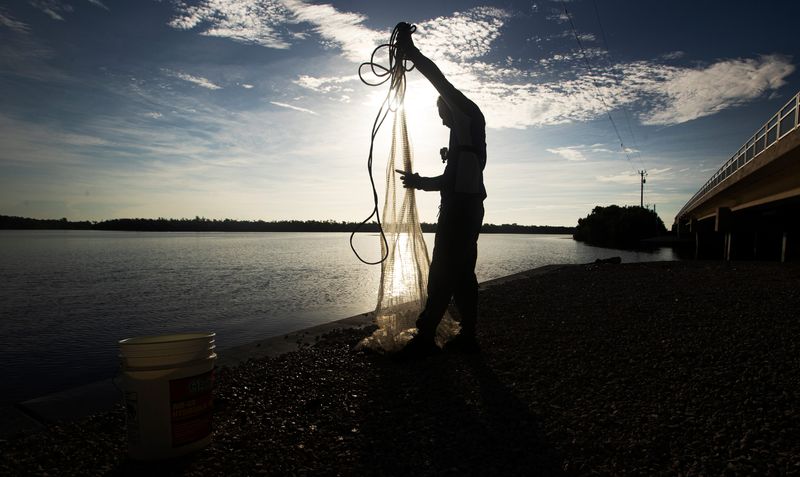
Chokoloskee is still home to fishermen, with a few motels and a resort having been added for Everglades National Park visitors.
The 1910 census for Everglades township, including Chokoloskee Island, listed 144 people in 29 different households. Many were farmers or farm laborers. Of those, most were engaged in the labor-intensive growing of sugar cane. In 2020, the population was 345 in 2020, according to the U.S. Census Bureau, down from 359 in 2010.
This article originally appeared on Naples Daily News: Visiting Chokoloskee, a town of historical significance with stories to tell
Reporting by J. Kyle Foster, Naples Daily News / Naples Daily News
USA TODAY Network via Reuters Connect