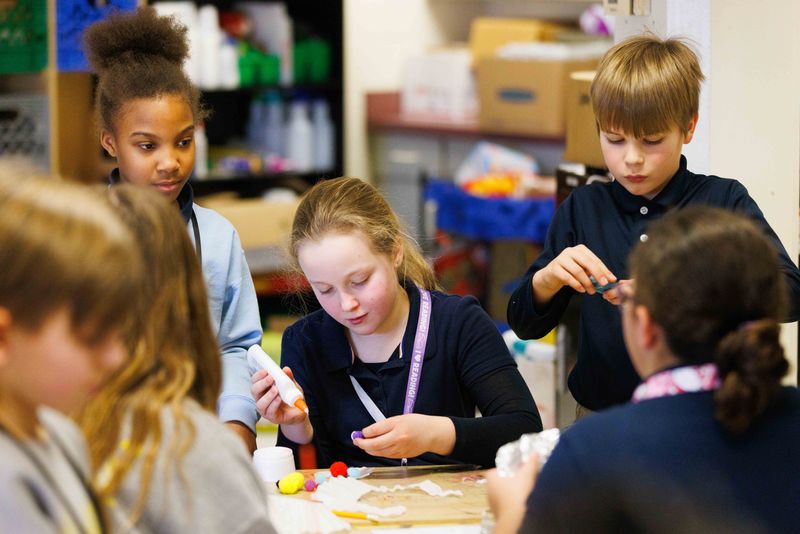
Believe it or not, school is just around the corner, and these last few weeks of summer are the perfect time for families to start helping their students prepare for the new school year.

Here are six tips to set students up for success and make the transition back to school as easy as possible.
Make it fun
The first day of school can be daunting to students, especially when they’re entering a new school. But addressing those feelings of uncertainty before the first day can assure your student that they’re ready to take on the challenge.
An article from the American Academy of Pediatrics (AAP) encourages families to visit the school campus prior to the first day of school to help students learn their way around, perhaps during a back-to-school night or orientation event. The article even suggests that parents take their students to play on the school’s playground a few days before school starts.
Parents can also point out the fun aspects of school, like seeing friends or a favorite teacher, which can help the first day seem less scary, the article says.
Create a sleep schedule
Summer break often brings a more relaxed sleep schedule, but as the start of school nears, it’s important to reintroduce some structure.
An article from the Mayo Clinic says children aged 6-13 require nine to 11 hours of sleep each night, while ages 13-17 need between eight and 10 hours, and this is especially important during the school year. Johns Hopkins Medicine adds that insufficient sleep increases the risk of health issues like depression, diabetes, hypertension and obesity.
The Sleep Foundation suggests that parents incrementally adjust kids’ sleep schedules in the weeks leading up to school. Every few days, the foundation’s website says, parents should have their child wake up and go to bed 15 minutes earlier until they’re sleeping and waking at the desired times for school.
It’s also a good time to establish a good bedtime routine without electronics, the Sleep Foundation says, including things like taking a shower, brushing teeth and reading in bed.
Have conversations and make a plan
To help students know what the school year will look like, the AAP article says, it’s important to have conversations to set expectations.
The article encourages parents to sit down with their children before the school year starts to talk about how they’ll get to school each day and what their routine will be once school begins.
These conversations are also the perfect time to ask how the student is feeling, the article says. Are they excited about going back to school, or is it a bit scary? What are they most looking forward to once school starts? Do they have any goals for the school year?
And, AAP says, it’s also important to come up with a plan for dealing with conflict and bullying so that the student knows what to do if they or a classmate is bullied.
The AAP website has a page about bullying and how to address it, as well as a first day of school checklist with important reminders to ensure parents and students know what to expect going back to school.
Encourage healthy eating
The Mayo Clinic website says eating a healthy breakfast with some form of protein each morning helps students prepare for learning because if they’re hungry, they’re more likely to have trouble focusing.
And sending kids to school with water rather than soda will keep them hydrated and help cut down on sugar intake, the AAP article says.
Support good study habits
Establishing good study habits at the beginning of school will help lay the foundation for the rest of the year, and, AAP says, this includes creating a homework-friendly environment where students can hit the books at home.
The article says students should have a quiet place for doing homework free of electronics and other distractions. And if they need some help organizing, AAP says, parents can work with them to come up with a system that helps them stay on task using tools like checklists and timers.
The last few weeks of summer are also a good time to go through kids’ backpacks to throw away any unneeded items and organize them for the year ahead, the article says.
Know your resources
Going back to school can be hard, the Johns Hopkins article says, and sometimes it can take a while for students to adjust. But there are resources both in and out of the student’s school district if families need a little extra help.
It’s good to regularly check in with students about how they’re feeling, Johns Hopkins says, and keeping their teachers and school administrators in the loop is also important. The Mayo Clinic article adds that if anxiety or depression may be a contributing factor to a student not adjusting well, families can connect with a social worker or counselor at the school, and outside help can be found through a family doctor.
Email South Bend Tribune education reporter Rayleigh Deaton at rdeaton@gannett.com.
This article originally appeared on South Bend Tribune: Six back-to-school tips to set students up for success this year
Reporting by Rayleigh Deaton, South Bend Tribune / South Bend Tribune
USA TODAY Network via Reuters Connect