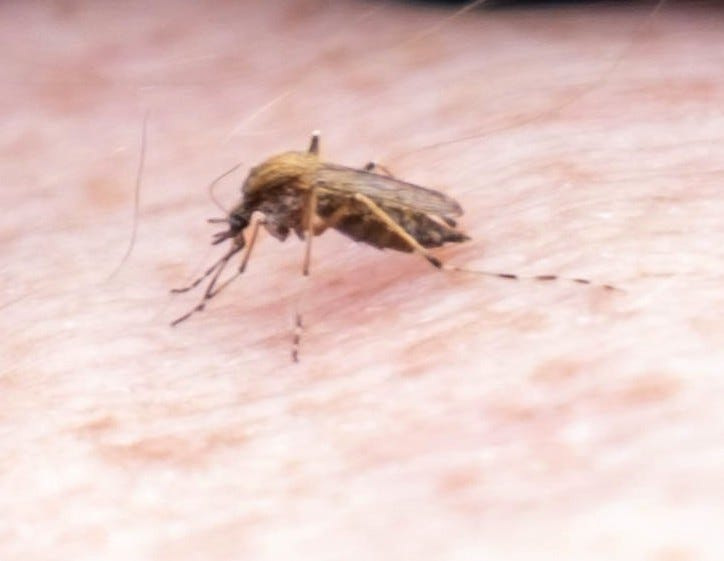
Oh, mosquitoes! Ask any Midwesterner, and they’ll tell you how much they love to hate the annoying pests with their irritating whine and bites that leave you itching for days.
Every summer, it often seems, the mosquito infestations get worse and worse.

But according to Ryan Smith, the principal investigator at the Iowa State Mosquito Surveillance program, perception might not match reality.
A graph from the Iowa State entomology department’s site shows that mosquito populations actually are down from where they were this time last year.
What to expect this mosquito season
There are more than 50 mosquito species in Iowa alone, Smith said, and they are aided by increased levels of stagnant water that emerge after heavy rainfall and flooding.
“Mosquitoes only develop in standing water, so usually, you’re not going to find mosquitoes in a river, stream, anything like that,” Smith said. “Any kind of flooding does create stagnant water, and some of these mosquitoes will actually lie dormant in some of these areas that were laid maybe the last time when there was some flooding, and so the next time that water level rises again, these mosquito eggs can actually hatch out.”
Smith said it will be interesting to watch what happens to mosquito populations over the next week or so.
“With these (recent flooding) conditions and in the warmer temperatures, it allows for mosquito development to complete rather quickly in these aquatic stages,” he said.
City pest control efforts — to be, or not to be?
If you’re planning to step outside this summer, brace yourself for the bite.
The city of Des Moines has stopped spraying for mosquitoes because of budget concerns. The city also has stopped monitoring and testing the local mosquito population and discontinued its hotline for mosquito-related complaints.
Pleasant Hill also discontinued its mosquito-spraying efforts this spring, citing rising costs and limited effectiveness. The spray used for mosquito control has no residual effect and only kills mosquitoes on contact. The pests tend to return 24-48 hours later, according to its website.
Unreliable weather conditions can also impact the effectiveness of the spray, and even under perfect conditions, it does not prevent mosquitoes from breeding.
Urbandale can rest easier. The city has no plans to do away with its mosquito spraying services this summer. A news release earlier this summer informed residents that spraying would begin in June and continue into the fall, “or when mosquito population thresholds are no longer exceeded.”
Residents should not worry about harmful pesticides, since the mosquito-control product employed Urbandale uses is EPA-approved.
What can I do to keep skeeters away?
Even in spaces that have been sprayed, mosquito repellent is still recommended, especially in the early morning and late evening.
Urbandale asks residents to clear their gutters and drain sources of stagnant water, such as old tires and rainwater receptacles.
The city also recommends that residents change water in birdbaths and pet dishes every two days so they don’t become a breeding ground for pests.
Norah Judson is a reporter for the Register. Reach her at njudson@gannett.com.
This article originally appeared on Des Moines Register: This bites: Des Moines metro’s mosquitoes may seem worse than ever. But are they really?
Reporting by Norah Judson, Des Moines Register / Des Moines Register
USA TODAY Network via Reuters Connect