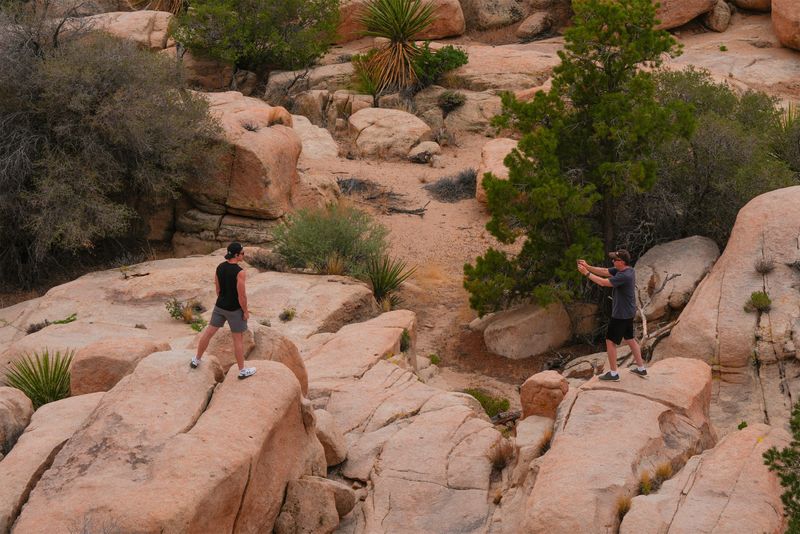
National Park visitors not from the U.S. may be in for an entrance fee hike due to a recent executive order from President Donald Trump, a move that would impact numerous parks in California.
The directive from the president comes months after the National Park Service faced major layoffs, with subsequent reports detailing issues at national parks linked to staffing problems.

“From the awe-inspiring Grand Canyon to the tranquility of the Great Smoky Mountains, America’s national parks have provided generations of American families with unforgettable memories,” the July 3 executive order said. “It is the policy of my Administration to preserve these opportunities for American families in future generations by increasing entry fees for foreign tourists, improving affordability for United States residents, and expanding opportunities to enjoy America’s splendid national treasures.”
What does Trump’s executive order do?
The executive order directs Secretary of the Interior Doug Burgum to develop a strategy to “increase revenue and improve the recreational experience” at parks by increasing entrance fees and recreation pass fees for nonresidents. This would apply to places in the National Park System that charge entrance or recreation pass fees.
The executive order specifically calls for there to be a price increase for America the Beautiful passes sold to nonresidents. The America the Beautiful pass covers entrance and day-use fees at lands not only managed by the National Park Service but by the U.S. Fish and Wildlife Service, the U.S. Forest Service, the Bureau of Land Management, the Bureau of Reclamation and the U.S. Army of Corps of Engineers. An annual pass costs $80, though there are different price points depending on your age or whether you served in the U.S. Military.
The revenue from the increased fees will go toward the nation’s federal recreational areas, specifically for improving infrastructure or “otherwise enhance enjoyment of or access to” these lands.
The executive order also calls for a review of the maintenance backlog within the National Park Service and to take “all appropriate action to fully implement” the National Parks and Public Land Legacy Restoration Fund and “invest in the infrastructure of national parks and increase visitor capacity so that more Americans can visit national parks.”
The restoration fund was established by the Great American Outdoors Act, passed in 2020, and provides funding for overdue maintenance and infrastructure needs across public lands, according to the U.S. Department of the Interior. Projects funded by the Great American Outdoors Act span the nation, including in California at Yosemite National Park, Sequoia and Kings Canyon National Park and the Golden Gate National Recreation Area among others.
Any rules that “unnecessarily” restrict recreation in national parks are to be revoked as part of the executive order. The executive order also revokes a presidential memorandum from 2017 signed by former President Barack Obama known as Promoting Diversity and Inclusion in Our National Parks, National Forests, and Other Public Lands and Waters. It promoted a range of diversity and inclusion efforts in the management of national parks and other public lands, according to USA TODAY.
There were 331.9 million recreation visits to National Park Service sites in 2024.
How many national parks does California have?
While California has nine national parks, it has dozens more units part of the National Park Service, although those units can also be referred to as parks. These other places in California part of the National Park System include national recreation areas like the Santa Monica Mountains, national seashores like Point Reyes and national historic sites like Fort Point in San Francisco.
All nine of California’s national parks saw more than 12 million visitors last year. Here’s a breakdown of how many visitors each national park in California had in 2024, according to National Park Service data.
How much does it cost to visit a national park in California?
Not all National Park Service units in California charge an entrance fee, like the Golden Gate National Recreation Area and the Tule Lake National Monument. However, places like Yosemite National Park or Joshua Tree National Park, among others, require an entrance pass — and the price of a standard pass can vary based on several factors.
For example, a visitor entering Yosemite on foot or bike would pay $20, while someone entering the park via their car or RV would pay $35 so long as the vehicle doesn’t have more than 15 passenger seats.
The executive order didn’t say how much entrance pass prices could be increased for non-residents.
Paris Barraza is a trending reporter covering California news at The Desert Sun. Reach her at pbarraza@gannett.com.
This article originally appeared on Palm Springs Desert Sun: Trump orders national park fee hike for non-US visitors. Could this impact California?
Reporting by Paris Barraza, Palm Springs Desert Sun / Palm Springs Desert Sun
USA TODAY Network via Reuters Connect