Ohio students soon will have to put down their cell phones during the school day after state lawmakers prohibited them under most circumstances.
The restrictions were included in the finalized state budget, which Gov. Mike DeWine signed June 30.

Each school district, community school, and STEM school must adopt a policy prohibiting students’ use of cell phones during the instructional day, with some exceptions. The district must adopt the policy by Jan. 1, 2026.
“This is a vital step in protecting our children,” DeWine said during a news conference July 1, “and helping them focus and learn in the school year.”
Sen. Jane Timken, a Canton Republican, defined the “instructional day” as the time between the first bell in the morning until the final bell at the end of the day.
“We’ll probably find that some school districts have different views of what the instructional day means, but the idea is to not have it during the school day,” Timken said.
Ohio school cell phone ban has exceptions
Lawmakers included some exceptions. Students can use cell phones for “student learning” or to monitor or address a health concern if the student has a written statement from their physician.
Each public school must also include in its comprehensive emergency management plan a protocol that addresses students’ use of cell phones during an active threat or emergency.
Under the law, students can use cell phones during an active threat or emergency if the emergency management plan permits it.
By implementing a statewide ban, lawmakers, rather than teachers or parents, become the “bad guys” limiting access to cell phones. Timken said she’s fine with that.
“We can’t police everybody, but at least it gives these kids a chance to put their phone away and actually listen to their teacher and interact in the classroom,” she said.
Cell phone ban in schools has been in the works for some time
Ohio lawmakers have been moving toward banning cell phones for some time. They passed a law in 2024 that required school districts to establish official policies on cell phone usage during school hours by July 2025.
DeWine called for a ban on cell phones in schools earlier this year. Shortly after, the Senate passed a standalone bill banning students’ use of phones during school hours.
Many schools in Ohio have already taken steps to ban or limit cell phone use. Cincinnati Country Day School in Indian Hill enforced an all-day cell phone ban during the 2023-24 school year. Princeton City Schools in suburban Cincinnati has implemented policies and procedures that are aligned with the law, a spokesperson for the district said, and will make any necessary adjustments as needed.
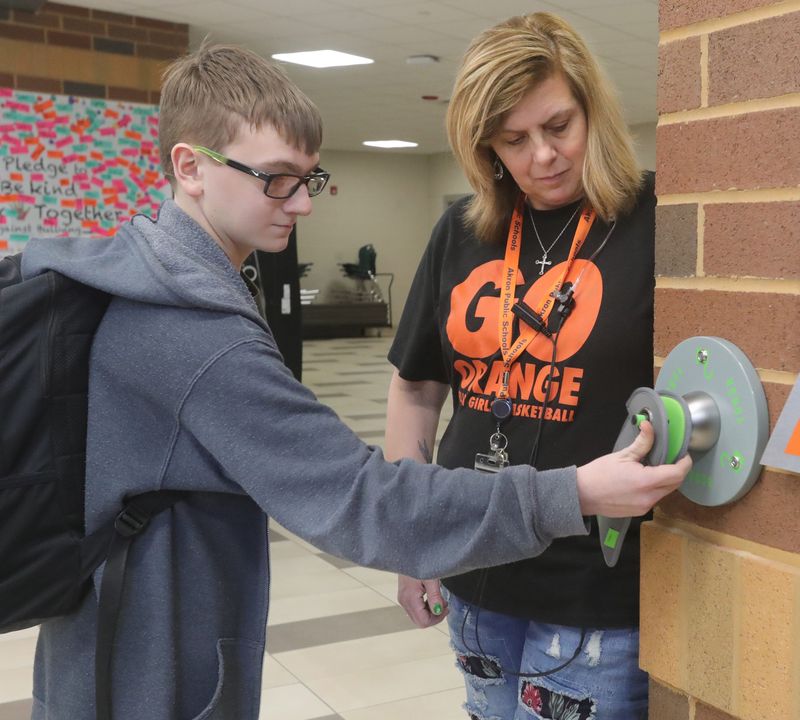
How districts enforce the cell phone ban differs, and the state didn’t mandate a particular practice. Cincinnati Public Schools was one of Ohio’s first districts to reduce in-class phone use, the district said. In fall 2024, the district began using Yondr pouches. The program provides pouches that students use to store their phones during the school day, which unlock with a magnetic tap.
In June 2024, South Western City Schools in Franklin County passed an update to its cell phone policy, and the district launched a campaign called “#BePresent,” which focuses on encouraging students to increase “attentiveness and time on-task in the classroom while also reducing the amount of distractions that inhibit learning.”
During the last school year, South Western students were expected to keep their phones on silent and in their backpacks or otherwise out of sight.
Districts say they’ve seen success, but not everyone supports cell phone ban
South Western spokesperson Evan Debo said the district received informal feedback from high schoolers that the initiative made them feel more engaged.
“That’s why we really pushed our #BePresent campaign last year to make sure students understood the value of having conversations, and building capacity and relationships with students across the cafeteria table and in class,” Debo said.
Cincinnati Public Schools said it has seen “strong” results from its cell phone policy. Teachers and principals report better classroom engagement and early data shows a rise in grades among ninth graders, the district said.
However, not everyone supports the state ban on cell phones.
John Coneglio, president of the Columbus Education Association, the union representing Columbus City Schools teachers, said that while cell phones are “absolutely a distraction” in the classroom, he said he is concerned about how it will be enforced.
“Just tell me how is this going to be enforced − is this purely on the burden of the educators to make this happen?” Coneglio said. “What is going to guarantee student compliance? Because if it’s suspension or whatever − or if it’s not ultimately some sort of removal − then what are we doing here?”
Coneglio also said students will find a workaround to common strategies for limiting cell phone use in schools like cubbies or having students place phones in locked bags.
“Kids are smarter than you think, and they can bring in anything that they want,” Coneglio said. “If you can smuggle a cell phone into a prison, you can smuggle a cell phone into a school.”
He said if people want cell phone bans to be effective, they need support from school administrators and parents to make it happen.
Parent Diamond Robinson-Lacy is also against the cell phone ban. Robinson-Lacy has six kids who attend Cincinnati Public Schools and is on the Local School Decision Making Committee and Parent Teacher Organization at Westwood Elementary School.
She’s concerned about her kids being able to reach her in case of an emergency if their phones are taken away or required to be left at home. She said she understands students can call their parents from the front office but not if the emergency is in the front office.
While she agrees that cell phones are distracting, Robinson-Lacy said the district needs to prioritize other issues, including fighting. “We need to get schools back in order,” she said.
This article originally appeared on Cincinnati Enquirer: Cell phones banned in Ohio schools, with some exceptions
Reporting by Bebe Hodges, Cole Behrens and Jessie Balmert, Cincinnati Enquirer / Cincinnati Enquirer
USA TODAY Network via Reuters Connect