Editor’s note: This story contains descriptions of an attempted suicide and child sexual abuse that readers may find disturbing.
WEST PALM BEACH — Jurors deliberated for two hours Monday before convicting a former SouthTech Academy teacher of sexually abusing a 16-year-old student, and acquitting him of aiding in her suicide attempt.

Damian Conti, 37, maintained that his relationship with the girl was never sexual. He turned down 10- and 25-year plea offers ahead of the trial and now faces between 27 and 120 years in prison for four counts of unlawful sexual activity with a student.
Circuit Judge Howard Coates will sentence him Aug. 15. He reserved two hours for the hearing.
The jury’s verdict follows four days of graphic testimony and evidence. The lengthiest came from the student, now 18, who said Conti groomed, isolated and sexually abused her almost daily during the 2023-24 school year.
She remained composed throughout her two days on the witness stand but collapsed and wept once it concluded. Jurors, dismissed from the courtroom minutes earlier, did not see her fall.
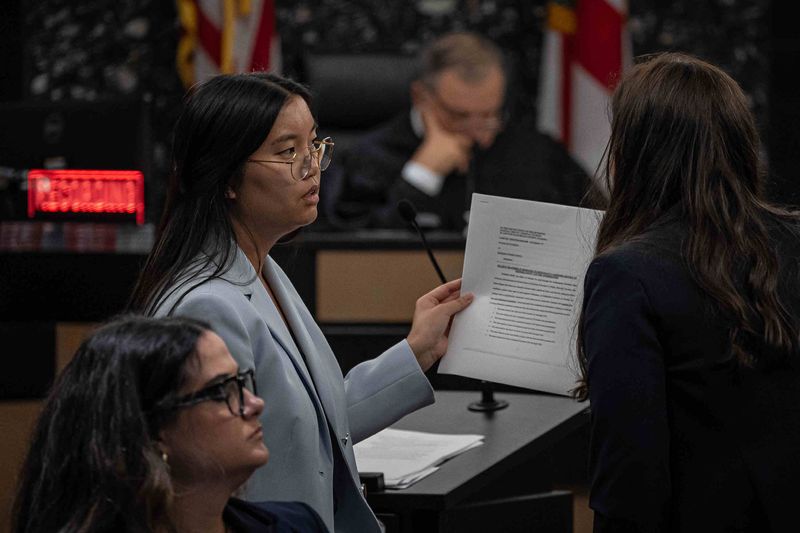
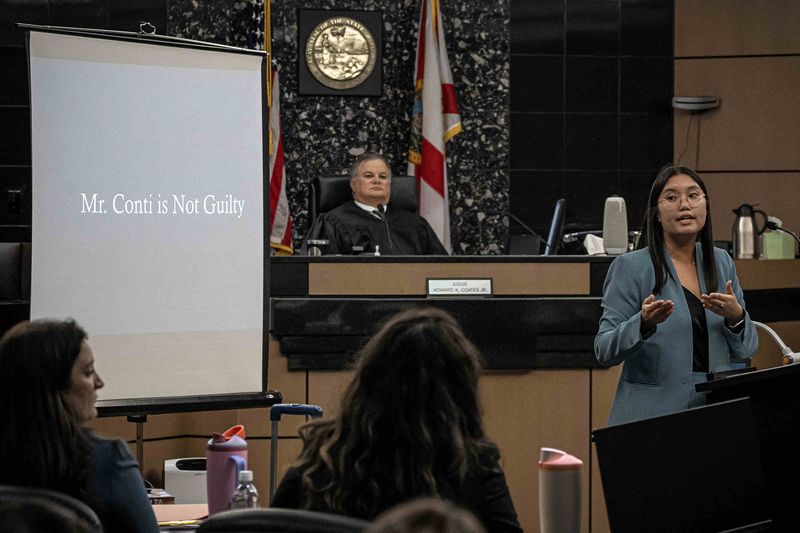
Assistant Public Defender Lily Boehmer called only one witness to testify briefly, but suggested through her cross-examinations of state witnesses that the girl was an enthusiastic participant of the relationship that Conti maintains was strictly emotional.
“They pushed the boundary,” Boehmer said during her opening statement. “But they never crossed it.”
Conti’s confession to police, played aloud for jurors, suggested otherwise.
Here’s what happened Monday.
Damian Conti, ex-SouthTech Academy teacher, chooses not to testify
Before bringing jurors into the courtroom, Coates asked Conti whether he’d like to testify in his defense. He declined.
The jury had already heard the former AP English teacher describe his encounters with the teen in his own words by then, first through lewd texts and later in a whispered confession to investigators.
“Did you use your penis?” a Palm Beach County sheriff’s deputy asked, his body-worn camera recording.
“Yes,” Conti said.
Conti initially said he had sex with the girl once but, after prodding from the detective, amended the answer to a “couple” of times. He said he used protection and that the girl was always in charge, always consenting.
Under Florida law, the age of consent is 18. Those who are 16 and 17 can legally consent only to a partner younger than 24.
Prosecutors rest their case against Damian Conti
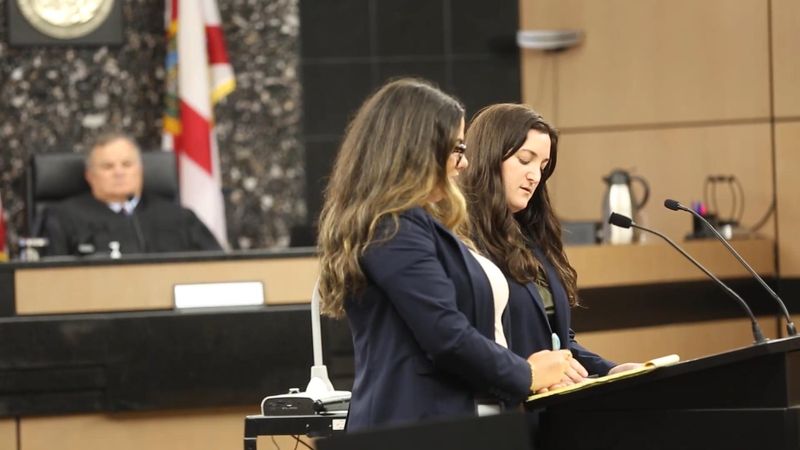
Coates called jurors back into the courtroom. Assistant State Attorneys Alexa Ruggiero and Nicole Corring presented two emails a SouthTech Academy administrator sent Conti in January 2024, one month before his arrest.
“I want to remind you that you should not be transporting students in your car. If you are transporting them for a field trip, the appropriate paperwork should be on file and there should always be a minimum of three people,” wrote Erin Kurtz, assistant principal at the Boynton Beach school.
Kurtz sent a second email 12 days later: “Giving gifts and spending time with student groups outside of school activities is outside the boundaries of the teacher/student relationship.”
She added she was “confident” Conti would avoid such situations in the future.
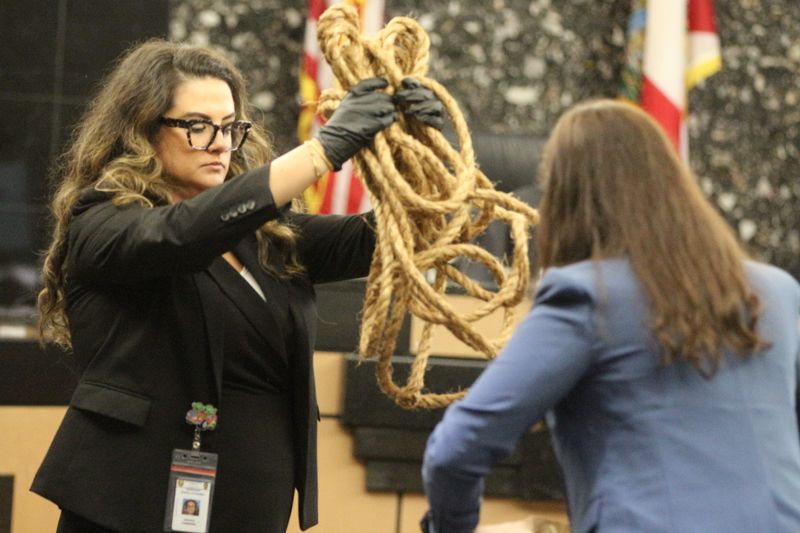
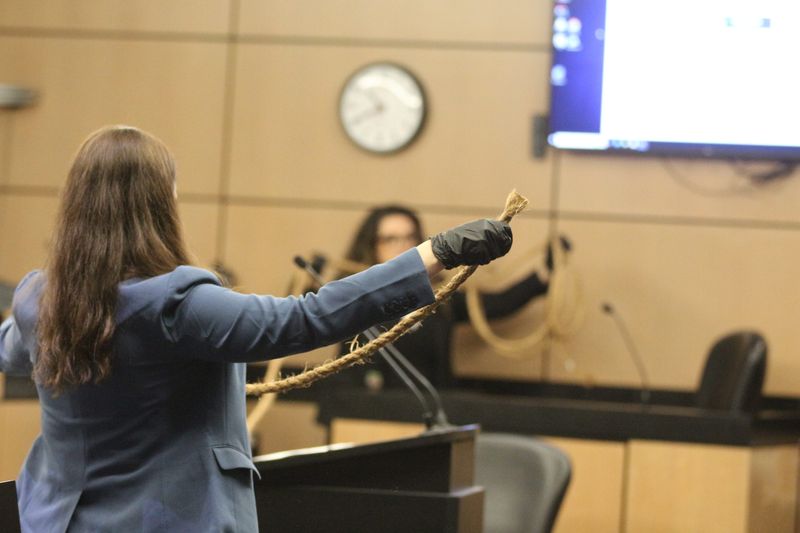
Ruggiero and Corring then unspooled the 30-foot rope and 15-foot chain the teen bought at a Lake Worth Beach-area hardware store with plans to hang herself. They held it aloft before the jury.
The prosecutors rested their case soon afterward, forgoing the final witness they had planned to call.
Judge considers dismissing assisted suicide charge
Boehmer called one witness, PBSO homicide detective Jeremy Gelfand, to the stand. He confirmed that Conti was the only person who called 911 in reference to the teen’s suicide attempt.
Boehmer rested her case. Afterward, she made a renewed push for Coates to dismiss the attempted assisted suicide charge. She argued that no reasonable juror could find him guilty based on the state’s evidence.
Echoing the student’s own words, Boehmer reminded Coates that Conti tried to dissuade the teen from ending her life. The only indication he physically handled the rope came from the student’s statement, which Boehmer said wasn’t corroborated by video evidence.
Boehmer argued that even if Conti did touch the rope, that alone couldn’t prove intent to assist in suicide, a required element of the charge.
Ruggiero disagreed. She argued that Conti’s actions went beyond passive acquiescence, pointing to surveillance footage, time-stamped records and Conti’s own sworn statements as evidence of intent.
“It doesn’t matter if he says, ‘No, you don’t need to do this,’ ” the prosecutor said. “He helps her carry that rope. He holds her keys while she checks out. He gives her back her keys to the car, her access to a vehicle, to go find a park.”
He called 911 belatedly, after placing a seven-minute call to his therapist. Once he did alert authorities, Ruggiero said, he gave deputies the location of a park more than a mile away from the spot off Hypoluxo Road where the teen was found hanging, despite having her location shared on his phone.
“He did assist her attempted suicide,” Ruggiero said. “She’s a child. It’s not just merely failure to act. It’s what he did do to help her do it.”
Coates wasn’t convinced.
“I have some concern about most of the evidence being that he’s telling her: ‘Don’t do this. Don’t do this,’ ” the judge said. “… Also the fact that he is the one that called 911 once she left Home Depot.”
Coates said he would wait for a verdict and then decide whether to permit additional briefing on the matter. Though prosecutors recommended waiting until after the lunch break to begin closing arguments, the judge chose to press ahead.
Closing arguments begin in Damian Conti’s sex abuse trial
Prosecutors began presenting their closing arguments — streamed live at the top of this article — at 12:20 p.m. Each side was given one hour to make their final case to the jury.
Ruggiero urged jurors to convict Conti of all charges. She began by juxtaposing the typical teenage experience to that of Conti’s student.
“While most girls her age were worried about passing their exams, which boy was going to ask them to the prom, or whether they would score Taylor Swift tickets, (the teenager) was learning how to tie a noose around her neck,” Ruggiero said.
Conti’s behavior was manipulative, self-serving and predatory, the prosecutor said. She described Conti as a man who saw an opportunity in a vulnerable teen and exploited her for sex.
The girl was not a willing partner in a relationship, Ruggiero said, but a child starved for affection — a condition Conti deliberately used to his advantage.
The prosecutor walked jurors through the charges. She stressed that for all four sex-abuse counts, what matters under Florida law is not consent but age, authority and penetration.
She acknowledged that some jurors might have been taken aback by the lewd language the teen used in text messages to Conti. But, Ruggiero said, that was by design — Conti had manipulated the teen into believing that “to be worthy of love, you have to speak that way, do these things.”
“I want to remind you that she is not on trial here, that she is a child, that consent is not a defense,” she told the jury.
Throughout her argument, Ruggiero returned to the theme of power imbalance and manipulation. The girl worked two jobs, cared for her siblings and sought stability from an adult who should have protected her.
She also walked through the evidence that she said proved the attempted assisted suicide charge, describing the day Conti accompanied the girl through Home Depot, where she bought the rope and a chain.
He didn’t call 911 to save her, Ruggiero said. He called to cover himself.
Defense argues lack of proof, inconsistencies
In her closing argument, Boehmer said Conti’s relationship with the student was inappropriate and unprofessional, but not criminal. She urged jurors to acquit the former teacher, portraying him not as a predator but as a man who panicked, lied to police in desperation and tried to save the teen.
Boehmer focused on the girl’s description of on- and off-campus sexual encounters with Conti. The testimony was vague and inconsistent, the defense attorney said. It lacked detail, like dates, clothing worn, “what positions were used, who undressed whom?”
The attorney argued that those gaps amounted to reasonable doubt.
Boehmer also raised concerns about the state’s evidence, or lack thereof. Investigators collected swabs from the girl to test for DNA, but no results were introduced at trial. That omission was telling, Boehmer said.
She pointed next to the student’s personal circumstances. She lived with strict parents and feared her mother’s reaction when her “relationship” with Conti was exposed.
That fear compelled her to attempt suicide, Boehmer said. Not Conti. As for Conti’s confession to police, his attorney said it was a fabrication, made in a moment of distress to dissuade her from going through with it.
“Mr. Conti, in his last ditch effort to prevent her from self-harm, decides not only to take the blame, but to admit to a crime that he did not commit,” she said.
Boehmer said that if Conti truly wanted the girl to end her life, she would not have been found in time. He was the one who called 911, triggering the search.
Boehmer urged jurors to weigh the credibility of the student’s testimony against other evidence, including messages in which she appeared to contradict claims made in court. The defense pointed to enthusiastic texts she sent about a summer program prosecutors said she had been manipulated into attending, and messages in which Conti complimented the type of shoe he was supposedly told her not to wear.
“Does the fact that she was inconsistent or untruthful about the heels or the camp, is that really material to the elements of this case?” Boehmer said. “No, not really.”
“But when it comes to her credibility, you have to ask yourself: If she’s willing to lie about the small things that don’t matter, is she also willing to lie about the big things that do?”
The attorney reminded jurors that they’re being asked to judge a man not for poor decisions or moral failings, but for specific crimes. And for those charges, the defense said, the state’s case falls short.
Prosecutors rebut, and jurors begin deliberating
In a final rebuttal Monday, Corring said Conti deliberately let his 16-year-old student attempt suicide rather than risk being exposed for his crimes.
This was damage control, she said. Not a rescue.
“He did just enough so he could sleep at night,” the prosecutor said. “His deliberate act was not to help her, was not to guide her, was not to teach her. His deliberate act was to let the evidence and the stories of the horrific things that he did with her — that he did to her — die with her.”
Corring dismissed arguments that the girl’s memory gaps should cast doubt on her testimony, pointing to Conti’s own words in hundreds of graphic text messages. She cited messages in which he described intimate acts, complimented the taste of her body and discussed the curve of his own anatomy.
“People are not going to remember absolutely everything in the absolute order that it happened,” she said. “Especially an individual who had to be cut down from a noose, purple in the face and foaming at the mouth.”
As for the lack of DNA evidence, Corring said this isn’t a case where DNA is going to tell you anything, “because you heard it all already.”
Jurors began deliberating at 2:30 p.m.
Jurors reach a verdict in Damian Conti trial
Shortly before 4:30 p.m., they announced they’d reached a verdict. Attorneys and spectators returned to the courtroom gallery, where they awaited the news.
It came quickly: Guilty of all four counts of unlawful sex between a teacher and student. Not guilty of attempted assisted suicide.
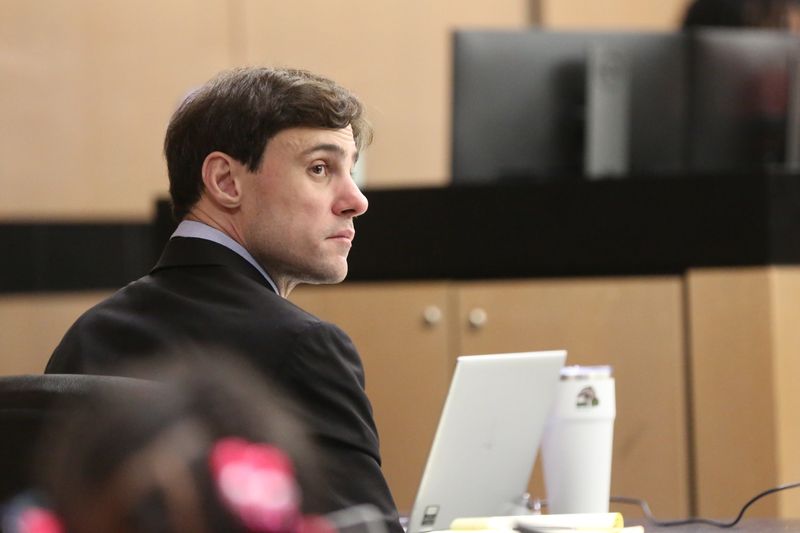
Beyond a clenched jaw, Conti did not visibly react.
The teen was not present. Victoria Mesa-Estrada, an attorney who represents the girl and her family in a civil lawsuit against SouthTech Academy, called the verdict “a clear affirmation that justice was partially served and accountability upheld.”
Mesa-Estrada said she’s disappointed with the single-count acquittal but grateful for the work of the prosecutors, the jury and the deputies who saved her client’s life.
“This is a step in the right direction to permit this young woman to heal from this trauma that she suffered at the hands of her teacher,” she wrote. “However this is far from over.”
SouthTech Academy knew of Conti’s predatory tendencies and still failed to take action, the attorney wrote. She promised to continue pursuing justice on the girl’s behalf.
SouthTech’s attorney, Lyman Reynolds, did not immediately respond to a request for comment.
Hannah Phillips covers criminal justice at The Palm Beach Post. You can reach her at hphillips@pbpost.com. Help support our journalism and subscribe today.
This article originally appeared on Palm Beach Post: Jurors reach verdict in SouthTech teacher Damian Conti’s sex abuse trial
Reporting by Hannah Phillips, Palm Beach Post / Palm Beach Post
USA TODAY Network via Reuters Connect