With an early summer heat wave baking Michigan and the Midwest, residents may notice two temperatures provided with daily forecasts: actual and apparent — or “feels like” — temperatures based on the heat index.
The heat index, also known as the apparent temperature, is what the temperature feels like to the human body when relative humidity is combined with the air temperature. The index offers important considerations for the human body’s comfort, according to the National Weather Service.

Temperatures may feel hotter because humid conditions slow the rate at which your body sweats, and sweating is your body’s natural cooling system.
In Michigan, there are extreme heat warnings and advisories in place for southern counties Tuesday, June 24, until 8 p.m. Temperatures were expected to range in the 90s with storms likely later, though apparent temperatures will range in the lower 100s.
As the heat wave continues, here’s a breakdown of the heat index:
How does the heat index work?
The heat index shows you what the temperature “feels like” to the human body by measuring air temperature and relative humidity (which is the amount of atmospheric moisture present, expressed in a percentage).
“There is direct relationship between the air temperature and relative humidity and the heat index, meaning as the air temperature and relative humidity increase (decrease), the heat index increases (decreases),” the NWS said.
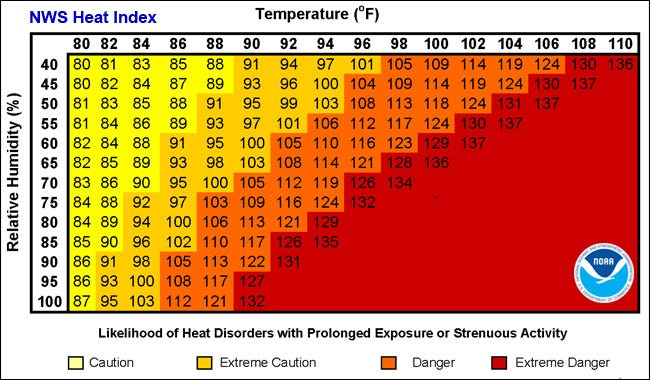
What does the heat index chart look like?
To get an idea of how air temperatures and humidity levels produce apparent temperatures, here is the NWS’ heat index chart. (these readings apply to shaded locations as well)
What is the heat index today?
Residents can use the NWS Heat Index Calculator to calculate what the heat index is locally. In addition, there is the Heat Index Chart with a wider range of temperatures and humidity percentages.
What are dangerous apparent temperatures?
At an apparent temperature of 103 degrees or higher, serious heat-related illnesses may occur, such as, heat stroke, cramps or exhaustion.
Here are ranges of apparent temperatures and their effect on the body under prolonged exposure, according to the NWS:
Contact Sarah Moore @ smoore@lsj.com
This article originally appeared on Lansing State Journal: What’s the ‘feels like’ temperature? How the heat index can keep you safe
Reporting by Sarah Moore, Lansing State Journal / Lansing State Journal
USA TODAY Network via Reuters Connect