For those in Michigan who fish to put dinner on the table, there are fish consumption limits to heed. Michigan’s 2025 Eat Safe Fish Guide includes safe serving sizes and local information on harmful chemicals.
“Some fish contain chemicals that can harm your health. MDHHS (Michigan’s Department of Health and Human Services) tests filets of fish taken from Michigan’s lakes and rivers to learn which fish are safer to eat,” MDHHS said. “The Eat Safe Fish Guide lists the fish that have been tested and how much is safe to eat.”

The updated guides, released on June 2, provide a regional breakdown of how to safely consume fish.
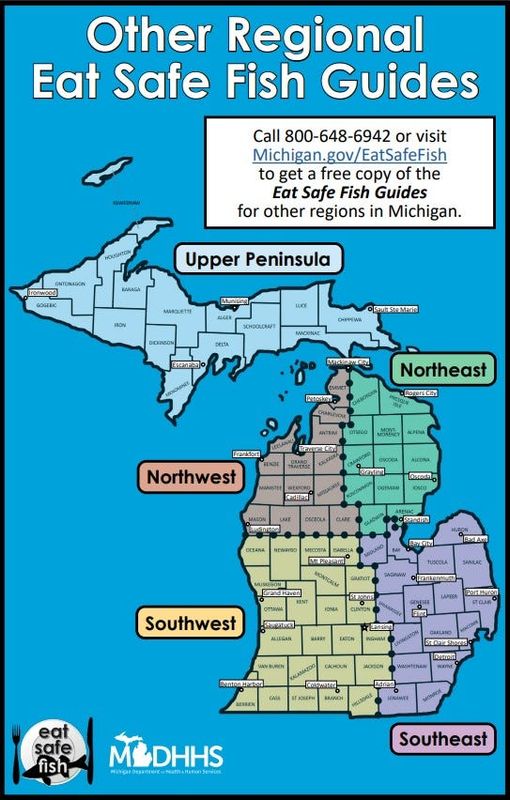
There are guides for the Upper Peninsula, northeast, northwest, southwest and southeast regions of Michigan with information based on county.
Michigan has over 11,000 rivers, lakes and streams, so officials test as many fish as possible. However, there are statewide safe fish guidelines to follow if your county or the species you caught is not included in the local information.
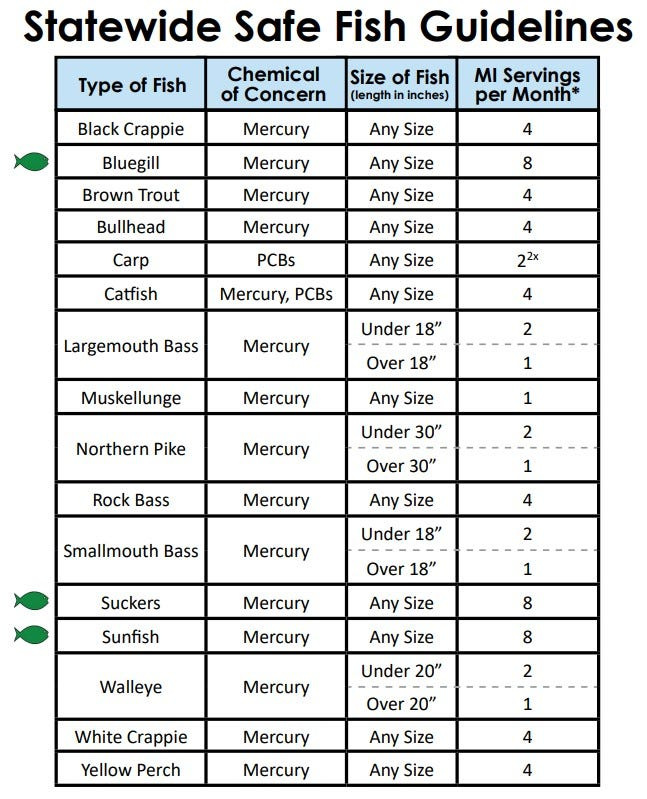
The statewide fish guidelines are “based on the typical amount of chemicals found in fish filets tested from around the state,” listing 16 common fish and their chemicals of concern, sizes, and safe serving sizes, according to the MDHHS.
Officials are testing fish for these chemicals: DDT, (dichlorodiphenyl-trichloroethane) dioxins, mercury, PCBs (polychlorinated biphenyls), PFOS (perfluorooctane sulfonate), selenium and toxaphene – all of which pose varying health problems if eaten in unsafe amounts.
In all the Great Lakes, bluegill, yellow perch and other panfish are the ideal species to eat, according to the ESF Guide.
In addition, “The 3Cs” principle applies to all fish in Michigan. This principle describes the safest order of operations for eating fish, including:
While residents continue to fish in Michigan’s numerous lakes and rivers, here’s more on how to eat fish safely:
What are the suggested portions for eating fish in Michigan?
“The guidelines in the ESF Guide are set to be safe for everyone. This includes children, people who are pregnant or breast feeding and people who have health problems, like cancer or diabetes,” MDHHS said.
There is a trick used to help measure a safe serving size by just using your hand:
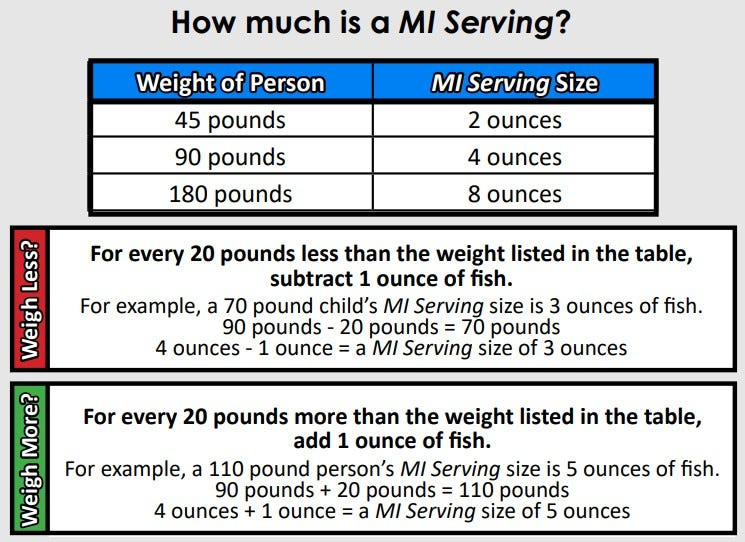
Eight ounces of fish is typically the size of your entire hand; four ounces of fish is the size of your palm; and two ounces of fish is the size of half of your palm.
Choosing a safe portion size can also be based how much a person weighs. For instance, someone who weighs 45 pounds should eat two ounces; at 90 pounds four ounces of fish; and at 180 pounds 8 ounces of fish.
What are the most common fish caught in Michigan?
From the ESF Guide, here are the 30 most common fish in Michigan, all of which can be found in the guide:
For local information on these fish and others, here are the 2025 regional guides:
Which Michigan rivers or lakes should I not eat fish from?
The MDHHS compiled a list of lakes or rivers that are areas of concern (AOCs) due to environmental issues such as oil spills and other industrial contamination. To keep residents safe, some are designated catch and release areas, such as Deer Lake.
Here are 13 AOCs to be aware of:
How often is Michigan’s Eat Safe Fish Guide updated?
The ESF Guide is updated regularly, but not all fish from all bodies of water listed in the ESF Guide are tested every year, according to the MDHHS, with the exception of AOCs.
Is it safe to touch a fish that contains chemicals?
Yes, chemicals will not be absorbed through the skin. Residents can access the Department of Environment, Great Lakes and Energy’s Beachguard MiEnviro portal (an interactive map) for local water quality concerns in Michigan.
Can you tell if a fish is safe to eat by looking at it?
No, the chemicals within the fish can’t be seen.
Contact Sarah Moore @ smoore@lsj.com
This article originally appeared on Lansing State Journal: Which Michigan fish are safe to eat? Check out the 2025 Eat Safe Fish Guide
Reporting by Sarah Moore, Lansing State Journal / Lansing State Journal
USA TODAY Network via Reuters Connect