State lawmakers and advocates wanted to make sure that insurance companies would cover breast cancer screenings for Ohioans of any age, so they worked to pass a bill that became a state law in 2022.

But there was a problem. Expanded coverage didn’t necessarily mean the screenings became more affordable.
“People are still on the hook for high costs associated with their screenings,” said Rep. Jean Schmidt, a Loveland Republican, who sponsored House Bill 371, the bill that took effect in 2022.
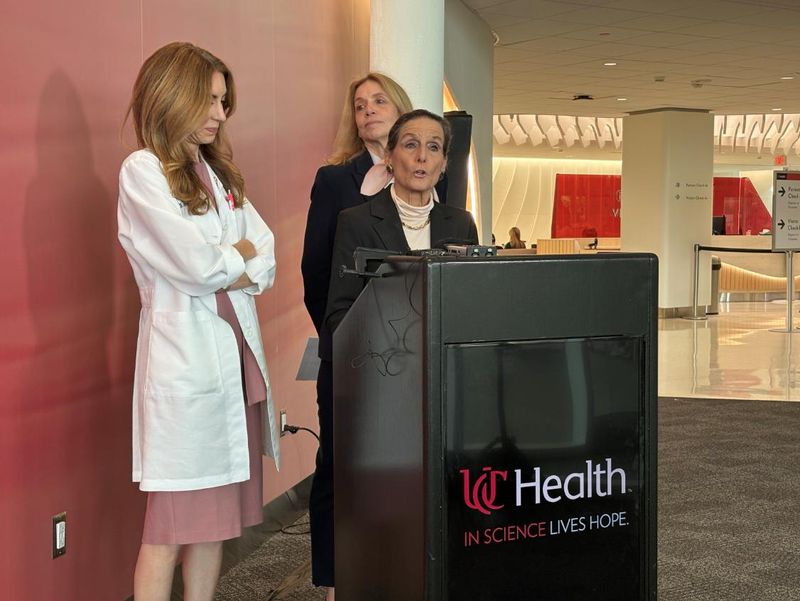
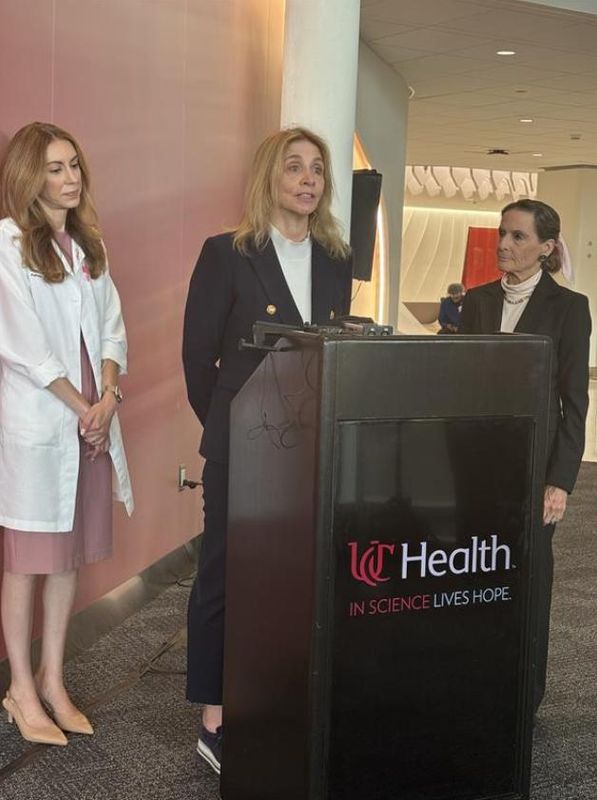
Schmidt introduced her new bill, the Breast Examination and Screening Transformation Act, or BEST, which seeks to eliminate out of pocket medical expenses such as copays and deductibles associated with supplemental breast cancer screenings, during a press conference Friday at UC Health.
BEST is intended to help Ohioans who face costs for breast cancer screenings that range from $200 to $1,000 out of pocket. The costs are high for several reasons, including high deductibles and screenings being coded incorrectly by insurance companies.
Cincinnati-based attorney and Stage 4 breast cancer survivor Michele Young said the high cost of screening means that more women are going undiagnosed until the cancer – and the treatment it requires – becomes debilitating and expensive.
“There’s an extraordinary number of cancer patients who also experience bankruptcy,” said Young, who helped advocate for both HB 371 and the BEST Act. “And of course, this impacts the entire family.”
Why additional breast cancer screening is important
HB 371 improved awareness about the need for supplemental screenings beyond the standard yearly mammogram, according to Dr. Ann Brown, a breast radiologist at UC Health and an associate professor of radiology at the University of Cincinnati.
The mammogram is still the first step to diagnosing breast cancer, said Brown, but it can miss symptoms of breast cancer in the more than 40% of women who have dense breast tissue.
Mammogram results for someone with dense breast tissue can be more difficult to interpret, according to the National Cancer Institute, because dense breast tissue and tumors appear as white areas in the mammogram, as opposed to fatty tissue, which looks dark.
In other words, for someone with dense breast tissue, it’s easier to miss cancer with a mammogram alone. This is why many women “would benefit from an additional test,” such as breast MRI or ultrasound, said Brown.
It’s also important for patients to make sure they’re getting screened regularly, even when they feel they’re in good health. According to the American Cancer Society, women between the ages of 45 and 54 should get a mammogram every year.
“What we don’t want is for someone to get it once and never again,” said Brown. “Screening has to be a continuous thing in order to find cancer as early as possible.”
Brown hopes this bill becomes law, so her patients and others won’t be deterred from seeking supplemental screenings.
“Far too often, I see women delay or forego testing not because they’re afraid of the results, but because they’re afraid of the cost,” Brown said.
“No one should have to choose between paying their mortgage or finding out if they have cancer.”
This article originally appeared on Cincinnati Enquirer: Ohio lawmakers want to make breast cancer screening less expensive
Reporting by Elizabeth B. Kim, Cincinnati Enquirer / Cincinnati Enquirer
USA TODAY Network via Reuters Connect