A slew of new Michigan laws signed by Gov. Gretchen Whitmer and passed by state lawmakers in the last legislative session take effect Wednesday, impacting a range of policies from unemployment benefits to gun regulations.
Lawmakers voted on the bills during the previous legislative session when Democrats controlled both the Michigan House of Representatives and the Michigan Senate. But the new laws didn’t kick in right away because they didn’t receive the Republican support needed to take effect immediately.

Here’s a look at some of Michigan’s new laws kicking in:
Michigan’s new car seat law
Michigan has new car seat regulations for child passengers:
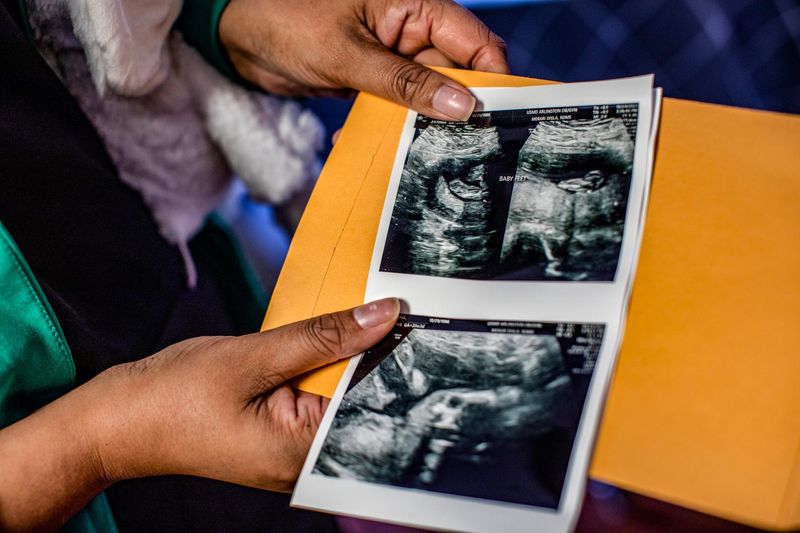
Michigan ends ban on paid surrogacy agreements
A new Michigan law brings an end to the state’s prohibition on paid surrogacy agreements. Michigan’s ban previously stood out as a national outlier and dates back to 1988.
Surrogate parenting, a means of assisted reproduction, refers to the process in which a woman will carry a pregnancy and deliver a child for another family. Parental surrogacy has been taking place in Michigan in the years since the ban on compensated surrogacy agreements was put in place, but parents and surrogates said during committee testimony on the bills signed by Whitmer in 2024 that the practice was difficult, forcing parents to go through lengthy adoption processes for their own biological children.
The new law requires those entering a surrogate agreement to be at least 21 years old, complete consultations with medical and mental health professionals and secure independent legal representation, which supporters say will protect carriers.
Michigan sees expansion of unemployment benefits
Unemployment benefits expanded in Michigan for the first time since 2002. The maximum weekly benefit increased from $362 to $446 Wednesday. It will increase to $530 in 2026 and $614 in 2027. The maximum number of weeks for receiving benefits will also expand from 20 to 26.
The Unemployment Insurance Agency said in a press release it will review claims filed between Jan. 1 and April 2 “on a case-by-case basis” to determine those eligible for higher payments.
In 2011, Whitmer’s Republican predecessor — Gov. Rick Snyder — signed legislation cutting the maximum number of weeks unemployed people could claim benefits from 26 to 20 weeks. Until the new law took effect Wednesday to restore 26 weeks of unemployment benefits, Michigan was one of a dozen states offering unemployed workers fewer than 26 weeks of unemployment insurance, according to the Center on Budget and Policy Priorities.
Gun ban at polling locations
Michigan law now bans the open carry of firearms at Election Day polling locations, early voting centers, clerks’ offices and absentee ballot drop boxes. It allows possession of a firearm at those locations for peace officers, individuals permitted to possess firearms on private property, those licensed to carry a concealed pistol and those transporting firearms.
The law also bars firearms at locations where election workers count absentee ballots, with the lone exception for law enforcement officers.
Separately, Michigan law now requires the complete destruction of firearms turned over to Michigan State Police through gun buyback programs that aim to curb gun violence. Lawmakers introduced the legislation after an investigation by The New York Times found that the Michigan State Police was the biggest client of a company that destroyed only some parts of firearms through buyback programs and sold the rest, enabling a secondary firearms market.
An end to Michigan’s gay and trans panic defense
State law now bans what’s known as the “gay and trans panic defense” in criminal cases. Specifically, Michigan prohibits using sexual orientation or gender identity as evidence to “demonstrate reasonable provocation,” to “show that an act was committed in a heat of passion” or to “support a defense of reduced mental capacity.”
Including Michigan, 20 states and Washington D.C. currently ban gay and trans panic defense, according to the Movement Advance Project, a think tank that researches LGBTQ+ issues.
Advocates for banning gay and trans panic defense say prohibiting the practice will make Michigan more welcoming for LGBTQ+ residents.
Although a majority of Republican lawmakers voted against the measure, four Republican senators joined Democrats in voting yes on the legislation, which was signed into law by Whitmer in July.
Michigan Politics: Veterans, unions, top Michigan Dems gather to protest Trump VA order in Ann Arbor
Michigan sees update to its child labor law
Michigan lawmakers voted along partisan lines last year to create a central database within the state’s Department of Labor and Economic Opportunity (LEO) for youth work permits, a shift away from previous law, which placed responsibility on schools to issue the permits.
Supporters say by having LEO issue work permits, the state can better track when minors are working and ensure Michigan’s child labor laws are not being violated.
Along with having LEO issue and track work permits, Michigan’s updated child labor law also modifies the hours minors under 16 years old can work, including barring them from working outside the hours of 7 a.m. to 7 p.m. from the period after Labor Day through May 31. Beginning June 1 and ending Labor Day, minors under 16 can work shifts falling between 7 a.m. and 9 p.m.
Contact Clara Hendrickson at chendrickson@freepress.com or 313-296-5743. Contact Arpan Lobo: alobo@freepress.com
This article originally appeared on Detroit Free Press: New Michigan laws take effect April 2: Car seats, parental surrogacy and more
Reporting by Arpan Lobo and Clara Hendrickson, Detroit Free Press / Detroit Free Press
USA TODAY Network via Reuters Connect