

By Jim Bloch

It may not be surprising that the prevalence of microplastics in Lake Erie have increased by more than 21 times, 2014-2024.
“Sadly, because I do this for a living and know we haven’t done enough as a society to reduce our usage (of plastics), these results are really not surprising,” said Dr. Sherri A. “Sam” Mason in a statement. Mason led the original study in 2014 and the follow-up research 2024. “And as dramatic as these numbers are, we could not count all of the particles that were in the samples, so these are actually underestimates.”

Ohio Sea Grant reported the findings of her research in an Aug. 21 story, “A Huge Lesson from Tiny Particles.”
For a week in 2024, Mason and several teachers resampled eight sites in Lake Erie that they sampled in 2014, plus new locations in the Western Basin of the lake. The Center for Great Lakes Literacy and the Great Lakes Sea Grant Network supported the research.
“The fact that every single sample was greater shows that, in my mind, we are definitely seeing an increase in microplastics in Lake Erie from 10 years ago to today,” said Mason, a professor at Gannon University in Erie, PA.
A world made of plastic?
Plastics are pervasive in contemporary society. Our clothes are made of polyester, nylon, acrylic and other plastic-based materials. We wrap our food in polyethylene terephthalate, high- and low-density polyethylene, polyvinyl chloride, polystyrene and other forms of plastic.
Plastics are everywhere in modern homes – in storage containers, cutting boards, the inner linings of canned goods, spatulas, tea bags, shower curtains, dental floss, cosmetics, dryer sheets, rugs, furniture, even chewing gum.
Plastics don’t biodegrade. As these products age and are tossed away, they breakdown into ever-smaller pieces. Microplastics are technically bits of plastic smaller than five millimeters.
Microplastics have been found in fish, fruits and veggies, household dust and the air we breathe. They have been found in human breast milk, placenta, testicles, hearts, livers and other organs. Pinpointing the health impacts of ingesting plastics is a relatively new scientific endeavor, but the chemicals in plastics have been linked to heart disease, fertility problems, cancer, ADHD, metabolic problems and DNA damage. One study estimated that humans ingest the equivalent of a credit card worth of plastics weekly.
Humans deposit eight to 10 metric tons of plastics into the oceans annually.
Meanwhile, for the second straight year, representatives of 184 counties meeting in Geneva, Switzerland, failed in mid-August to adopt an international plastics treaty that would limit plastics production, regulate plastic products and chemicals, and fund enforcement efforts.
The less-studied Great Lakes have their own plastics problem. The Great Lakes Alliance has reported that more than 22 million pounds of plastics end up in the five lakes each year. Plastics also account for than 85 percent of litter collected on Great Lakes beaches annually.
The future
“Mason was among the first to study the prevalence of plastic pollution in freshwater ecosystems and is now a leading researcher in the field,” according to the Ohio Sea Grant story. “In 2012, she took her first samples of microplastics across three of the five Great Lakes, finding evidence that microplastics are widespread in the region’s waters.”
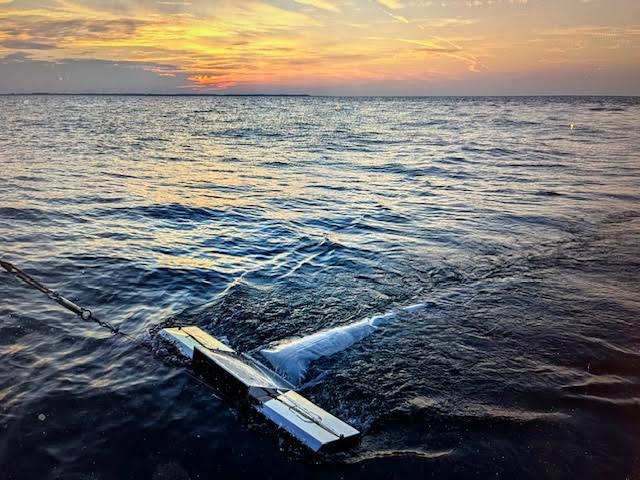
In 2014, Mason and her team of teachers used a manta trawl – a net-like contraption dragged behind a research boat that traps surface plastics – to collect their original samples and the 2024 samples.
“I can tell you the teachers were flabbergasted,” Mason said. “They didn’t realize how small microplastics are. You start looking at a sample under a microscope, and you’re saying, ‘oh my god, it’s like confetti.’ They’re just really, really, really small.”
An inherent problem with her findings is their static nature – snapshots of what’s happening in the lake separated by 10 years.
“People want to know if things are getting better, and we don’t know because there is no regular monitoring,” Mason said. “This study tells you why monitoring is important, because at this point it appears that we’re seeing a dramatic increase in the count over 10 years.”
The Science Advisory Board of the International Joint Commission has recommended continuous monitoring for microplastics in the Great Lakes. Mason hopes to work with the new Center for Lake Erie Education and Research to accomplish that.
Jim Bloch is a freelance writer based in St. Clair, Michigan. Contact him at bloch.jim@gmail.com.
