Voters in Eaton County next week will decide two county-wide tax proposals, one that funds 911 services and another for the county’s youth facility and its juvenile justice system services. Both are renewals of taxes that are already in place, and if they fail it will cost local governments, said Jim Mott, chairperson of the county’s Board of Commissioners.

“If we don’t have 911 at the county, then all the local cities, villages, townships, they will have to provide that service themselves,” he said. And if the tax of 0.35 mills on property that has been in place since 2005 to help fund services for youth charged with a crime doesn’t pass, Mott said the county will need to find $1.7 million out of its general budget to fund those services.
Voters have rejected the last two millage proposals from the county, leading to $8.4 million worth of staff reductions and cuts to services last fall, including the elimination of Sheriff’s Office road patrol for most areas of the county.
Throughout the Lansing area, there has been wavering support for millages at the ballot box, leaving many local official nervous as the August election approaches while gas prices are high and inflation continues to impact families.
There are plenty of examples. In May, Morrice Area Schools had its operating millage, an 18-mill tax on non-homestead properties levied by every public school district in the state, shot down by voters. The school will try again on Aug. 4.
Farther north, St. Johns schools has seen a series of millage proposals fail. In May 2024, St. Johns Public Schools had a $92 million bond proposal on the ballot, which failed by 109 votes. The district put another proposal on the ballot in May 2025, asking for $99.8 million, which failed by more than 1,500 votes. In January, the board approved borrowing $3 million — without voter approval — to bring an early childhood learning center to the district.
Back in Eaton County, voters in the Grand Ledge area voted down a proposal to build a new fire station for the Grand Ledge Area Emergency Services Authority.
Mott is hopeful voters still see the value in the services they gain with a “yes” vote, but says there’s no question that millage fatigue, coupled with rising costs and a struggling economy, make any tax proposal a hard sell.
“I think millage fatigue is going to be an issue just because of everything that’s going on, the cost of stuff in general,” he said. “It is a concern; however, we really don’t have any other choice.”
‘What are our obligations to each other?’
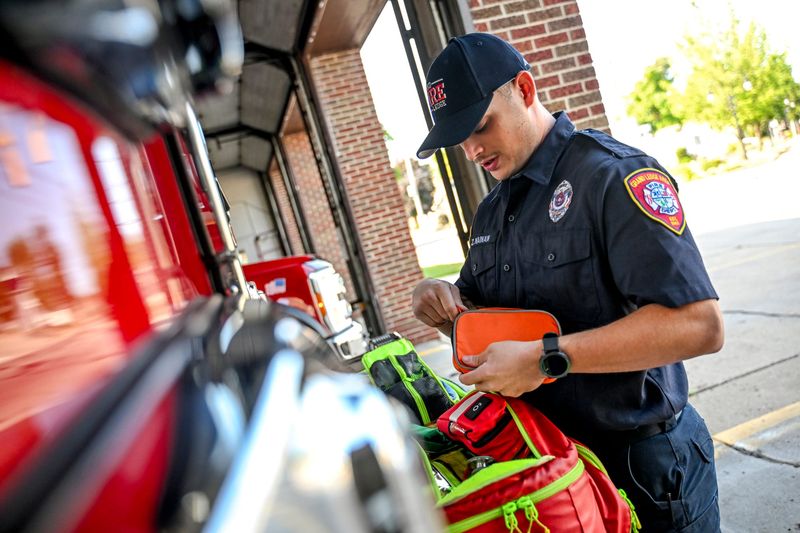
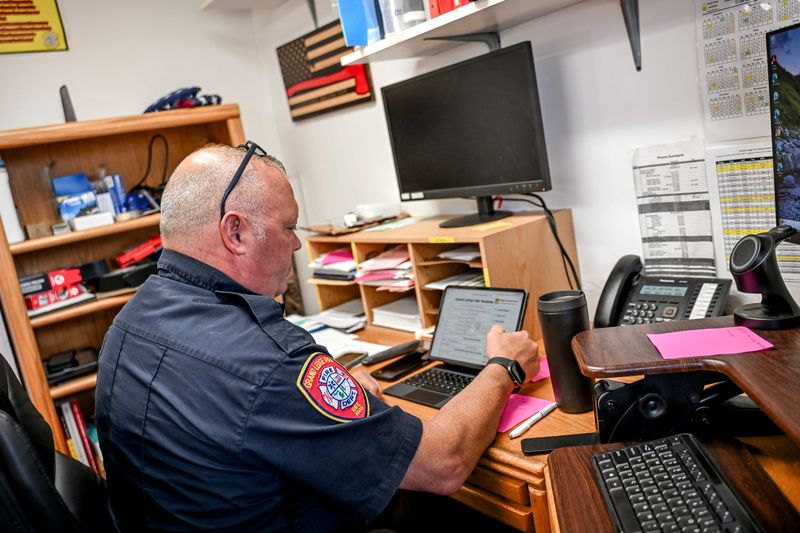
People are “fed up with taxes,” Grand Ledge Fire Chief Michael Roman said. “I’m fed up with taxes, too, but I also have that realization that if you want things, it’s going to cost money.”
In May, voters in Grand Ledge and Oneida Township served by the Grand Ledge Area Emergency Services Authority, which provides emergency medical and fire services to 12,000 residents, voted down a 3.04-mill tax that would have generated $22.6 million to build two new fire stations. They would have replaced the authority’s current fire station off North Clinton Street.
“We’re in an 80-year-old building and it’s tired,” Roman said. “It needs to be renewed. It’s not built for a modern fire station as far as the size of the bays or the even the way the layout of the building is.”
There’s no tax proposal on the upcoming ballot for new fire stations, but the authority is asking voters to renew a 2-mill tax for operations that would bring in $1.1 million in its first year, and represents a significant chunk of the authority’s budget. A separate tax of 3 mills passed in 2022.
“If it fails, I’m not going to say we’re going to stop doing what we’re doing,” Roman said. “We’re going to continue to do what we’re doing but it’s a third of our budget.”
Cuts to staff would be likely, he said. “Seventy percent of our budget is people.”
Simply voting tax proposals down because you’re anti-tax ignores the broader issue, said Mike Cox. A member of the Friends of the Charlotte Community Library, a group that advocates for the facility, he points out that the 1.4-mill tax voters are being asked to renew for operations next week has been in place a decade. It funds staff, supplies and a host of community services, he said.
When residents talk about voting it down, he reminds them of the good it funds. “People only have half the conversation,” Cox said. “I mean, that’s my main criticism of this anti-tax thing is, well, what do you want? What, as a society, what are our obligations to each other?”
Tracking local millage trends difficult
It’s hard to track overall trends regarding why local millages fail or pass.
Erika Rosebrook, director of the MSU Extension Center for Local Government Finance and Policy, said Michigan is among many states utilizing local property taxes to bring financial support to local schools and governments.
“School districts and local governments in Michigan rely really heavily on property tax millages, and that’s by design. That’s the way our system is set up,” Rosebrook said.
She said that while some state funding comes in for these systems, a majority of their funding comes from property taxes.
Millages can be shot down for any reason, including voters concerned they can’t afford the tax increase or they don’t feel the services are needed. But because millages are often determined on such a small, local scale, there isn’t much research done into phrasing or support to determine what could make a millage pass or fail.
“It’s something we don’t know a lot about because these millages are so local in a lot of cases, they can be hard to compare,” she said. “We don’t have as much systematic research about what language works here versus not here.”
When it comes to property tax rates, Michigan is not taxing as much as other states, Rosebrook said.
According to a March 2026 report from The Tax Foundation, Michigan’s 1.19% mean effective tax rate placed it at the 14th highest rate in the country in 2024. The effective tax rate was the average real taxes paid divided by the total home value.
While Michigan’s tax rates are higher, the average dollar amount is lower, because Michigan’s median home price is lower.
According to Bank Rate, Michigan has the 28th highest taxes, based on dollar amount.
“That doesn’t mean it doesn’t feel like its higher taxes to other people,” Rosebrook said. “How they’re going about making those decisions is certainly affected by the economy, the political climate around them, and how they value what’s happening in their local community.”
But when you’re going to the gas station or grocery store and the bill seems to just keep getting higher, it’s hard to want to give up any extra money. But local governments and schools aren’t immune from rising costs either, Rosebrook said.
Education is key, officials say
While inflation is causing prices to rise, Catherine Mullhaupt, staff attorney for the Michigan Townships Association, said she hasn’t seen many townships struggling to get millages passed recently. However, that has not always been the case.
Mullhaupt said in periods of economic downturns, she’s seen more proposals fail.
“When people get nervous, people get nervous,” she said. “… There have been ebbs and flows of people opposing taxes.”
Educating local voters about why tax proposals are important and what they pay for is the best way to combat naysayers, Mott said.
“So, myself, the commissioners, staff have been going to all the townships and villages and cities and just informing them about the details of what the juvenile and 911 millages do, what they can expect if they don’t pass, and just the benefits that we believe they offer,” he said.
In St. Johns, misconceptions about the Briggs Public Library’s budget, which isn’t flush with extra funds, have Library Director Sara Morrison worried that a 10-year, 0.75-mill tax renewal that funds about 80% of the library’s operations could fail.
Though audits show a large fund balance mid-year in the library’s budget, Morrison said that money is utilized before the end of each annual fiscal year. Essentially, they get their tax payments before then using them to fund the library.
“We do a really good job with the resources that we have,” Morrison said. “If we don’t renew this millage the library will become insolvent. Our library will run out of money, and we won’t have a library. There is no fallback plan. It scares me to think that there are people in our community who don’t think our community needs a library.”
Ingham County Board of Commission Chairperson Ryan Sebolt said three of the four county-wide tax proposals on the August ballot are renewals that have passed previously. The measures fund Potter Park Zoo, the county trails system and transportation services for elderly and disabled residents.
“All three of those have been widely supported in the past,” Sebolt said. Still, the downturned economy gives him “a little bit of pause,” he said. “It is always a concern, but I think it’s more of a concern than it has been in the past. Affordability is a huge issue but these are millage renewals. We’re not asking for something new, and I do think that makes a huge difference.”
Contact Reporter Rachel Greco at rgreco@lsj.com. Follow her on X @GrecoatLSJ. Contact Karly Graham at kgraham@lsj.com. Follow her on X at @KarlyGrahamJrn.
This article originally appeared on Lansing State Journal: Will ‘millage fatigue’ impact Lansing area tax proposals on Aug. 4?
Reporting by Rachel Greco and Karly Graham, Lansing State Journal / Lansing State Journal
USA TODAY Network via Reuters Connect



By Rachel Greco and Karly Graham, Lansing State Journal | USA TODAY Network