Five days out from Michigan’s Democratic U.S. Senate primary on Aug. 4, two polls released that day indicated Abdul El-Sayed would defeat Haley Stevens by 14 or 15 percentage points.
The day before, another poll showed El-Sayed leading the Oakland County congresswoman by 10 points.

Three weeks before that, a poll commissioned by The Detroit News and WDIV-TV (Channel 4) had Stevens leading by 7 points against El-Sayed, a progressive firebrand from Ann Arbor.
El-Sayed prevailed by about 1 percentage point.
Why were there such wild swings in public polling of the U.S. Senate race in July?
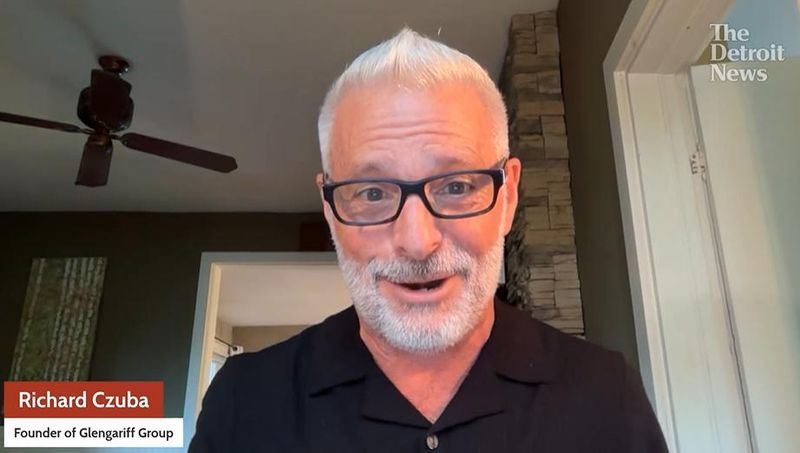
Richard Czuba, a veteran Michigan pollster whose Glengariff Group polls for The News and WDIV, spoke with Detroit News Political Reporter Craig Mauger and Politics Editor Chad Livengood on the Political Insider podcast about the state of polling and his firm’s methodology.
The following partial transcript has been edited for clarity:
Question: We had, in Michigan’s August primary, polling out there that indicated Abdul El-Sayed was going to win by somewhere around 10 points, maybe more, maybe 15 points. Then, in reality, he won by about one percentage point. Then a Wisconsin pollster said, ‘Hold my beer.’ They had Francesca Hong (a democratic socialist running for governor) winning by 20 points, and then she lost. What happened, Richard? Should people trust polling? Where are we at right now?
Answer: Well, let me start by saying what I normally talk about. No, don’t pay attention to polls. Polls are tools that campaigns use for strategic positions to help their strategy. We’ve morphed polls into looking at these horse races. That’s not what polling is really intended for. … Responsible public polling isn’t meant to predict a race. It is meant to inform the voters how people are coming to their conclusions. So, if all you’re providing is a head-to-head, you’re not helping the conversation any. You need to help people understand why their neighbors are making the decisions they’re making, and that’s a big difference. With the work we do together, that’s part of what we try to do is inform people rather than predict. Campaigns don’t use polls to predict. Campaigns use polls to figure out where they’re at and where they’re moving. Who’s moving and who’s shifting, and how to move them. … Secondly, we say this all the time: nobody pays attention to us. Polls are a snapshot in time. So, for example, the poll we put out with (The Detroit News and WDIV-TV) was done four weeks before primary election day. Never intended, for example, to predict the outcome, because so much happened in that final four weeks.
I think we need to pay attention. That’s particularly important when you look at what happened in Wisconsin. Polls are a snapshot in time. Well, the final three weeks of that campaign were insane. I mean, just the Wisconsin race was certifiably insane, unlike anything we’d ever seen, where you had candidates dropping out of the race, scandals. Suddenly, it became a one-on-one race between [Milwaukee County Executive David] Hong and Crowley, where [outgoing Gov.] Tony Evers got Crowley back into that race. He climbed back in. It became a one-on-one race, and we didn’t see a lot of polling at the end. … We’ve seen this also in past campaigns. There’s movement that happens in the final weekend. People who are undecided, who are soft, make their final decisions. There’s no polling that’s going to capture that because nobody’s doing polling at the end, because it takes too long, and what’s the purpose of putting out a poll on a Monday before the election, unless you’re trying to sway a narrative, which I think that’s bad for public polling.
Q: When we cover polls at The Detroit News … there are some standards that we use, and there are reasons for those standards. Some of this polling that is put out on X or internal polling, we always say who paid for the poll. Usually, when we’re covering the poll, it’s us and WDIV partnering together to do the poll. If it’s an internal poll, it’s the campaign of one of the candidates putting out the poll. So, right off the bat, it’s less trustworthy, correct?
A: If a campaign is putting out their internal numbers, they’re doing it for a reason, and that is to sway voters and make them think the numbers are a specific way. … I think we should all be very, very careful about what we’re paying attention to in terms of polling. And, frankly, as you guys know, good polling costs money. There are ways around that money, and what we saw (in the pimary) were a lot of those ways around that paying that money led to wrong polling.
Q: How do you poll versus what other types of polls are out there? And what is the difference, scientifically, in the variations?
A: We do live operator telephone polls. We poll about 85% on cell phones, but we still reach out and contact about 15% of our respondents — people are going to laugh — by landlines. And one of the interesting things that we really saw this past election was the far left in that U.S. Senate race in Michigan was much more willing to answer a poll. They were excited to answer these questions, which, let me tell you, as a pollster, is rare. But that doesn’t mean that the people who weren’t excited to answer the polls weren’t going to vote. So I think we saw a lot of numbers coming out that overrepresented, dramatically, college-educated voters, progressive far-left voters, compared to what I call the quiet middle of voters — those voters who are consistent, always vote, but are quiet about it; they don’t put up yard signs, they don’t go to rallies, and yet they vote. And they’re typically older. And the way to reach those older voters is you still have to talk to them on telephones, because they are reluctant to do text-to-web.
Q: Text-to-web is when you get a text message saying, ‘Hey, will you do this poll?’ You click on a link and then you go to a survey. Correct?
A: Right. And when you talk to specifically older voters, who dominate primaries, by the way, those older voters, particularly the ones over 70, they are far more likely to talk to you on a telephone than they are text-to-web.
Q: So that’s why it matters where, if there’s a story about a poll … one of the questions to ask is how did they do this poll? Is it over the phone? Is it text to web? Is it some type of email survey? Is it a SurveyMonkey link on X? All of the matters.
A: All of that matters. And what matters is the security if you’re doing text to web; the security of that poll matters. So, for example, you can’t pass it on. It’s very important that only the person getting it can do the response. Otherwise, God knows who it’s shared with, or potentially could be shared with — and all of that warps things.
The other thing that I think is really important, particularly in Michigan, a lot of times we see polls that say they polled by media market. So Metro Detroit, Metro Grand Rapids. But we all know Southeast Michigan, and not all votes are created equal in Southeast Michigan. And what I mean by that is, a voter in Oakland County does not look like a voter in Macomb County, does not look like a voter in Detroit, does not look like a voter in Wayne County. They are all not the same voter, so you have to pay attention to those individual counties and those individual regions. And increasingly, frankly, as we look at Wayne County, we are now going to stratify out because of the intensity of the vote — those areas of Dearborn, Dearborn Heights, Hamtramck — to make sure that we’re getting that accurate as compared to the rest of Wayne County. Because all of that is so drastically different and leads to different results just inside the Detroit metro market. So be careful if a poll can’t tell you how many (voters) are coming from Oakland or Macomb or Wayne or Detroit, because it all changes the results.
Q: Do you think that’s primarily one of the reasons some of these polls were off? I know we’ve talked about how these polls are not supposed to be predictive. … People are taking them as predictive, though. … If pollsters were not capturing older voters accurately, older voters who are more in the middle, who are less likely to vote for someone like Francesca Hong or Abdul Al-Said. If we’re not capturing them in the poll, that’s … underportraying what their level of support is. Is that what you think one of the main reasons these polls were off?
A: It’s certainly one of the differences I was seeing between what we put out and what others were showing. I think we all know when we put out those numbers showing that it was a toss-up race, it was a dead-even race four weeks before the election, we took a lot of grief, frankly, for showing that Haley Stevens was leading black voters by 40 points, and it’s because all the other polls didn’t show that. But what we paid attention to were older black voters who were voting by absentee ballot. That’s where that margin was enormous. It wasn’t in the election day vote. It was in the absentee vote, and the way you know one of the important differences here is we draw our samples from lists of people with histories of voting. That has its pros and its cons, but in a primary, it really is important because primaries in Michigan are the first week of August. If you don’t have a history of voting the first week of August, chances are you’re not going to.
… We expected a turnout of about 1.2 million. What we saw was a turnout of about 1.5 million. So it was far higher than even we expected, and we expected a high turnout. … But what was really interesting to me was a national narrative we were hearing — it was the progressives, it was the young people who are going to pour in to vote. We saw something different. We saw Democratic voters across the political spectrum motivated to vote. That included older voters. One of the stories that is not being told right now is the motivation of black voters to vote, and we saw that shift take place after the Supreme Court ruling on the Voting Rights Act. Black voters are angry about what is happening to their representation, and they are getting out to vote. We certainly saw that in the primary election here in August.
Q: And that inherently changes what you normally would sample, right? The amount of turnout, how you build those models, essentially those models got kind of flipped on their heads on Aug. 4?
A: They did and they didn’t. They got flipped on their head because it was 1.5 million voters. Yet, what we expected was everybody was motivated to vote across that Democratic spectrum, and that’s why I think we kind of got it right there. We saw that happening from earlier polling. It wasn’t just young progressives who were motivated to vote. It was older voters. It was the Black women in the church pews. It was across the board. If you were a Democrat, you’re very angry right now, and you are motivated. And as we look ahead to November, we are seeing that difference play out again, with the question of: Are you definitely voting, or are you probably voting? And if you’re telling us you’re definitely voting, those are by a bigger margin Democratic voters. They are highly motivated. If you’re telling of us, you’re. Probably voting, those are tending to be Republican voters. That’s the challenge we talk about Republicans face going into November: turning out voters who just aren’t as motivated as the Democrats.
So as we move forward into November, we’re going to be reporting out definite voters and probable voters to show the difference of what the races could look like if these probable voters don’t turn out, and what it would look like if they do turn out.
Q: … There are such different ways of voting now. If you’re voting on election day, we saw that Abdul Al-Sayed did better with people voting on election day. Haley Stevens did much better in some areas with people casting absentee ballots. We have so many people on the permanent absentee ballot list now. So the motivation question: How does that interact with the idea that there are some people who might not be that motivated to vote, but they’re getting a ballot sent to their house automatically for each election, and all they have to do is fill it out and return it? Does that change how you judge the motivation or how you look at this? Because a lot of Haley’s voters, I’m going to guess, were on that permanent absentee ballot list, got the ballot sent to them. So even if they maybe weren’t that excited about the Senate race, it was kind of very easy for them to participate in this process.
A: It absolutely shifts the equation of how we sample in these polls. If you are on the permanent AV absentee list, which a lot of people are, you are included in the sample because we know you are getting a ballot, and that’s why we report out. And frankly, (every pollster) needs to report out at this point: Are you planning to vote by absentee? Are you voting at the polls on election day? Or are you voting early? …
Q: What should people look for in the next couple of months? This is obviously now a tactic that is becoming much more popular. Put out polling, try to get the narrative going in one direction. For Michigan residents who are going to be seeing a lot of this, what’s your No. 1 piece of advice?
A: No. 1 piece of advice is if they don’t issue the full Kahuna poll, just don’t pay attention to it. Just discount it. And by that I mean, you need to see where these respondents came from. Are they from the Upper Peninsula? Are they from West Michigan, Southwest Michigan, Oakland, Wayne, Macomb? How old are they? Really crucial in Michigan polling: What is their education attainment level? One of the things, frankly, we saw in a lot of the Senate polling was way too high percentages of college voters. In fact, I saw some percentages where 20% of the electorate had PhDs and master’s degrees, and I thought, ‘Wow, that’s a really high percentage. Does Michigan have that many people?’
Q: Only in Washtenaw County.
A: But this is a good example of what I said, and what we’re seeing is the far left, the liberals, the DSA voters, for example, they couldn’t wait to do these polls. But they aren’t the only people who vote. So as a pollster, I certainly pay attention to, OK, that’s great, they were willing to do the poll. But how about all these other people we know are going to vote who aren’t as willing to do the poll? We have to pay attention to them and work at getting them (in the poll).
… In Democratic primaries, you have to focus on voters who don’t have college degrees and aren’t as engaged. Perfect example: a lot of polls now do online panels. If you’re willing to do an online panel, you’re not a normal voter. You’re not one of those quiet people who just goes to the polls. You are an engaged voter, and that’s very different from the quiet voters.
clivengood@detroitnews.com
cmauger@detroitnews.com
This article originally appeared on The Detroit News: Veteran Michigan pollster explains why polls can be wildly different
Reporting by Chad Livengood and Craig Mauger, The Detroit News / The Detroit News
USA TODAY Network via Reuters Connect
By Chad Livengood and Craig Mauger, The Detroit News | USA TODAY Network