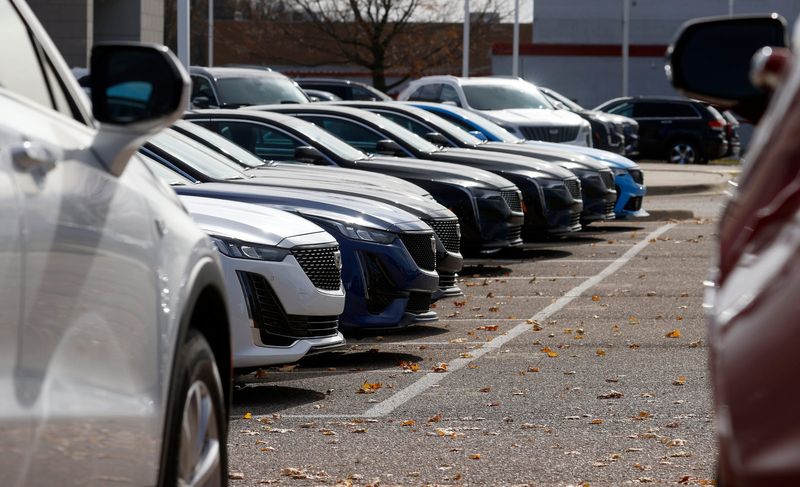
Don’t blame safety features for the high cost of new vehicles.
That’s the message David Harkey, president of the Insurance Institute for Highway Safety, thinks consumers need to hear.

Average new vehicle prices paid by consumers hit an all-time high in December — $50,326, according to Kelley Blue Book — and affordability has become a popular topic in today’s hyper-political climate.
Harkey’s concern stems from hearing comments in recent months from elected officials, such as U.S. Sen. Bernie Moreno, R-Ohio, that tie some safety features to the high cost of vehicles, a framing that IIHS disputes.
Harkey wants to prevent safety features from becoming a casualty as a result of this charged environment. He said safety features, which save lives, aren’t the issue.
Instead, a major culprit is convenience features. He pointed to items like retractable mirrors, power liftgates and puddle lights, which illuminate the vehicle brand or logo when a door is opened, as the kinds of items driving up the costs of new vehicles.
Harkey, who also noted that consumers often opt for larger vehicles and those with higher trim levels, said you don’t have to spend $50,000 to get a vehicle with good safety features. He wrote in a website posting on Tuesday, Jan. 20, that vehicles like the Mazda 3, Hyundai Kona, Honda Accord, Toyota Camry and Subaru Forester are options that earn top safety awards from IIHS with prices that start at less than $30,000.
“You do not have to spend $50,000 for a vehicle. You can spend much less than that. You can get all of the safety features that are important for you and your family,” he told the Free Press. “It’s not safety that is driving up the cost. It’s consumer choice, and we’re all guilty.”
Harkey noted that although he likes his heated seats, he said he counts on safety features such as seat belts, air bags and automatic emergency braking to protect him and his family.
Vehicle affordability was discussed in a contentious U.S. Senate committee hearing involving Moreno in November that highlighted newer safety technologies.
Affordability was also one of the topics Moreno addressed in prerecorded comments aired at this year’s Detroit Auto Show.
In addition, a hearing of the U.S. Senate Committee on Commerce, Science and Transportation that had been scheduled for Jan. 14 set to “examine how radical global warming regulations and mandated technologies have driven up the cost of vehicles for American consumers” has been postponed. It was to have included the CEOs of Ford Motor Co., General Motors and Stellantis as well as a key executive at Tesla.
Harkey said his organization doesn’t want to see legislation or regulations dial back safety advances. In his website posting, Harkey pointed to a federal analysis showing that the benefits of federal motor vehicle safety standards have far outweighed the costs to consumers.
Notably, the National Highway Traffic Safety Administration in 2024 reported on its website that “from 1968 through 2019, NHTSA’s safety standards prevented more than 860,000 deaths on the nation’s roads, 49 million nonfatal injuries, and damage to 65 million vehicles.”
Eric D. Lawrence is the senior car culture reporter at the Detroit Free Press. Send your tips and suggestions about cool automotive stuff to elawrence@freepress.com. Become a subscriber. Submit a letter to the editor at freep.com/letters.
This article originally appeared on Detroit Free Press: Safety shouldn’t get blame for high vehicle costs, advocate says
Reporting by Eric D. Lawrence, Detroit Free Press / Detroit Free Press
USA TODAY Network via Reuters Connect