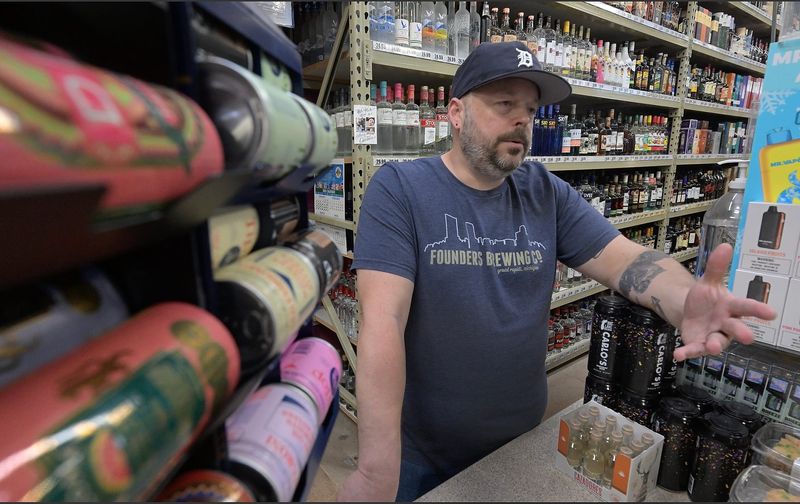
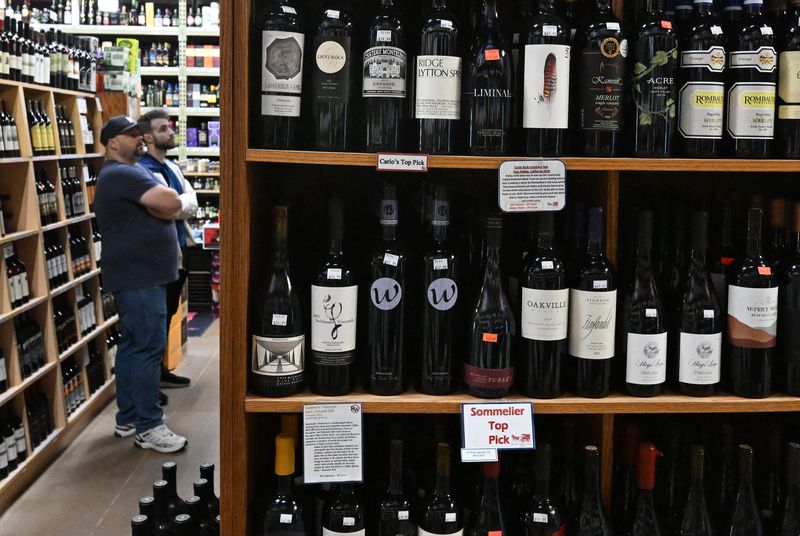
Troy — Had an alcoholic beverage lately? Michigan’s liquor sellers wouldn’t be surprised if the answer is no.
Sales of spirits fell from $1.895 billion in 2024 to $1.78 billion last year, according to the Michigan Liquor Control Commission. Officials in the booze business cite a “California sober” trend for part of the sales dropoff in the Great Lakes State: People lately are becoming more health-conscious.

Other factors include inflation, which is leading more diners to order takeout, and competition from marijuana dispensaries. Altogether, it adds up to financial pain for Michigan’s bars, restaurants and off-premise liquor sellers, said Scott Ellis, the executive director of the Michigan Licensed Beverage Association.
“Their best profit margin is usually spirits, and that’s what’s taking the hit,” he said. “Labor costs, food costs are going through the roof. Liquor is where the majority of our members make their money, and now we’re seeing that huge decline in sales.”
Troy resident Janice Walker exemplifies the shift. She said going out to restaurants and bars is not her first option; she’d rather just stay at home. And the 33-year-old did just that after buying a $30 bottle of Mozart chocolate cream at Red Wagon Troy, one of the state’s biggest spirit sellers, earlier this month.
“I do not go out at all, and if I do, it’s to a restaurant and I order a maximum of two drinks,” Walker said. “I don’t go to bars and drink every day or every weekend. I’ll go home and have a glass of wine rather than spending $17 for an apple martini.”
But even with customers like Walker, Red Wagon isn’t immune to the downward trend. The store bought 25.4% less in spirits last year than it did in 2024, with its purchases going from $1.29 million to $960,295.
Steven Coleman, Red Wagon’s bourbon steward, said the store known for its collectible bourbons and cigar room is seeing a noticeable drop in sales of mid-priced liquor, something that could point to the impact of inflation.
“People want rare, special bottles, something you don’t see every day,” he said, adding that Jack Daniel’s 10-year, 12-year and 14-year bottles move on and off the shelf quickly. “People aren’t buying regular bottles anymore. It’s either lower-priced bottles or highly allocated, hard-to-get stuff.”
Carlo Koza, the store’s owner, sees a variety of reasons for the decline in business. Among them: Changes in how people socialize.
“(For) young kids, there’s no nightclubs, no real bars — there’s social media, they don’t need to go out and meet people and have a drink to entertain themselves,” he said. “They can just go to a coffee shop, restaurant. Drinking had a big social aspect to it. People are not going out like they used to.”
There’s also a change in what substances some people are using to unwind.
“Before, you’d have a glass of wine to come take the edge off. Now people they’re smoking, taking gummies, edibles, so these are all multiple factors,” Koza said. “People still drink … (but) you can definitely see that it’s down.”
Cost may also play a role, he said: “A bottle of wine might cost you $20, $30, a bottle of bourbon $50. Now what’s a gummy cost? $3.”
Still, adult-use marijuana sales also were down in Michigan from 2024 to 2025, falling from about $3.27 billion to about $3.17 billion, according to monthly sales reports from the state Cannabis Regulatory Agency.
Retailers in the association are looking for relief via legislation. House Bill 4113, which was approved by the Legislature’s lower chamber in June 2025, would increase the discount rate for specially designated distributors and on-premises licensees on liquor purchased from the Michigan Liquor Control Commission from 17% to 23%. The measure, which would reduce the state’s general fund revenue by an estimated $112.8 million, has not moved out of the Senate Regulatory Committee.
Yet even with liquor sales down last year, the Senate Fiscal Agency projected in January that revenue from the state’s 4% tax would increase from $85.1 million in the current fiscal year to $86.4 million in 2026-27.
Jeffery Elsworth, associate professor of hospitality business at Michigan State University, said the drop in liquor sales is particularly concerning for restaurant operators.
“It might be a good thing for society, but it’s not a good thing for the restaurant industry because we really count on selling alcoholic beverages,” he said. “Everybody is starting to understand that it’s a trend that they’re going to have to deal with right now.”
A full bar and restaurant typically spends 35% to 40% of its costs in food and about a quarter or less in alcohol, depending on drink sales to meet margins, Elsworth said. Now, he added, restaurants are starting to reduce portion size and shift toward cost-effective items like pasta rather than various steaks, for example, to make it up.
“Because the cost is lower, there’s higher margin on alcohol than there is on food,” Ellsworth said. “You depend on that to make your profit. There’s a lot more profit in alcohol than there is in food.”
mjohnson@detroitnews.com
This article originally appeared on The Detroit News: Michigan’s liquor sales are declining. What’s behind the drop?
Reporting by Myesha Johnson, The Detroit News / The Detroit News
USA TODAY Network via Reuters Connect