

Detroit — Abdul El-Sayed was leading Haley Stevens in early returns Tuesday night in the most-expensive Democratic U.S. Senate primary contest in U.S. history.
El-Sayed had 61% to Stevens’ 35.5%, according to early election data compiled by The Detroit News. The early returns included a fraction of ballots cast in Washtenaw County (El-Sayed’s home county, home to the University of Michigan), Kent, Eaton, Oakland, Macomb and Livingston counties.

A third candidate, state Sen. Mallory McMorrow of Royal Oak, was pulling in nearly 3% of the vote. She remained on Tuesday’s ballot after dropping out of the race on July 5.
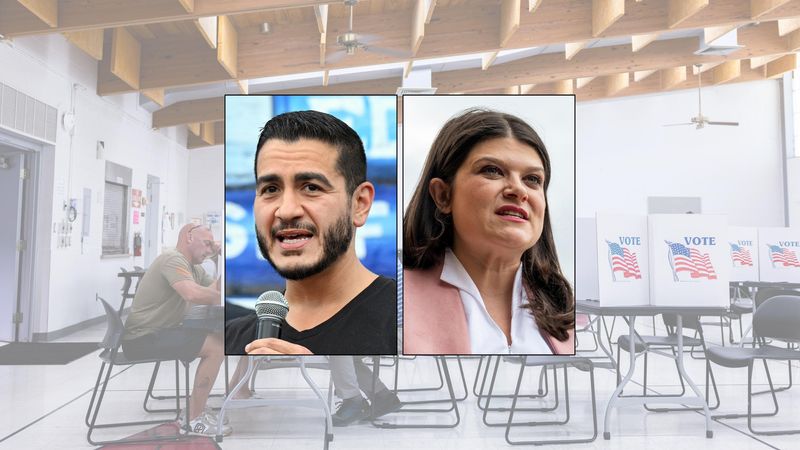
The fierce contest has pitted Stevens, a moderate four-term congresswoman from Birmingham, against El-Sayed, a former public health official and podcaster from Ann Arbor, for the chance to take on Republican Mike Rogers of White Lake Township in November.
Michigan’s Senate seat is up for grabs because two-term U.S. Sen. Gary Peters, D-Bloomfield Township, is retiring. Republicans haven’t won a Senate race in Michigan since 1994, and Democrats need to win in Michigan if they hope to retake control of the Senate.
The primary battle is widely viewed as a test of whether a progressive Democrat preaching Medicare for All and railing against dark money to young crowds can win “purple” Michigan over the establishment’s pick, who has run a more traditional, blue-collar campaign on building up the state’s manufacturing core and fighting President Donald Trump. Michigan went for Trump in 2024.
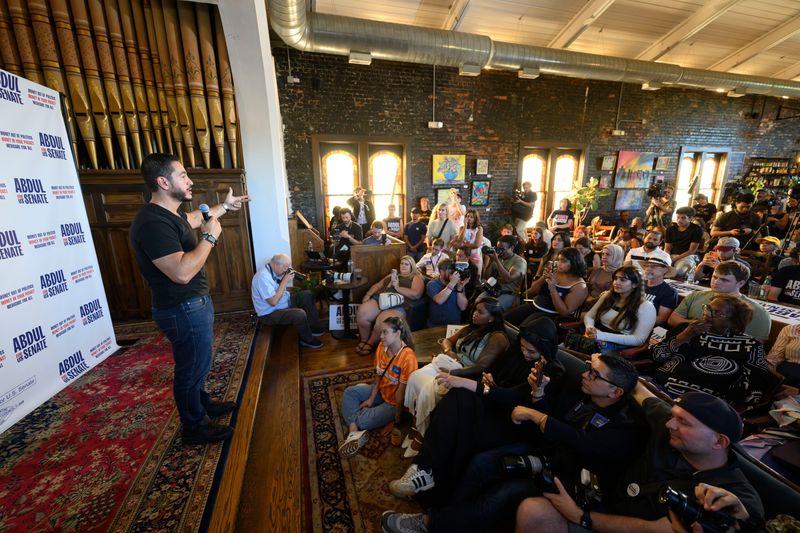
El-Sayed has been drawing larger crowds on the campaign trail for weeks and led Stevens in recent public polls. Some Democrats have argued the young energy and well-organized ground game behind El-Sayed’s bid could make the difference Tuesday in turning out voters who don’t usually cast ballots in an August primary.
The race has been especially nasty and toxic in its closing month, with El-Sayed calling Stevens “the least capable candidate in America” and suggesting she could not “string together two coherent sentences.” He cast her as beholden to corporate dollars and morally bankrupt for her support of U.S. aid for Israel.
“I get real pissed off when they say, ‘You’re unelectable because your name is Abdul.’ Because for me, I push back and say, ‘You don’t know Michigan like I know Michigan,” El-Sayed said at a rally over the weekend. “You don’t know what our state needs and deserves like I know what our state needs and deserves.”
Stevens has claimed her rival is only running for office to be a “celebrity” senator who wants to sell books, give paid speeches and promote his podcast. She’s also accused him of being an untrustworthy, closeted millionaire hiding his personal finances and blaming the country’s problems on a foreign country, Israel.
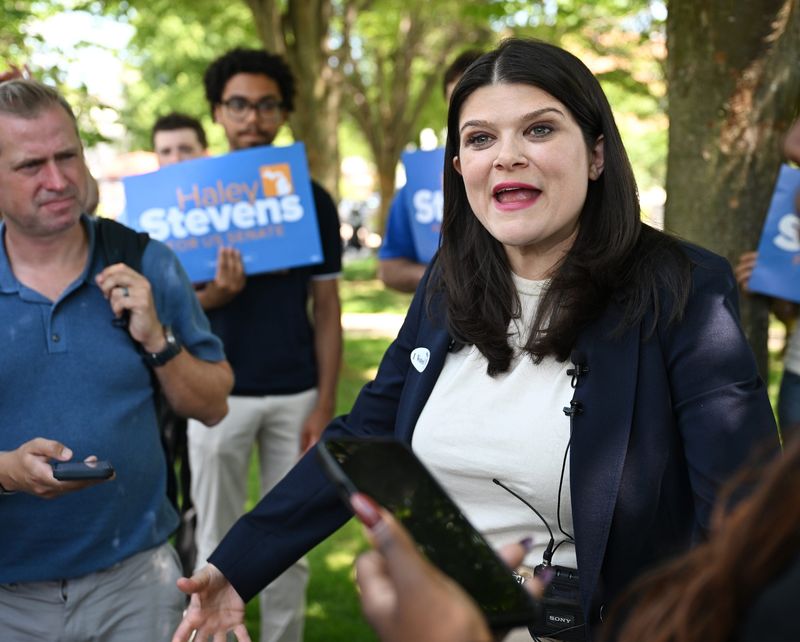
“What I have been hearing from Michiganders in these last couple of days, they want to see a proven fighter,” Stevens told reporters Sunday. “Look, I’ve been underestimated before, and also I have stood up for Michigan in really tough moments.”
Peters, who has endorsed Stevens, and other party centrists have warned that selecting the left-wing El-Sayed could jeopardize the seat for Democrats in November.
“It’s because of her really common sense, practical problem-solving ability. That’s where folks from Michigan are. That’s what they like,” Peters said after a Sunday rally with Stevens in Madison Heights. “Haley basically represents the kind of people in the Midwest who roll up our sleeves, get to work. It’s not about theatrics.”
Sen. Bernie Sanders, a Vermont progressive who won Michigan’s Democratic presidential primary 10 years ago, has dismissed the concerns about whether El-Sayed could prevail in a general election contest against Rogers.
“Maybe it’s time to understand the status quo is not working for working families or the middle class,” Sanders told The Detroit News last month. “They want real change, and Abdul is a vehicle for that change. That is why the billionaire super PACs are spending so much money trying to defeat him.”
For his part, El-Sayed on Monday predicted he’d defeat Rogers by 7 percentage points, deeming him a “generationally bad candidate.”
The primary contest has featured a record amount of outside spending for a U.S. Senate primary race, about $60 million, with a lop-sided $54 million benefiting Stevens and $5 million benefiting El-Sayed ― a ratio of nearly 11-1.
That total includes over $30.6 million spent by the American Israel Public Affairs Committee (AIPAC) ― the most that the group has sunk into a single race since starting their United Democracy Project super PAC in 2022. Their ads boosted the reliably pro-Israel Stevens and attacked El-Sayed, who opposes foreign military aid for Israel and has called its actions in Gaza a genocide.
El-Sayed has said the money spent against him is a “validator” of his message, betting that support for Israel has eroded to such a point in his party that he can criticize U.S. support for it and still be elected.
“If I prove that you can win statewide, taking on AIPAC and winning, that is catastrophic because of what it says about the future of the party,” El-Sayed told Mother Jones last month.
Stevens has largely declined to discuss her support from AIPAC while embracing it. She slammed El-Sayed last week for blaming Jewish Americans “for America’s problems.”
She has opposed placing conditions on aid for Israel despite concerns about humanitarian aid in Gaza. Stevens has said the goal in the Middle East has to be long-term peace and a two-state solution. “I can say that Israel has a right to peacefully exist alongside the people of Palestine and in Gaza,” she said at a debate last month.
Stevens, 43, is in her fourth term representing Oakland County in the U.S. House. She has touted her experience working on the auto rescue team under President Barack Obama and her reputation as a “workhorse” in Congress, helping to pass legislation to boost domestic semiconductor production and the bipartisan infrastructure bill. She has campaigned on controlling costs for working families and standing up to Trump.
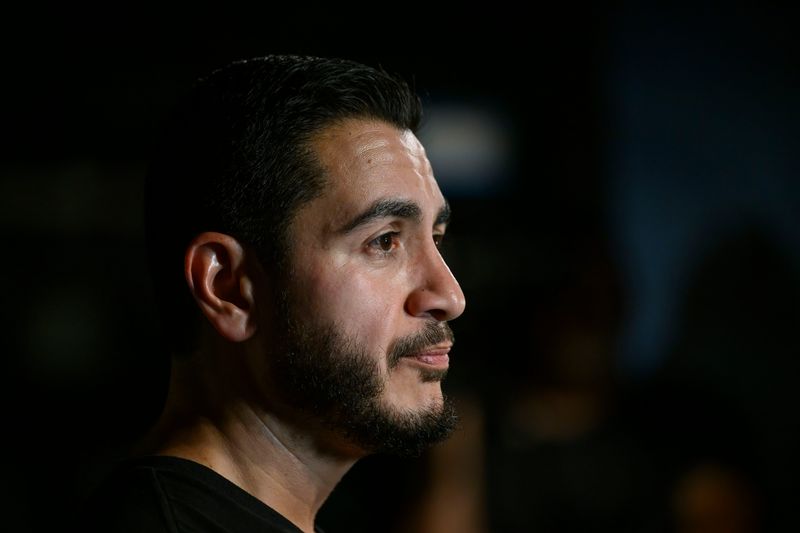
El-Sayed, 41, is the physician son of Egyptian immigrants who grew up around Detroit and previously served as the top health official in Wayne County and for the City of Detroit. He has campaigned on single-payer health care, ending the corrupting influence of money in politics and his plan to abolish the U.S. Immigration and Customs Enforcement agency known as ICE. If elected, he’d be the first Muslim to serve in the Senate.
Voters explain their picks
Steve France, 61, of St. Clair Shores, said he favored Stevens for Senate, in part because he had not seen negative advertising from her, while he felt other candidates were attacking one another.
“I haven’t seen any negative ads out of her,” France said of Stevens. “Everybody else is, you know, shooting each other in the foot.”
France said he hoped Stevens would do well against the GOP’s Rogers in the fall.
“These candidates, right now, are they’ve been working on the same issues for the past 20 years,” he said. “So I’m not expecting anything new. I just don’t want anything radical like what we’re having right now.”
David Dieter, 71, of St. Clair Shores said he was motivated to vote in part because he feels threatened by Trump’s policies and rhetoric as a married gay person.
“Trump is the most evil thing in the world, and he’s doing everything possible to destroy our basic belief systems, protecting people like all of us,” he said.
Dieter said he voted for El-Sayed in Tuesday’s primary, despite concerns about whether he could win the general election in November.
“I know for a lot of people he’s too progressive. He isn’t for me,” Dieter said. “It’s worth the risk because I think he’s more solid, would be more solidly against Trumpism.”
On Stevens, Dieter said that, “even though she has been around a long time, I’m afraid she’s going to wimp out under pressure.”
Dieter said electability was a difficult consideration for him and a topic of discussion in his household.
“I figure, even if Stevens wins in the fall, okay,” Dieter said. “But I still had to support (El-Sayed) because his time’s not over.”
Robert Knevels, a 54-year-old Birmingham resident, said he’d support either Democratic candidate for Senate. But, he strongly prefers Stevens, who represents him in the U.S. House.
“I voted for Haley Stevens because I think she has a better chance to beat Mike Rogers in the November election,” he said. “I also want to keep things a little bit more moderate because while I’m a Democrat I’m not in favor of some of these left-wing policies that the Democrats are doing right now, and so I wanted to make my voice heard here that I like it to be more moderate.”
No matter who wins, Knevels said the most important thing was to beat Rogers in November.
“I’m not going to vote for the other side at all,” he said. “But this is an issue where the Democratic Party has a split in it, and that’s rough for me.”
Two El-Sayed voters who cast their votes for him at a polling place in Epicenter of Worship church in south Lansing Tuesday pointed to the progressive Democrat’s stance on healthcare and his chances of beating Rogers in November as important reasons he won their votes.
“I came out to vote for Abdul,” said Stephanie Bergmann, 35, of Lansing. “One less vote for Haley Stevens.”
Bergmann suggested the support Stevens has received from AIPAC will vanish in November, predicting the pro-Israel group would rather see Rogers in office and asserted that is why the group has given Stevens so much support. Because El-Sayed is a better contender against Rogers, Bergmann said.
“I’ve seen her going out and doing her spiels and everything, but I haven’t seen her connect with community as much as Abdul has,” she said. “He seems like more of an approachable person who treats people like people as opposed to pawns to further an agenda.”
El-Sayed’s support for expanded healthcare access earned him a vote from Ali Aljazi, 27, also of Lansing. El-Sayed supports Medicare for All, a single-payer health care system funded by the government and guaranteed to all Americans, and wrote a book on the subject in 2021.
People should be able to access routine and preventative care, Aljazi said, because it could stave off more serious illnesses. Health care is “crazy expensive,” and people can’t control their need to see a doctor, he said.
“If cancer’s early detected, you can get it taken care of, but if you don’t have any coverage, you won’t be going to get it checked out; you won’t have regular checkups, routine visits, and those are key,” he said.
Harrison Township resident Susan Malley, 67, said she voted for Stevens because of “what she believes in,” saying that Stevens is “for the people” and worked under former President Barack Obama, who was her favorite president.
“He did a lot for this country,” Malley said. “He did.”
Malley said the economy is an important issue for her this election. “Our economy sucks,” she said. “It just does.”
Malley, a retiree who voted early, noted that grocery and gas prices are “going up.” She thinks the U.S. shouldn’t be in the Iran war and she doesn’t support Trump.
Harrison Township resident Maddi Sulflow, 27, voted for El-Sayed because of the way he “calls out” corporate funding for other candidates.
“He’s highlighting that other candidates, even in his own party, are also accepting money from massive corporations,” she said.
Sulflow, who voted early, said she also likes that El-Sayed “calls out” AIPAC. She said that, if a candidate is accepting AIPAC money, that means they’re “aligned with Israel and what they’re doing” to the Palestinians.
“And that’s just not something I’m aligned with,” Sulflow said.
Mindi Brouker, 40, of St. Clair Shores, also voted for El-Sayed because of Stevens’ sources of campaign funding.
“I feel like Haley Stevens with all the funds that she’s getting from corporate donors and AIPAC, I’m against,” she said. “So that’s a big reason for me.”
“AIPAC funding, I’m not in support of, and so that’s a big one for me,” Brouker added.
El-Sayed is endorsed by progressive icons Sen. Bernie Sanders of Vermont and U.S. Rep. Alexandria Ocasio-Cortez of New York, while Stevens has the backing of big-name Michigan Democrats, including Peters, Gov. Gretchen Whitmer and former Sen. Debbie Stabenow of Lansing.
mburke@detroitnews.com
Staff writers Craig Mauger, Candice Williams, Sarah Atwood and Anne Snabes contributed.
This article originally appeared on The Detroit News: El-Sayed leads Stevens in early returns for Democratic Senate primary
Reporting by Melissa Nann Burke, The Detroit News / The Detroit News
USA TODAY Network via Reuters Connect
By Melissa Nann Burke, The Detroit News | USA TODAY Network
