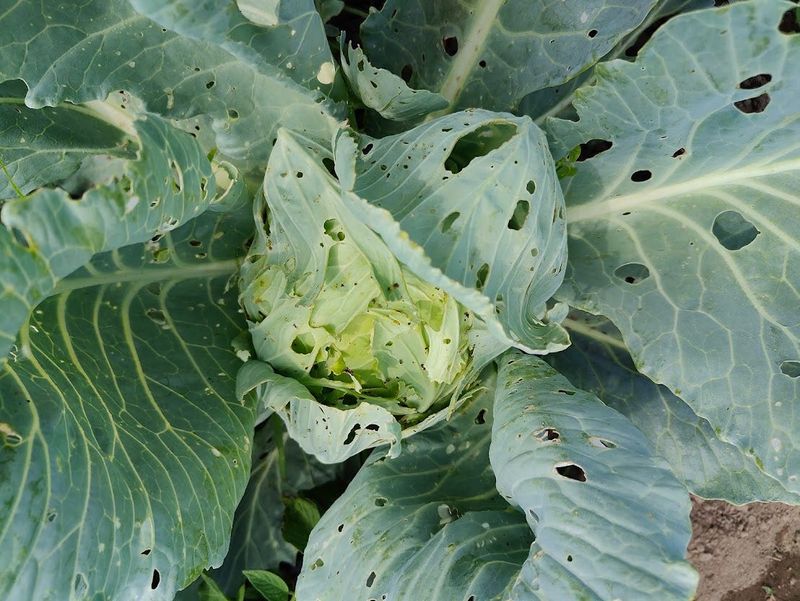
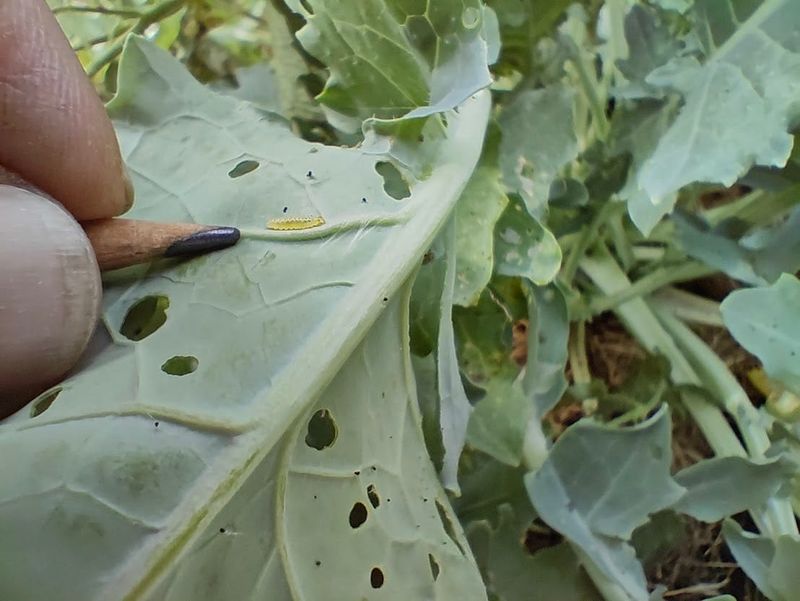
Three of the most destructive garden pests are poised to infest your vegetable garden; they may already be there without you knowing it. A fourth pest may be on the horizon. Commonly called cabbage worms, the imported cabbage worm, cabbage looper, and diamondback moth all attack crops in the cabbage family. All three have similar life cycles as caterpillars that chew holes in leaves, grow, and pupate.

Crops at risk include cabbage, broccoli, cauliflower, Brussels sprouts, kale, kohlrabi, turnips, mustard greens and others, sometimes called cole crops, brassicas or cruciferous vegetables. Farmers primarily use the term cole crops. Scientists prefer to use brassicas while the nutrition and culinary industries call them cruciferous vegetables.
The imported cabbage worm overwinters in our area as a pupa and is the most noticeable of the three because its adult stage, called the cabbage white butterfly, can be seen flitting around in gardens during the daytime looking for brassicas to lay their eggs on. Each time they land, they lay a single tiny, white, oval egg that soon turns yellow.
The eggs hatch into small green caterpillars that immediately begin chewing holes in the leaves. About one inch long when fully grown, they pupate and emerge as new butterflies.
In the olden days, children with butterfly nets snagged the butterflies before they had a chance to lay eggs. Imported cabbage worms also feed on alyssum, sweet alyssum, nasturtium, and stock.
The cabbage looper is a green inchworm, the larval stage of a night-flying moth, so you will not see them flying. Loopers are carried here on wind currents from the southern states. Eggs are laid in clusters of one to seven. In addition to chewing on leaves these one and one half inch long worms sometimes bore into heads of cabbage and broccoli. It’s quite surprising to find dead green worms floating in a pot of cooked broccoli. Loopers also feed on potato, tomato, peas, lettuce and spinach.
Diamondback moths are also nocturnal and come from the south. Their tiny green eggs are laid in groups of two or three. You can sometimes see these half-inch-long green pests hanging from leaves on thin, silky threads.
Your best bet to control cabbage worms is to regularly apply Bt, Bacillus thuringensis, an organic, naturally occurring biological insecticide through the growing season. Bt should be a permanent part of every gardener’s arsenal.
The fourth pest, cross-striped caterpillars, has yet to arrive. Their eggs are laid by a moth in clusters of up to twenty or thirty on each plant. This results in large numbers of three-quarters-inch-long caterpillars on a single plant that can be quickly defoliated.
If you use Bt regularly, you will not see cross-striped caterpillars because they would be eliminated by the Bt before they can grow big enough to cause damage.
Control measures for all three should begin as soon as you see flying butterflies or holey leaves, since small caterpillars are much easier to kill.
This article originally appeared on The Detroit News: Cabbage worms are headed for your garden
Reporting by Bob Dluzen, The Detroit News / The Detroit News
USA TODAY Network via Reuters Connect
By Bob Dluzen, The Detroit News | USA TODAY Network