When Tenee Gildea entered Women’s Huron Valley Correctional Facility in 2015, she was newly pregnant with her first and only child.
The prison staff knew Gildea was pregnant and knew the care she would need, yet she still felt like her health was neglected while she was in Michigan’s only women’s prison in Pittsfield Township. When she went into labor and went to the infirmary, the health care team acted as if she was a burden, she said.

After she gave birth, Gildea, now 36 and living in Kalamazoo, said she wasn’t given any postpartum supplies, as it depended on the officer who brought the women back from the hospital as to whether they would receive anything. Instead, she relied on the generosity of other women who had been lucky enough to receive products as she recovered from childbirth.
“It’s not like I have the opportunity to say, ‘Hey, I don’t like the care that I’m getting here. I’m going to go to the next hospital,'” said Gildea, who was released from prison in 2019 after serving a four-year sentence for operating and maintaining a meth lab. “I am completely reliant on this institution and the medical care that they are offering me. … The incarceration is our punishment. Neglect should never be part of the sentence.”
Medical care at Women’s Huron Valley, the state’s only women’s prison, and within the Michigan Department of Corrections can be inadequate, said two women who spent time incarcerated there, family members of those who died in the prison and two attorneys.
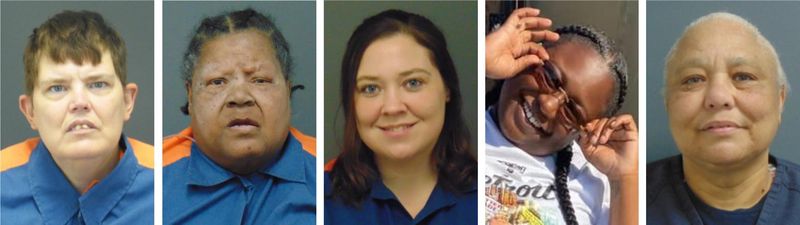
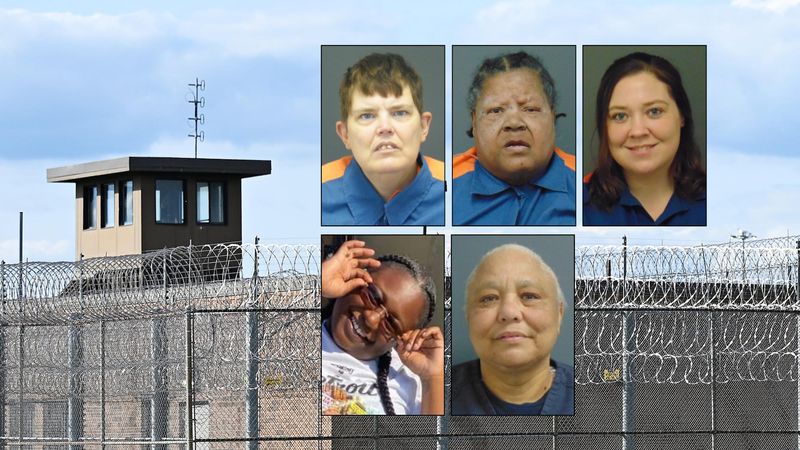
Multiple questions have been raised about the conditions at the Pittsfield Township prison amid a slew of inmate deaths in a matter of months. Five inmates at Women’s Huron Valley have died since May.
The most recent death happened in late July. Dasie Forbes, 69, was undergoing palliative care, and her death was expected, according to the Michigan Department of Corrections.
Ashley Hoath, 36, died by suicide in early June, and Khaira Howard, 28, died May 14 of a blood clot in her lung. Autopsies for Rebecca Fackler, 57, who died May 17, and Dalephenia Jones, 62, who died July 2, have not been released.
The Michigan Department of Corrections has contracted with an outside firm, Topeka, Kansas-based VitalCore Physicians Group, to provide medical care in all of its prisons since 2024. VitalCore took over after the state Department of Corrections parted ways with its previous provider, Nashville, Tennessee-headquartered Grand Prairie Health Care Service. In September 2024, the state sued Grand Prairie in Ingham County for “dismal performance,” among other reasons.
Michigan Department of Corrections spokesperson Jenni Riehle said in an email that the department is required to provide “constitutionally adequate” medical care to prisoners. She said there have been changes to the services provided to pregnant women since Gildea was paroled in 2017. Pregnant women have access to a doula or labor coach, counseling and Lamaze, parenting classes and childcare options, Riehle said.
Women’s Huron Valley employs an obstetrician, dietician and dentists who are able to care for pregnant women who are incarcerated, Riehle said. Overall, the department provides health care to about 32,500 prisoners and has a team of about 1,300 health care professionals, she said.
“Similar to health care settings in the community used by the public, to provide incarcerated individuals a consistent standard of care, MDOC health care leadership set clinical policies and procedures to guide the care toward evidence-based and community standards of care,” Riehle said. “Clinical leadership meet regularly with medical providers and nursing leadership to review outcomes and adjust practices as necessary to ensure the highest quality of care.”
Still, the loved ones of some of the women who have died behind bars since May question the care inmates receive.
Howard’s father, Don Howard, said his daughter was in prison to serve a sentence, not to lose her life.
“She still deserved compassion, dignity and proper medical care,” Don Howard wrote in a statement read aloud by Howard’s mother, Shaquillia DeShields, during a vigil last month for those who’ve died. “I trusted that while she was in there, in their care, her basic human needs, including her medical needs, would have been met. Instead, I am left with questions, heartbreak, an empty place in my family that can never be filled.”
Some, including state Sen. Jeff Irwin, D-Ann Arbor, who represents part of Washtenaw County where the prison is located, have called for the prison to be shut down because of the recent deaths.
Mom says her daughter ‘will never be the same’
Tamika Bogan, 47, was a shell of her former self, when she was released from prison on medical parole in August 2024, her mother Darla Dowdell and friend Tamika Daniels said.
Bogan stopped eating for 30 days and refused to leave her bunk, but corrections officers didn’t do anything about it, Daniels said, which is odd because guards are usually quick to write up someone for not following the rules. Bogan had been in prison since 2000 on a 25- to 40-year sentence for second-degree murder. Bogan and Daniels grew up together, though Daniels also spent time at Women’s Huron Valley.
Daniels said she only found out about Bogan’s condition because Bogan’s cellmate called her. It took 30 days for Bogan to get any sort of medical treatment once she stopped eating, Daniels said. They sent her to the hospital, then when she returned, put her in the infirmary. Bogan didn’t know what was wrong, but kept saying her stomach hurt. Her condition started to decline, and she began to lose mobility in her legs, Daniels said.
“Whatever happened to her, it started in this prison,” Daniels said. “She was due to come home in 2027. Now she’s non-verbal. … We’ve only seen her decline. She’s not getting better.”
Dowdell had an advocate try to help get her daughter out of prison, but the parole board refused until the point where Dowdell said she was about to die. Then, the board gave her medical parole to be spent at a nursing home.
“They did something to my baby,” Dowdell said. “My daughter, she had just got on the dean’s list. She had two jobs. Nobody said anything about why she wasn’t at work. … My daughter will never be the same.”
Doctors do not expect Bogan to recover, Dowdell said.
Daniels faced her own medical issues while in prison. She said she spent nine months in a wheelchair because her legs gave out and she could not work. Doctors recommended physical therapy, but she was unable to do it, she said.
Daniels said she slowly began walking again on her own, but had constant medical problems during her time there, like no treatment for her lupus, headaches and constant congestion, which she thinks may be attributable to the mold she said was in the prison. It is a claim echoed by many others who spent time in the prison but has been denied by state prison officials.
For its part, the Michigan Department of Corrections contended it regularly uses a host of outside specialists and hospitals for inmate medical care as needed.
“This includes, but is not limited to, treatment in oncology, dermatology, surgery, or emergency services. All incarcerated individuals receive regular health and wellness screenings by MDOC health care, in addition to preventative care such as OBGYN, ultrasounds, mammograms, dental, x-ray, and dialysis,” said Riehle, the MDOC’s spokeswoman.
Cost of health care in prison may be a burden
But Tony Gant, director of policy at Safe and Just Michigan, a nonprofit focused on reducing harms in the legal system, said health care in prison doesn’t work as well as it does in general society.
One of the biggest issues is a $5 medical co-pay for incarcerated people, which may seem like a small amount, but “$5 is a lot of money for someone who may only make $30 a month” through prison jobs, he said.
“It makes people put (medical care) off … until it’s absolutely necessary,” Gant said. “I think the state should be responsible for health care completely. … It’s not going to save everybody’s life. But what we can do is make it easier.”
Gant, who has been out of prison for just over 11 years after serving an 18- to 30-year sentence for attempted murder and felony firearm, said the prison health care teams will try to find the easiest way to treat people who come to them for help.
“The running trope is if you go to health care, they’re going to tell you to take some aspirin, drink some water and get some rest,” Gant said. “Obviously that’s not a good solution for everything.”
Crystal Mulherin, who was exonerated in 2024 after spending about 18 months in prison, echoed Gant’s comments, saying prison health care staff does not take medical concerns seriously.
“They’ll accept you to come in and be seen, then they’ll push you right back out. It don’t seem like they want to do more to help the women in there,” Mulherin said. “They seem to think, ‘Oh, they committed a crime. Let’s get our money and move on.’”
This adds to the dehumanizing effects of the prison environment, said Ken Nixon, president of the Michigan-based Organization of Exonerees. Nixon, who was exonerated after spending 16 years in prison, said the answer to all health ailments in prison was “Tylenol and water.”
“It’s a common-known fact,” Nixon said. “You don’t go to health care unless you absolutely have to. … They do everything to prevent actually having to administer any form of costly care.”
Attorney Tim Holland, who is representing the families of Howard and Hoath, said he believes there were signs of the emboli that led to Howard’s death “significantly before” she died, which should have been caught and handled.
“I remain concerned about the culture in the prison that allows stuff like this to happen,” Holland said. “We want to make sure that people are getting taken care of in the prison.”
Is mold an issue at prison?
Critics argued that one issue that could be compromising inmates’ health at Women’s Huron Valley is the alleged presence of black mold. Numerous inmates and advocates have raised concerns about the presence of dangerous levels of mold at the prison, but Michigan corrections officials insisted an air quality assessment at Women’s Huron Valley Correctional Facility earlier this year found no widespread mold contamination.
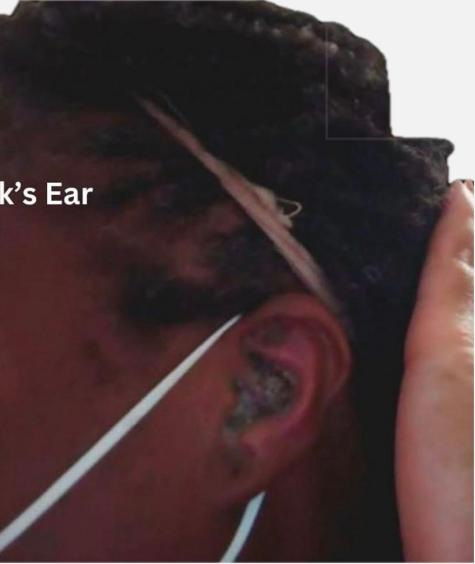
At a state legislative hearing earlier this year, pictures were shown of an inmate with mold visibly growing from her ear. And at least one corrections officer and one inmate have said they have become ill because of it.
Holland said he has received many reports that women are retaliated against at Women’s Huron Valley for raising concerns, especially concerns about cleaning black mold without protective gear. He’s concerned about this, he said.
“I don’t believe it’s a coincidence because I’m investigating right now to what extent these women were retaliated against for raising concerns,” Holland said. “Lives became miserable, leading to these incredible deaths.”
A federal judge ruled in 2006 that the Michigan Department of Corrections was practicing torture after a mentally ill inmate died of dehydration while chained naked to a concrete slab for four days in an unventilated cell, according to the American Civil Liberties Union of Michigan.
U.S. District Judge Richard Enslen of the Western District of Michigan appointed an independent medical monitor and threatened a hefty fine if the state Department of Corrections didn’t fill staff vacancies to provide basic medical and mental health care to prisoners. In 2015, the federal monitoring was terminated.
kberg@detroitnews.com
This article originally appeared on The Detroit News: As deaths mount at Michigan’s women’s prison, critics impugn health care
Reporting by Kara Berg, The Detroit News / The Detroit News
USA TODAY Network via Reuters Connect
By Kara Berg, The Detroit News | USA TODAY Network