

By Jiaxing Li
HONG KONG, Aug 6 (Reuters) – Currency markets drifted on Thursday with the yen struggling to retain intervention gains and the dollar pinned near six-week lows, as concerns about a proposed U.S.-Iran deal and jitters about upcoming U.S. payroll data left traders cautious.

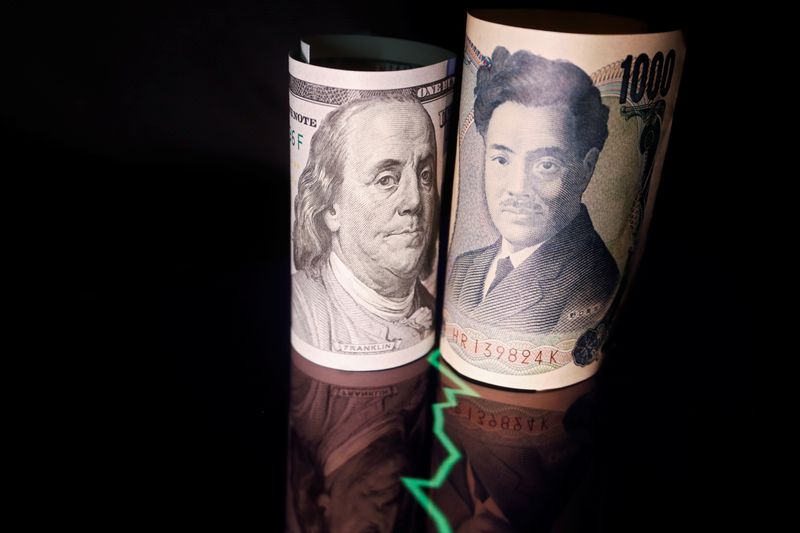
The yen was little changed at 157.71 per dollar in early trade after weakening for two straight sessions. It has now given back some intervention gains after touching 155.20 per dollar on Monday, but remains well off last month’s multi-decade low of about 164.
The euro was little changed at $1.1557, and sterling traded flat at $1.3469. The New Zealand dollar and the Australian dollar were also flat, last trading at $0.5885 and $0.7056, respectively.
The dollar index, which tracks the U.S. currency against six major peers, was little changed at 99.65, struggling to find direction while hovering near a six-week low.
Markets remained watchful as tensions continued to play out in the Gulf after Reuters reported a proposed deal between Iran and Oman to help end the U.S.-Iran conflict could give Tehran control over inbound traffic through the Strait of Hormuz.
There was no immediate U.S. comment on the proposal. President Donald Trump has said a deal to reopen the strait was imminent, but U.S. officials have repeatedly insisted they would never agree to Iran controlling access to the world’s most important trade route for energy supplies.
Brent crude futures fell 0.5% to $79.08 a barrel on Thursday, near the levels last seen when the U.S. and Iran signed an interim peace agreement in June.
“The market’s very much in sort of watch and wait mode,” Ray Attrill, head of FX strategy at National Australia Bank, said in a podcast.
“We haven’t got the oil market volatility that has really been the key driver of most markets in recent days and weeks,” he said, adding that markets were waiting to see whether a deal would be struck at all.
CENTRAL BANKS IN FOCUS
Bank of Japan policymakers debated mounting price risks that likely required more rate hikes even as they raised borrowing costs to a 31-year high in June, minutes of the meeting showed on Wednesday.
That highlights growing attention within the board to broadening price pressures, further bolstering the case for another rate hike as soon as September.
Fuelled by interventions from Tokyo and coordinated action with Washington in recent days, the yen rallied as much as 5% against the dollar but was struggling to retain the gains.
In a recent Reuters poll, nearly 95% of the respondents said future Japanese currency interventions alone would not sustainably curb the currency’s weakness. Nearly every respondent who said that also said the BOJ would have to raise interest rates to make a lasting impact.
Investors are now also awaiting U.S. payroll data that could provide more clues on the Federal Reserve’s interest rate path, after data showed the country’s services sector stayed strong in July even as input costs rose, but services-sector employment slowed.
A Reuters survey of economists expected July’s employment report on Friday to show nonfarm payrolls increased by 80,000 jobs in July after rising 57,000 in June. The unemployment rate is forecast to hold steady at 4.2%.
Fed Governor Lisa Cook said on Wednesday that she was open to the idea that the central bank may need to raise its short-term interest rate target to deal with “too high” levels of inflation in the U.S. economy.
(Reporting by Jiaxing Li in Hong Kong; Editing by Jamie Freed)
By Jiaxing Li | Reuters | © Copyright Thomson Reuters 2026.
