By Olivia Le Poidevin
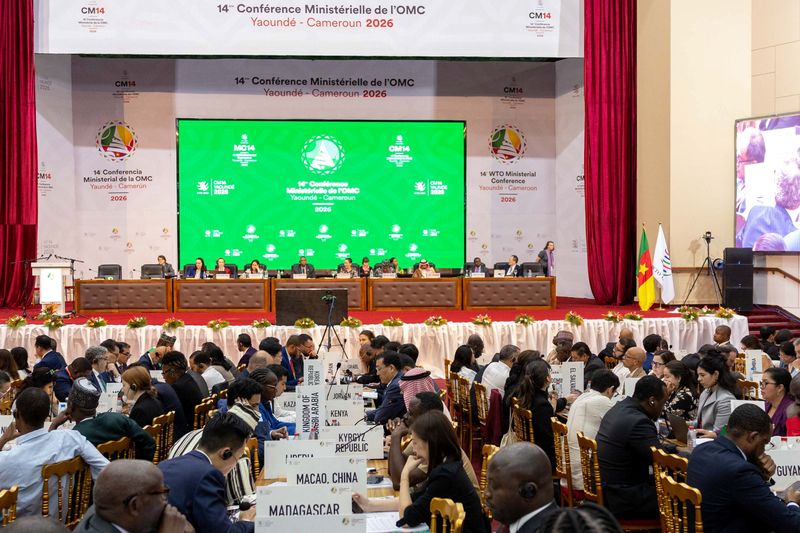
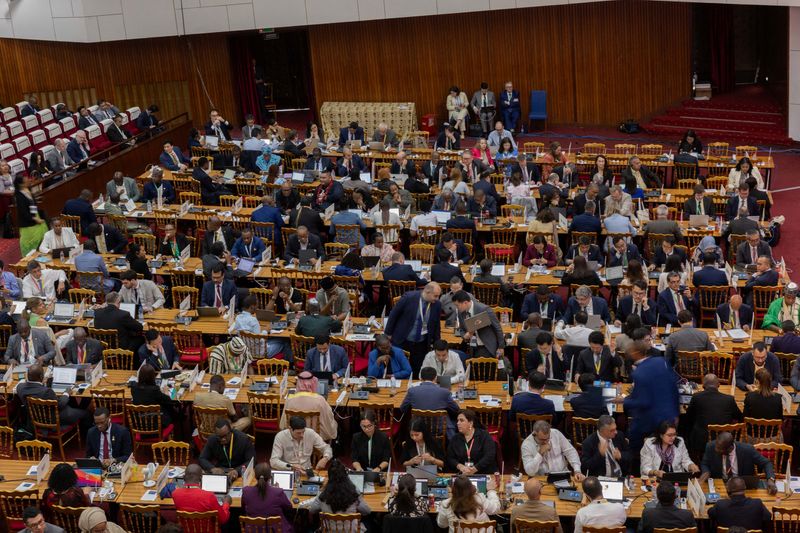
YAOUNDE, March 29 (Reuters) – Talks to reform the World Trade Organization and extend a moratorium to not impose customs duties on electronic transmissions such as digital downloads entered their final day on Sunday with no breakthrough yet in sight, diplomats said.

Trade ministers are working at a WTO meeting in Cameroon to close the gap between the United States and India over extending the e-commerce moratorium due to expire this month, three diplomats told Reuters.
Extending the moratorium is seen as a test for the WTO’s relevance, following a year of tariff-fuelled trade turmoil and major disruptions due to the Middle East conflict.
India indicated it would accept a extension of two years, three diplomats said. U.S. Trade Representative Jamieson Greer, however, has said Washington was not interested in a temporary extension to the ban, only a permanent one.
Business leaders say an extension is critical to guarantee predictability, fearing duties could otherwise be introduced.
There are suggestions the U.S. could accept a “pathway to permanence” with a 10-year extension, a Western diplomat said. A second said a five- to 10-year extension was being explored, while a third indicated it was unlikely all WTO members would agree to go beyond two years.
A new draft document seen by Reuters on Saturday evening proposes support for developing country members, as well as a review clause.
Extending the moratorium permanently would give the U.S. confidence to remain “fully engaged” in the trade body, the U.S. Ambassador to the WTO, Joseph Barloon, told Reuters ahead of the talks.
“If the moratorium does not get extended, the U.S. will use it as an excuse to beat the WTO on the head,” a fourth senior diplomat said.
REFORMS
The debate comes amid efforts to rework WTO rules to render subsidy use more transparent, make decision-taking easier and potentially rethink the so-called Most-Favoured-Nation principle that ensures members extend all trade benefits equally to one another.
The U.S. and the EU argue China in particular has taken advantage of current rules to their detriment.
Meanwhile decision-making under the consensus-based system has often been stymied by individual countries’ objections.
A handful of countries are opposing a detailed work plan on reforms, while most members support it, two senior diplomats said.
“We are frustrated that we are spending a lot of time talking about process, when we want to get on with the real work, reforming the WTO,” a western diplomat said.
Including into WTO rules an agreement reached by a subset of members aimed at boosting investment in developing countries also remains blocked by India, which said plurilateral accords risk eroding the body’s founding principles.
(Reporting by Olivia Le PoidevinEditing by Dave Graham and Alistair Bell)