By Marc Jones and Ankur Banerjee
LONDON/SINGAPORE, March 26 (Reuters) – Stock and bond markets fell on Thursday as oil surged more than 5%, with Iran’s denial of any talks with the U.S. deepening doubts over the prospect of a quick ceasefire in the near one-month-long Middle East war.

Conflicting signals over the scope of contact, plus reports of thousands of U.S. troops being sent to the region, snapped a three-day rebound in world stocks and reignited selling in global debt markets.
After falls in Asia – where the Philippines held an unscheduled central bank meeting due to the turmoil – European stocks and government bond prices dropped as Germany’s central bank head said an ECB rate increase next month was “an option” and Norway said it was now likely to hike rates this year too.
A warning from U.S. President Donald Trump to Iran to “get serious” about a ceasefire saw oil and European natural gas prices jump more than 5.5% and 4% respectively.
It hoisted Brent to just over $107 a barrel and gas to 54.9 euros per megawatt hour , leaving their gains for the month at an eye-watering 45% and 70% and cementing the worries of policymakers about another 2022-style inflation spike.
“I think we’ll have enough data by April to determine whether we need to take action or whether we can wait and see,” Germany’s central bank chief Joachim Nagel said during an interview with Reuters regarding a possible ECB rate hike.
He said it was just one of the options the ECB had, but added: “We shouldn’t shy away from it now just because we think it’s still too early.”
Trump repeated on Thursday that Iran was “begging” to make a deal to end the war. Iran’s Foreign Minister, Abbas Araqchi, had earlier countered that Tehran was reviewing a U.S. proposal but had no intention of holding talks.
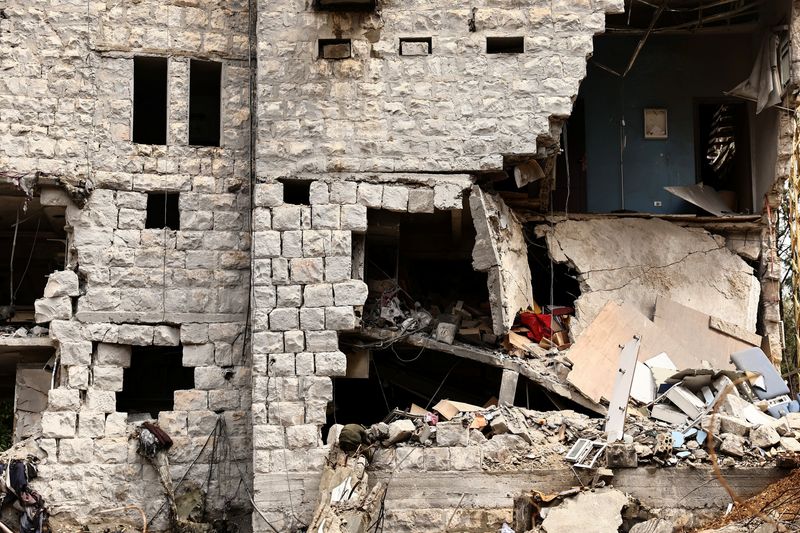
The war, triggered by U.S.–Israeli strikes on Iran in late February, has rattled global markets and effectively shut the Strait of Hormuz, a conduit for a fifth of global oil and liquefied natural gas flows.
A first economic forecast from the Paris-based OECD since the crisis erupted predicted it would suppress global GDP growth, keeping it below 3% this year.
Germany’s two-year bond yield, sensitive to European Central Bank rate expectations, rose 8 basis points to 2.68%, after falling 4 bps on Wednesday. Bond yields move inversely to prices.
The U.S. two-year yield was nearing 4%, while Japan’s hit its highest level in 30 years at 1.33%, as traders cemented bets on another Bank of Japan rate hike as early as next month. [JP/]
Prolonged disruption in the strait could keep energy prices and inflation elevated, forcing central banks to tighten, Pascal Koeppel, chief investment officer at Vontobel SFA, said.
Earlier on Thursday, Norway’s central bank said it now expects to raise its rates this year due to rising energy prices and wages, after previously flagging it could cut them.
“If we saw (U.S.) ground troops in action, that would make me much more nervous,” Vontobel’s Koeppel added. If that happened, “we would trim risk… and go more into short-term government bonds and gold, of course.”
STRUCTURAL SHIFTS
Wall Street’s main markets also opened around 1% lower [.N], and Asian markets fell overnight.
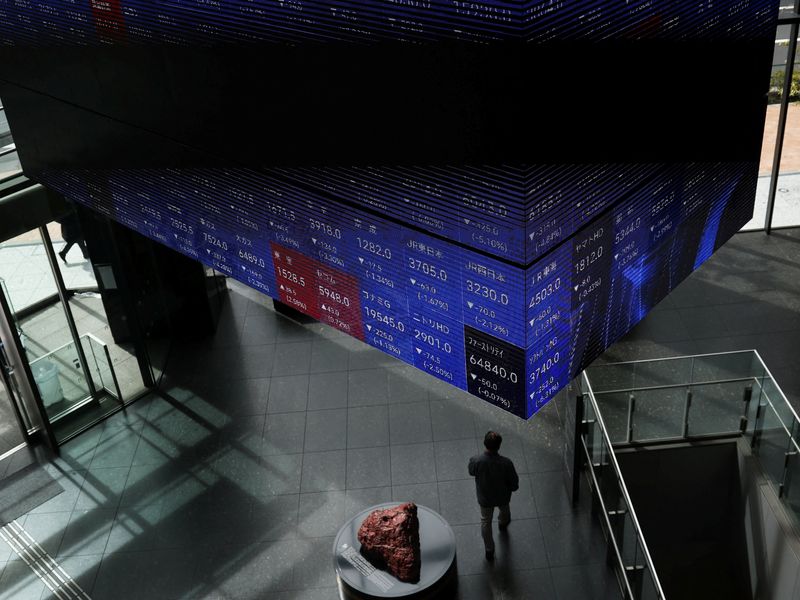
Japan’s Nikkei ended down 0.3%, while worries over rising energy costs hammered South Korea’s KOSPI, which slumped 3.2%.
Hong Kong’s Hang Seng fell 1.9% and China’s blue chips dropped 1.3%, leaving MSCI’s index of Asia‑Pacific shares outside Japan on track for a 9.5% monthly fall, its biggest since October 2022. [.SS]
In currencies, the dollar held near recent highs and is heading for a 2% gain this month, reviving its safe-haven appeal after last year’s more than 9% slide. [/FRX]
Fears of a 2022-style inflation shock have seen traders fully price out any chance of a Federal Reserve rate cut this year, further supporting the dollar.
Gold, another traditional safety play, has dropped more than 16% this month – on course for its steepest fall since October 2008. It was down 2% at $4,421 per ounce on Thursday, though still almost 50% higher than a year ago.
“If you look at what the U.S. wants to achieve, what Israel wants to achieve, and what Tehran wants to achieve, it will be very hard to reconcile all these points,” said Matthias Scheiber, senior portfolio manager and the head of the multi-asset team at Allspring Global Investments.
“We still think there is a case to make for structurally higher energy prices for the moment.”
(Reporting by Marc Jones; Editing by Mark Potter and Andrew Heavens)