By Anna Szymanski
April 24 (Reuters) –

Everything Mike Dolan and the ROI team are excited to read, watch and listen to over the weekend.
From the Editor
Hello Morning Bid readers!
Just when it looked like the U.S.-Iran ceasefire might put a cap on oil prices, the continued blockade of the Strait of Hormuz and tit-for-tat tanker seizures sent Brent crude prices soaring back above $100 a barrel this week. While this stalled the global equity rally on Thursday, that was after many major stock markets had already set new highs earlier in the week.
Don’t expect this breather to last long, however, as it is still simply too expensive for most investors to remain on the sidelines. Perhaps ironically, at a time of geopolitical strife and rapid technological change, the biggest risk may be risk aversion itself.
Back to the Middle East, President Donald Trump announced on Tuesday that he was extending his previous two-week ceasefire deadline until negotiations with Tehran were complete. But he also kept the U.S. naval blockade of Hormuz in place for ships traveling via Iranian ports, diverting at least three Iranian-flagged oil tankers in recent days.
Tehran retaliated by seizing two ships on Wednesday and releasing a video on Thursday of commandos in a speedboat storming a large cargo ship – which Trump later dismissed as Iran’s “little wise-guy ships.”
For now, it’s unclear when peace talks will resume. But the U.S. blockade underscores the fact that Hormuz – a route critical to Iran’s revenues and imports – isn’t just a weapon for Tehran, but also a significant economic vulnerability.
So should we abandon hopes that the strait will be fully reopened anytime soon? Perhaps. And even if it is, how long might it take for normal energy flows to resume? Likely months – possibly years.
That’s a major concern for the rest of the world, as oil demand destruction is mounting each day – particularly in Asia.
There are some big winners from all the supply disruption, though, most notably U.S. energy producers, who are seeking to fill a Qatar-sized hole in the global LNG market.
Perhaps paradoxically, there is also reason to believe that, over the long run, the Iran war could lead to more fossil fuel consumption – not less. While the crisis will likely accelerate the shift to renewables, the combination of spiking energy security concerns and greater fragmentation could ultimately lead to a less efficient, more voracious global energy system, pushing up demand for all fuel sources and leading to a new era of ever-more frequent energy shocks.
Oil and gas are certainly not the only commodities feeling the pinch from the Iran war. The conflict has already caused turmoil in the global aluminium market, with the fallout now spreading to both copper and nickel supply chains.
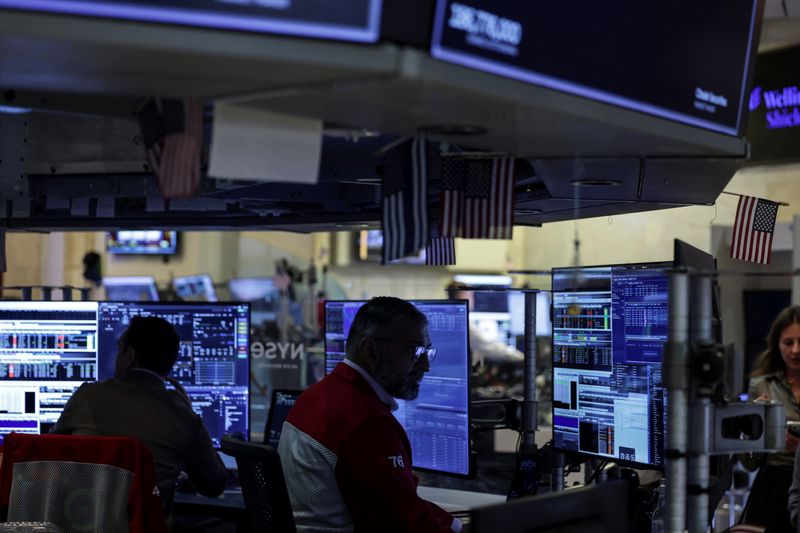
Turning back to global equities, the artificial intelligence boom and a mostly bumper earnings season promise to keep the rally humming despite the modest pullback yesterday.
But there are causes for concern. U.S. tech giants have driven the recent rebound – largely thanks to sky-high AI ambitions – but energy prices will likely be well above what hyperscalers were banking on only a few months ago, and this could eat into the profits being baked into their valuations.
Indeed, concerns about spending dogged the first of the ‘Mag 7’ to report this week: Tesla. While Elon Musk’s firm produced a positive free cash flow surprise, investors didn’t respond well to news that the tech juggernaut was upping its 2026 capex budget to more than $25 billion.
Many of the rest of the ‘Mag 7’ gang will report next week. With the Iran conflict putting upward pressure on inflation, investors will likely have questions about Big Tech’s ability to continue generating strong returns if energy prices – and potentially interest rates – stay higher for longer.
And that, of course, brings us to the Federal Reserve, which is meeting next week for what could be Jerome Powell’s last outing as chair. This week we saw the long-awaited Senate confirmation hearing of Kevin Warsh, Trump’s nominee to replace Powell. It offered few surprises: Warsh reiterated his desire to gradually shrink the Fed’s balance sheet, sparred with Democrats about divestment and fielded questions about Fed independence.
While Warsh stated that Trump had never asked him to agree to any rate decision, the president told CNBC roughly an hour before the hearing began that he would be “disappointed” if Warsh did not lower rates immediately upon taking office.
Given that inflation is running above the Fed’s 2% target and could head higher amid the supply disruption in the Middle East, Warsh may face an impossible task if he wants to both restore price stability and please the president.
Meanwhile, consumers still appear to be handling the energy price spike fairly well, as U.S. retail sales in March rose more than expected. This was obviously driven partly by higher gasoline prices themselves, but bumper tax refunds meant that elevated prices at the pump didn’t erode spending in other categories as much as many feared. However, that buffer may not prove durable.
How long that cushion will be needed depends on when someone finally blinks in the Middle East showdown that – for now – appears nowhere near a resolution.
For more data-driven insights on markets and commodities, check out Reuters Open Interest. You can learn:
• Why aren’t stocks necessarily a good inflation hedge?
• Why might China’s yuan be less undervalued than many assume?
• Could Kevin Warsh seek to shift the Fed’s inflation goalposts?
• Are European consumers more insulated from price shocks than their American counterparts?
• Why might this year’s U.S. corn crop disappoint?
• Which clean energy milestones has the U.S. recently hit?
• What can the war against almond “milk” teach us about economic protectionism?
I’d love to hear from you, so please reach out to me at .
This weekend, we’re reading…
MIKE DOLAN, ROI Finance & Markets Columnist: This piece by economist Maurice Obstfeld at the Peterson Institute for International Economics argues that attempts to blame rewidening U.S. current account deficits on an overvalued dollar are wide of the mark.
ANDY HOME, ROI Metals Columnist: Defensive stockpiling in the critical minerals space is an idea that has come to the fore again in a world of rising geopolitical tensions. To learn about the history of stockpiling in the U.S., check out this comprehensive article by the Defense Logistics Agency, the U.S. military’s primary global supply chain manager, published over 20 years ago.
GAVIN MAGUIRE, ROI Global Energy Transition Columnist: In this super-detailed study, think tank Ember examines electrification trends around the world.
JAMIE MCGEEVER, ROI Markets Columnist: “Global imbalances” were among the hottest topics at last week’s IMF/World Bank Spring Meetings in Washington. Economist and historian Adam Tooze shares his thoughts in this excellent synthesis.
CLYDE RUSSELL, ROI Asia Commodities and Energy Columnist: A new report from the Institute for Energy Economics and Financial Analysis examines the diesel crisis in Australia – the world’s top importer and highest per capita consumer of the fuel. Despite its pro-renewables stance, the institute offers a clear-eyed assessment of both short- and long-term solutions to the supply crunch triggered by the Iran war and the risks it continues to create.
We’re listening to…
RON BOUSSO, ROI Energy Columnist: In this podcast by the Oxford Institute for Energy Studies, senior research fellow and Pentathlon Investments managing partner Ilia Bouchouev dives into algorithmic trading and hedge fund strategies in the oil market. Is it technical? Yes, but also essential for understanding the price volatility currently being driven by the Iran war.
And we’re watching…
ANNA SZYMANSKI, ROI Editor-in-Charge: With the Iran war stoking inflation and the jobs market weakening, President Trump’s pick for Fed chair faces an unenviable task. On this episode of Reuters Econ World, U.S. economics editor Dan Burns joins host Carmel Crimmins to discuss how Warsh may try to thread the economic and political needle.
Want to receive the Morning Bid in your inbox every weekday morning? Sign up for the newsletter here. You can find ROI on the Reuters website, and you can follow us on LinkedIn and X.
Opinions expressed are those of the authors. They do not reflect the views of Reuters News, which, under the Trust Principles, is committed to integrity, independence, and freedom from bias.
(By Anna Szymanski)